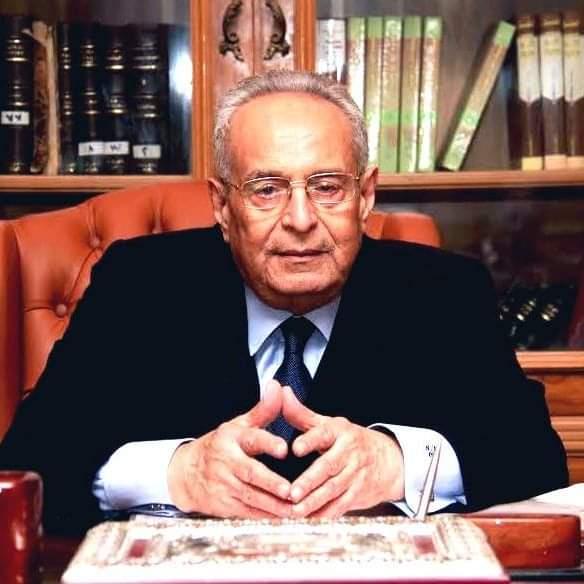
Counselor Baha Abu Shuka
Legal consultations
- Name: Counselor Baha Abu Shuka
- Phone: 0128 266 6999
- City: Cairo
- Area: Downtown
Counselor Baha Abu Shuka
Birth and Education
Birth: Born in 1938 in Asyut, in a family with a legal background.
Education: Graduated with a Bachelor of Laws from Cairo University in 1959.
Judicial Career
Work in the Public Prosecution:
Appointed as an Assistant Public Prosecutor in 1959, beginning his career in North Cairo Prosecution.
Promoted to the position of Chief Judge in 1968.
Resignation: Resigned from the judiciary in 1975 to transition to a career in law.
Career in Law
Establishing a Law Firm: Founded his own law firm and became a well-known attorney.
Notable Cases:
Incident of the Ataba Girl: A case that generated significant public debate.
The Spoiled Meat Case: Played a crucial role in defending the accused.
Hisham Talaat Mustafa Case: Defended him in the case concerning the murder of actress Suzanne Tamim.
Political Activity
Wafd Party:
Engaged in party activities, rising through the ranks to become the party president in March 2018.
Senate Membership:
Appointed to the Senate, contributing to important legislative discussions.
Awards and Honors
State Award: Received the State Award in Fiction in 1961, highlighting his interest in literature.
Community Impact
Writings: Authored various legal and literary articles that promote legal awareness.
Workshops: Participates in workshops and lectures to enhance legal culture.
Reputation and Influence
Considered a prominent figure, Baha Abu Shuka has a significant impact on legal and social issues.
33 Abdel Khalek Tharwat Street
01282666999
Suggested Results
Phone: 01006312340
WhatsApp: https://wa.me/+201006312340
Location: Downtown, Cairo
Address: 📌 14, 26th of July Street, Downtown Cairo
About the Lawyer:
👨⚖️ Counselor Hussein Mohamed OmarLawyer Specializing in Egyptian Nationality, Dual Citizenship Foreign Marriage Documentation Military Status International Scholarships
🏛️ About Counselor Hussein Mohamed ... Read More
FAQ
Egyptian law has granted lawyers a special status as essential partners in achieving justice. Therefore, it guarantees them a set of rights that ensure their independence and ability to fulfill their mission. The most important of these rights are:
1- The right to access and defense: Lawyers have the right to review cases, documents, and papers related to the lawsuits they are assigned, attend investigations with their clients, and communicate with them freely.
2- The right to immunity: Lawyers enjoy immunity during the practice of their work and cannot be held criminally or civilly liable for what they state in terms of defenses or arguments before courts or investigative authorities, as long as it is within the limits of their profession.
3- The right to proper treatment: Judges, prosecutors, police authorities, and others are obligated to enable the lawyer to perform his duties, respect his position, and not obstruct his tasks.
4- The right to fees: A lawyer has a guaranteed right to his agreed-upon fees with the client, and if no agreement exists, his remuneration is assessed based on his effort and the importance of the work he has performed. He may also resort to the judiciary to claim it.
5- The right to independence: A lawyer cannot be forced to adopt a certain stance in a case against his professional conviction, as the independence of his opinion is a foundation of professional integrity.
Thus, it becomes clear that the lawyer in Egypt is not merely a representative of his client, but rather an integral part of the justice system, with rights that protect him and enable him to perform his duty, along with obligations that preserve the honor and mission of the profession.
When you choose Mohamed Shaheen Law Firm, you are not just looking for a lawyer to defend you, but for a legal mind that knows how to turn the details of your case into strengths. The firm stands out by combining extensive practical experience with deep legal insight, leaving no loophole unstudied and no situation without a well-prepared strategy. Here, you are not treated as just a number in a file, but as a case that carries your name and deserves to be defended with full dedication.
Mohamed Shaheen Law Firm is the place where trust, professionalism, and the ability to achieve real results come together. That is why choosing it becomes the decision that grants you confidence and peace of mind in the face of any legal challenge.
1- **Honesty and Confidentiality**
A lawyer is committed to preserving the secrets of his clients and not disclosing any information related to them, even after the case has ended.
2- **Dedicated Defense**
A lawyer must make every effort to defend his client’s rights, using his knowledge and expertise without manipulation or negligence.
3- **Respect for the Judiciary and the Law**
One of the lawyer’s duties is to respect the courts, prosecution, and investigative authorities, and to comply with laws and procedures in his work.
4- **Upholding Professional Integrity**
A lawyer must maintain the dignity of the profession and proper conduct, and must not exploit his position for personal gain at the expense of justice.
5- **Serving Justice and Society**
The role of the lawyer is not limited to defending individuals only, but also extends to being a cornerstone in achieving justice and upholding rights within society.
1- Lawyer’s Specialization
It is important for the citizen to choose a lawyer specialized in the type of case, as criminal cases differ from family or commercial cases, and each field requires specific expertise.
2- Experience and Track Record
Reviewing the lawyer’s past experiences and results in similar cases helps in assessing his ability to manage the case efficiently.
3- Reputation and Trust
The lawyer’s reputation among people and colleagues in the profession is a strong indicator of his commitment and respect for legal ethics.
4- Communication Skills
A good lawyer is one who listens to his client and explains the steps of the case in simple and clear language, giving the client reassurance.
5- Transparency in Fees
A clear and prior agreement on the lawyer’s fees prevents future disputes and reflects his integrity in dealing.
Conclusion: Choosing a lawyer is not merely a matter of names or popularity; it is a decision that requires careful consideration and research to ensure the citizen has entrusted his case to safe hands that know how to defend his rights.
1- Foundation of Trust
Professional integrity is what makes the client trust his lawyer and feel safe entrusting him with the case.
2- Strength of Argument
A lawyer who is honest and committed has a stronger voice before the court and a more persuasive argument.
3- Protection from Misconduct
Adhering to professional integrity protects the lawyer from falling into personal interests or unlawful practices.
4- Reputation of the Profession
A lawyer does not represent himself alone, but the entire profession, and therefore his commitment to integrity preserves the status of lawyering in society.
5- Pillar of Justice
A lawyer who upholds professional integrity becomes a true partner in revealing the truth and supporting justice.
Conclusion: A lawyer without professional integrity is a lawyer without value, but one who adheres to it is the pure face of the law and a guardian of justice.
Ordinary Lawyer:
Relies only on memorizing legal texts and presenting traditional defenses, deals with cases as mere paperwork, and leaves no real impact on clients or in the courtroom.
Lawyer Who Makes a Difference:
Combines knowledge with experience, knows how to turn the law into a powerful tool for defense, uses persuasive skills and strong arguments, reads between the lines, and can change the course of a case with a compelling plea or decisive evidence. Most importantly, he gives his client a sense of trust and reassurance.
The blackmailer:
Uses social media or email to threaten the victim with publishing personal photos or information, demanding money or illegal favors.
The danger of blackmail:
Causes fear and severe anxiety for the victim, and may lead to serious social, financial, or psychological harm if not addressed properly.
Legal protection:
Egyptian and Arab laws consider electronic blackmail a crime punishable by imprisonment and fines, giving the victim the right to immediately report the blackmailer.
Steps to confront it:
1. Do not give in to the blackmailer’s demands or send any money.
2. Keep all messages or digital evidence.
3. Go to the nearest police station specialized in cybercrimes or contact the cybercrime unit.
4. Consult a legal counselor to follow up the complaint and ensure protection of rights.
5. Secure online accounts and change all passwords.
Psychological and legal support:
Confrontation is not only through the law, but also through psychological support from family and friends, along with ongoing follow-up with a specialized lawyer to ensure full legal protection.
Ordinary Lawyer:
Simply submits legal documents and relies on ready-made texts, treating the case as a routine procedure without much effort to search for details that could change its course.
Outstanding Lawyer:
1. Carefully listens to the client to understand every detail of the case.
2. Reviews documents and facts, collecting strong evidence and witness statements.
3. Studies legal texts and previous rulings to build a solid strategy.
4. Identifies legal loopholes or mistakes in the opponent’s position.
5. Drafts well-structured defense memoranda that clearly present the client’s stance.
6. Uses advocacy and persuasion skills before the judge to reveal the truth.
7. Stays by the client’s side throughout hearings, offering confidence and explaining each step.
8. After the ruling, follows up on execution or appeals if necessary.
Thus, the lawyer is not just submitting papers but fighting with law, knowledge, and experience to protect the client’s rights.
Part One:
Legal texts alone are not enough; trials are not won by memorization, but by understanding and the ability to turn the law into a powerful weapon.
Part Two:
The judge is influenced by how the case is presented, how evidence is organized, the timing of submitting documents, and even the lawyer’s tone of voice and confidence during the plea.
Part Three:
The greatest secret is that small details – such as a powerful sentence or a clever question asked by the lawyer – can completely change the course of the trial and open a door to victory that no one expected.
The lawyer’s real weapon is not just papers or legal texts.
The true strength lies in persuasion and the ability to use words wisely.
A distinguished lawyer knows how to connect evidence with the law and present it in a logical and impactful way.
His advocacy skills make the judge listen attentively and trust his arguments.
The law is the same for everyone, but the way it is presented is what decides who wins the case.