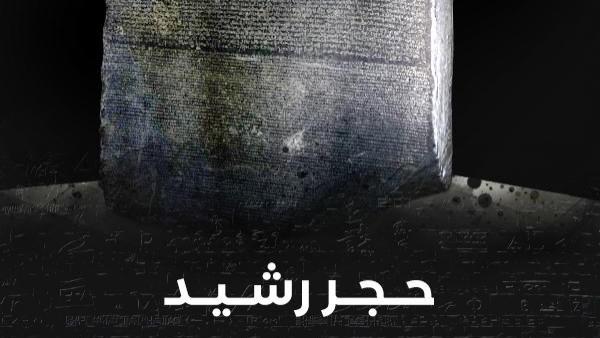

As part of its ongoing mission to preserve and revive Egyptian heritage, the Bibliotheca Alexandrina has unveiled the 50th documentary in its acclaimed series, titled:
🎬 “Rosetta Stone: Key to Egyptian Civilization”
This production goes beyond viewing the Rosetta Stone as an archaeological artifact, showcasing it instead as a living story that shaped the world’s understanding of ancient Egypt.
The film echoes Nobel laureate Naguib Mahfouz’s profound words:
✨ “Egypt came first… then history followed.”
📝 The Writing Systems on the Rosetta Stone
The documentary explores the evolution of ancient Egyptian writing through the three scripts carved into the stone:
🔹 Hieroglyphic – the sacred script
🔹 Hieratic – the script of the priests
🔹 Demotic – the people’s script
It also highlights how Coptic served as the linguistic bridge that helped scholars decode older Egyptian languages.
🗿 The Stone’s Journey… From Sais to London
The film traces the remarkable journey of the Rosetta Stone:
📍 Originated in the Temple of Sais in Gharbia
🏰 Reused as a building stone in Qaitbay Fortress in Rashid
🔍 Discovered in 1799 by French officer Pierre Bouchard
⚔️ Became the center of conflict between French and British forces
🏛️ Finally displayed in the British Museum, where it remains today
🔍 The Intellectual Battle to Decipher Egyptian Writing
The documentary highlights the scientific race to decode the inscriptions:
👤 Swedish scholar Akerblad
👤 British scientist Thomas Young
👤 French genius Jean-François Champollion – who achieved the breakthrough
Using his mastery of the Coptic language, Champollion connected phonetics to symbols, announcing his success in September 1822, forever changing humanity’s understanding of ancient Egypt.
🎥 A Modern Visual Tribute to Egyptian History
As the 50th film in the series, this documentary continues the library’s mission of presenting Egyptian heritage using modern storytelling tools, stunning visuals, and accurate historical research.