🎬 Closed-Door Meeting to Discuss the Public Performance Rights Crisis
The Egyptian entertainment industry is witnessing a new development in the ongoing debate over public performance rights, as the Syndicates of Acting Professions and Cinema Professions prepare to hold a meeting with a group of television drama producers to discuss issues related to intellectual property and creators’ rights.
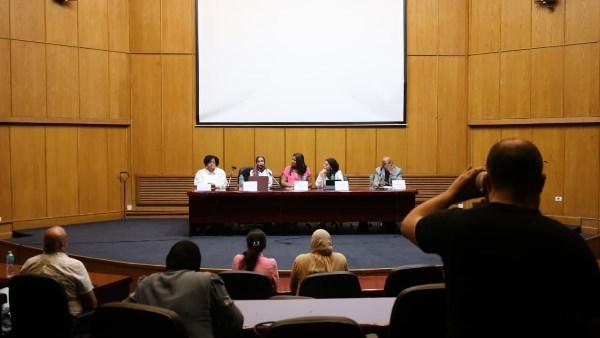
The meeting is expected to be held behind closed doors, without the presence of media representatives or journalists. This reflects the sensitivity of the issue and the parties’ desire to discuss the details directly and away from media statements.
The meeting will be chaired by actor Ashraf Zaki, Head of the Actors’ Syndicate, amid growing debate over how public performance rights should be applied, who is entitled to receive the related financial compensation, and how such payments should be collected and distributed among rights holders.
⚖️ What Are Public Performance Rights?
Public performance rights are connected to the rights granted by law to creators and performers when their works are used or made available to the public in different forms.
The issue is not limited to the initial sale or production of a work. It also raises a more complex question: What happens when a work is reused, rebroadcast, or publicly presented years after its original production?
This is where the distinction between copyright, neighboring rights, and performers’ rights becomes particularly important. The legal and financial interests of writers, directors, actors, and other creative contributors may overlap.
📌 Therefore, the current dispute is not simply about whether such rights exist. It also concerns their scope, the conditions for entitlement, contractual terms, and the mechanisms for collecting and distributing financial compensation.
📜 Egypt’s Intellectual Property Law at the Center of the Debate
The discussion is based on Egypt’s legal framework governing intellectual property rights, most notably Law No. 82 of 2002 on the Protection of Intellectual Property Rights.
Talks about activating mechanisms for collecting public performance rights have brought renewed attention to old entertainment contracts, particularly works produced many years ago that continue to be broadcast, distributed, or made available through different channels.
This raises a central question:
❓ Does an old contract contain an explicit waiver of a particular right, or does that right remain with its original holder if there is no clear contractual provision transferring or waiving it?
This is one of the most important issues requiring a case-by-case examination of each contract. The legal outcome may vary depending on the wording of the agreement, the nature of the right in question, the date on which the contract was signed, and the legislation applicable at that time.
🗣️ Ayman Bahgat Kamar Enters the Debate
Amid the controversy, screenwriter and poet Ayman Bahgat Kamar addressed producer Hisham Abdel Khaleq, head of the Cinema Industry Chamber, in a message discussing creators’ rights.
Ayman Bahgat Kamar stated that Egypt’s Intellectual Property Law contains provisions that, in his view, protect the rights of creators unless there is an explicit contractual waiver of those rights.
He also emphasized that the discussion should not be limited to new contracts. Instead, older agreements should also be examined to determine whether they contained clear waivers of the rights currently under dispute.
💬 According to the position he presented, the absence of an explicit waiver of public performance rights in certain old contracts could open the door to claims for financial compensation associated with those rights. This makes the review of historical contracts a central part of the current dispute.
🔎 Why Have Old Contracts Become the Focus of the Case?
Egyptian entertainment works do not necessarily lose their economic value once production ends.
A television series or film may remain in circulation for many years. It can be rebroadcast on television channels, added to digital platform libraries, or commercially exploited through different forms of distribution.
This makes the contracts originally signed by actors, writers, directors, and other creators particularly important.
If a contract clearly defines the rights that were transferred and specifies the scope of that transfer, the legal relationship becomes easier to interpret.
However, when contractual language is unclear, disputes may arise over which rights were transferred to the producer and which rights remained with the original rights holder.
⚖️ For this reason, the issue cannot simply be reduced to one general rule applicable to every production. Each case may require an examination of the contract, the nature of the work, the legal status of the rights holder, the type of exploitation involved, and the relevant legislation.
🎥 Producers and Creators Face a Sensitive Point of Disagreement
Producers, on the other hand, face questions concerning their potential financial obligations, particularly if the application of public performance rights involves older productions created under contractual models that differ from those used today.
From the producer’s perspective, production involves significant financial costs, along with the rights acquired under the relevant agreement.
Creators, however, argue that rights that were not clearly transferred or waived should not automatically be considered part of the rights assigned to the producer.
This is precisely why dialogue between the syndicates and producers has become important.
🤝 The closed-door meeting could provide an opportunity to develop clearer mechanisms, whether through interpreting contractual provisions, establishing practical procedures for collecting and distributing payments, or agreeing on measures that could prevent similar disputes in the future.
💰 Do the Claims Include Older Productions?
This is one of the most sensitive issues in the entire discussion.
Claims for compensation relating to older works raise questions about the periods for which rights can be calculated, how the relevant productions should be identified, how exploitation can be documented, and who has the legal right to claim the corresponding compensation.
In this context, Ayman Bahgat Kamar has argued that the existence of old contracts without explicit waivers of certain rights could support creators’ position in seeking compensation.
However, determining actual entitlement ultimately depends on examining the contracts, facts, and legal rules applicable to each individual case.
📺 Why Is This Issue Important to Egyptian Television Drama?
The significance of the dispute extends beyond disagreements between individual artists and producers because it is connected to the future of the entertainment industry itself.
Egyptian television drama has a vast archive of productions that continue to be broadcast decades after their original release. With the expansion of television networks and digital platforms, older works have acquired renewed economic value.
This makes the regulation of rights associated with the reuse and exploitation of older productions more important than ever.
✨ If a clear and fair mechanism can be established, it could help protect creators’ rights while also giving producers greater legal certainty when negotiating contracts and exploiting productions.
🧩 What Could Happen After the Meeting?
Several issues are expected to be at the center of the discussions, including:
🎬 Defining the scope of public performance rights.
📜 Reviewing old and new contract models.
⚖️ Identifying cases in which rights were explicitly waived or transferred.
💰 Establishing mechanisms for collecting and distributing financial compensation.
📺 Examining how productions that are rebroadcast or commercially reused should be handled.
🤝 Reaching a framework for understanding between producers, syndicates, and creators.
The meeting does not necessarily mean that the dispute will end immediately. However, it represents an important step toward direct dialogue between the parties involved.
🌟 Creators’ Rights Between the Law and the Entertainment Industry
At its core, the public performance rights dispute raises a question that goes beyond financial compensation:
How can a balance be achieved between protecting creators’ rights and supporting investment in the entertainment industry?
Writers, directors, actors, and other creative contributors form the essential foundation of any artistic production, while producers carry significant financial, administrative, and production responsibilities.
For this reason, the most sustainable solution does not depend on one side defeating the other. Instead, it requires clear rules, precise contracts, fair mechanisms, and practical procedures that can be consistently applied.
📝 The clearer future contracts become when defining and transferring rights, the smaller the room for disputes becomes. It also becomes easier to determine the financial compensation due to each party when a production is reused or exploited in new ways.
Conclusion
🎬 The public performance rights dispute is not simply another disagreement within Egypt’s entertainment industry. It is an issue that affects the future relationship between creators and producers, as well as the mechanisms through which artistic works are reused and commercially exploited in Egypt.
The upcoming meeting between the syndicates and producers could provide an important opportunity to establish a more organized dialogue concerning old and new contracts, creators’ rights, and mechanisms for collecting and distributing compensation.
⚖️ Ultimately, the main objective should be to achieve a balance that protects the rights of creators while preserving the ability of the Egyptian entertainment industry to produce, invest, grow, and continue developing.