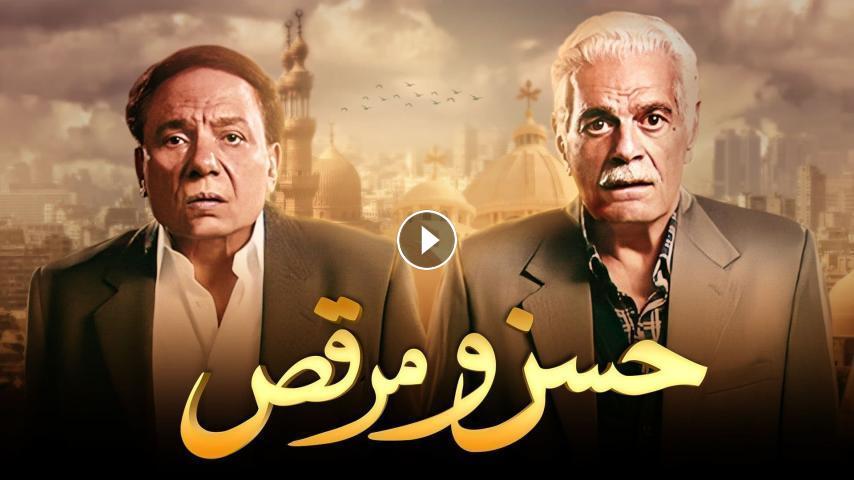

Egyptian journalist Emad El-Din Adib has revealed previously unknown details about the casting of the 2008 film “Hassan and Morcos,” explaining that late actor Mahmoud Abdel Aziz was initially considered to star opposite Adel Imam.
According to Adib, efforts were made to reconcile the two major Egyptian stars, and he managed to bring them together during the Cannes Film Festival. However, their disagreement reportedly resurfaced after the issue surrounding the television series “Raafat Al-Haggan” was brought up again.
Mahmoud Abdel Aziz Was the First Choice
Adib explained that Mahmoud Abdel Aziz was originally the first choice to share the lead with Adel Imam in “Hassan and Morcos.”
He believed that bringing the two stars together would have created a strong artistic and commercial balance, particularly because the film was built around two central characters representing different religious backgrounds.
However, the reconciliation between the two actors did not last after the discussion surrounding “Raafat Al-Haggan” reopened old disagreements.
The Raafat Al-Haggan Dispute
The character of Raafat Al-Haggan is strongly associated with Mahmoud Abdel Aziz, who famously portrayed the character in the acclaimed television series.
Adib said that revisiting the subject contributed to the renewed disagreement between Adel Imam and Mahmoud Abdel Aziz, ultimately making their collaboration in “Hassan and Morcos” impossible.
With Mahmoud Abdel Aziz no longer available for the project, the filmmakers had to search for another major star who could stand opposite Adel Imam.
Why Omar Sharif Was Chosen
Adib explained that several names were suggested after Mahmoud Abdel Aziz’s withdrawal, but he believed the film required a major star capable of matching Adel Imam’s stature.
Eventually, Adel Imam suggested international Egyptian actor Omar Sharif, considering him the right choice to create the necessary balance between the two leading characters.
The casting decision added significant weight to the project, particularly because it brought together two internationally recognized Egyptian stars.
One Phone Call Was Enough
According to Adib, convincing Omar Sharif to join the movie did not require lengthy negotiations.
He contacted Sharif by phone and invited him to the office. Sharif accepted the invitation, met Adel Imam, and the meeting reportedly took place in a warm and friendly atmosphere.
The two stars quickly agreed to work together, paving the way for one of the most notable cinematic collaborations in Egyptian film.
Adib Praises Omar Sharif’s Professionalism
Adib also praised Omar Sharif’s professionalism throughout the production of “Hassan and Morcos.”
He described Sharif as highly disciplined, punctual and well prepared, noting that he studied his character and dialogue carefully before filming.
Sharif also reportedly knew Adel Imam’s lines during their scenes, reflecting his extensive experience and commitment to his craft.
About Hassan and Morcos
Released in 2008, “Hassan and Morcos” is one of the Egyptian films that combined comedy with social themes surrounding religious coexistence and national unity.
The film starred Adel Imam and Omar Sharif, alongside Lebleba, Mohamed Emam, Sheri Adel and other actors.
Written by Youssef Maati and directed by Ramy Imam, the film explored the relationship between Muslims and Christians while addressing the dangers of religious extremism and intolerance.
The collaboration between Adel Imam and Omar Sharif was one of the film’s biggest attractions, while its social themes sparked considerable discussion following its release.
Who was originally chosen to star opposite Adel Imam?
Mahmoud Abdel Aziz was initially considered for the role.
Why did Mahmoud Abdel Aziz not appear in the film?
Emad El-Din Adib said their disagreement resurfaced after the Raafat Al-Haggan issue was discussed again.
How was Omar Sharif selected?
Adel Imam suggested Omar Sharif as a star capable of matching his stature.
When was Hassan and Morcos released?
The film was released in 2008.
Who directed Hassan and Morcos?
The film was directed by Ramy Imam and written by Youssef Maati.