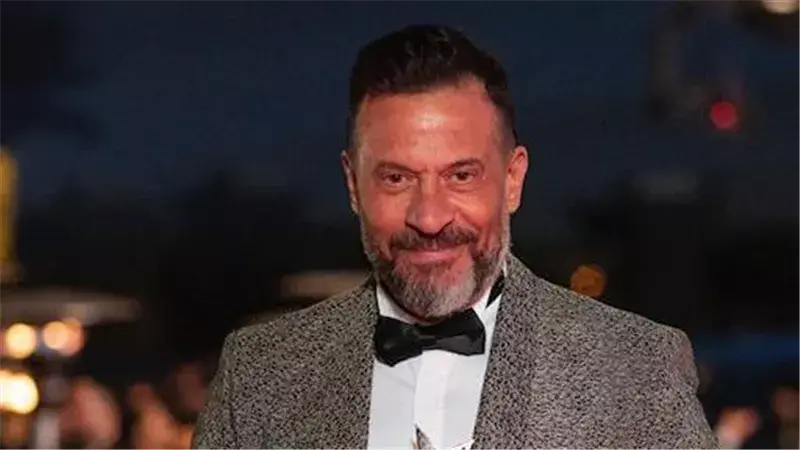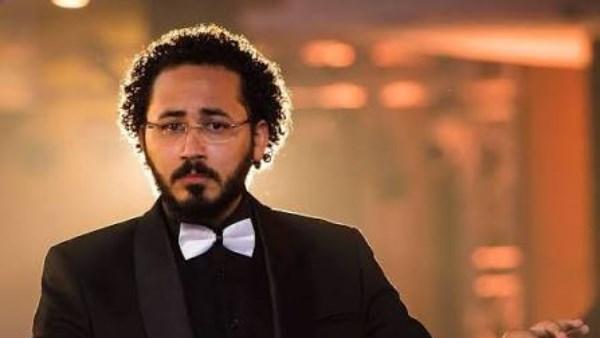

🎼 George Kolta on His Musical Collaboration With Farrah El Dibany
Music can sometimes bring together styles that appear completely different at first glance.
That idea lies at the heart of the artistic collaboration between Egyptian conductor and arranger George Kolta and internationally recognized mezzo-soprano Farrah El Dibany.
🎶 Kolta recently discussed their collaboration, explaining that working with El Dibany gives him continuous opportunities to experiment with new musical ideas and develop arrangements that move beyond traditional boundaries.
Their projects combine elements of opera, Eastern music, pop and jazz, creating a musical space where different traditions can interact without losing their individual identities.
🎤 Why Working With Farrah El Dibany Is Different
For Kolta, working with Farrah El Dibany provides an opportunity to explore new possibilities in orchestration.
El Dibany comes from an international opera background, while Kolta’s musical project focuses heavily on bringing Egyptian and Arabic musical traditions into modern orchestral settings.
✨ Their collaboration therefore goes beyond simply placing opera alongside Eastern music.
Instead, the objective is to find a genuine musical connection between the two worlds.
This includes elements of opera, Arabic music, pop and jazz, allowing the final arrangement to communicate with audiences who may come from very different musical backgrounds.
🎻 A Collaboration That Began More Than Five Years Ago
The artistic relationship between Kolta and El Dibany began more than five years ago, during a concert.
According to Kolta, their first collaboration revealed a strong level of musical understanding, particularly regarding how Egyptian heritage could be integrated with European musical approaches.
🎵 Over time, that initial collaboration developed into an ongoing artistic relationship in which every new project became an opportunity to experiment with different arrangements and musical ideas.
Such collaborations require a high degree of flexibility, especially when an operatic voice is being placed within arrangements inspired by Arabic and contemporary music.
🇪🇬 Presenting Egyptian Music With a Global Perspective
Kolta’s musical vision goes beyond rearranging individual songs.
His broader project focuses on presenting Egyptian and Arabic music through orchestral arrangements with an international perspective, while maintaining the character of the original musical identity.
🎼 This approach has appeared throughout his work with different artists and through performances led by his Syncop Orchestra.
The idea is not to replace the identity of Arabic music, but to use modern orchestration to introduce that identity to wider audiences.
🎧 Breaking the Musical Barriers
One of the concepts highlighted by Kolta is what he describes as “musical class divisions” between opera and classical music audiences and listeners who prefer Arabic songs, pop and other contemporary genres.
His project attempts to reduce that distance by creating arrangements that include familiar elements while introducing listeners to new musical colors.
❤️ A listener who normally prefers Arabic music does not necessarily need a classical background to connect with the experience.
At the same time, classical music audiences can discover Eastern melodies, rhythms and instruments within the orchestral structure.
This shared space represents an important part of Kolta’s artistic philosophy.
🎻 Syncop Orchestra.. The Musical Laboratory
Kolta’s vision is closely connected to Syncop Orchestra, a project designed to bring different orchestral traditions together.
The orchestra combines elements of Western classical music, the traditional Eastern ensemble and the modern Western band.
🎹 This structure allows arrangements to move between different instrumental languages while maintaining an organized musical framework.
Kolta has also led concerts for prominent Arab artists including Ragheb Alama, Carole Samaha, Faia Younan and Souad Massi, among others.
His work with Syncop has repeatedly explored the meeting point between Western orchestration and Arabic musical traditions.
🌍 His Musical Education in Egypt, London and Germany
Kolta’s approach is also connected to his academic background.
He studied conducting, composition and orchestral arrangement in Egypt before continuing his musical studies in London and Germany.
During this journey, he faced a central artistic question: how could classical and symphonic music be presented to Arab audiences whose musical tastes are strongly connected to Eastern traditions?
🎯 His response was to explore orchestral presentations of Egyptian and Arabic music while searching for a balance between identity and innovation.
✨ Breaking the Familiar Pattern
The idea behind the name “Syncop” is closely associated with breaking familiar patterns through ideas that may be unconventional while remaining structured.
That philosophy is reflected in Kolta’s arrangements.
🎶 A single musical project can include orchestral instruments, Eastern instruments, contemporary rhythms and an operatic vocal performance without making the different elements feel disconnected.
The result is a musical language that allows traditions to meet rather than compete.
🎭 Farrah El Dibany and a Global Egyptian Voice
Farrah El Dibany represents an important part of this experiment.
As an Egyptian mezzo-soprano with an international opera career, her presence allows her powerful vocal technique to be explored in settings beyond traditional opera performances.
🎤 This also creates a demanding role for the conductor and arranger, who must give the operatic voice enough space while building connections with Eastern and Western instrumentation.
🎶 She Arts Brings the Team Together Again
Kolta’s latest comments come as he prepares to participate for the second consecutive year in the She Arts Festival.
He is scheduled to lead Syncop Orchestra during the opening concert of the festival’s sixth edition in October 2026, in a performance featuring Farrah El Dibany and Nesma Mahgoub.
🌟 The concert is expected to present another example of the interaction between Eastern singing and operatic vocals within an orchestral setting.
The festival itself focuses on women in the arts and brings together artists from Egypt and different parts of the world.
🔥 More Than a Musical Fusion
The collaboration between Kolta and El Dibany raises a broader artistic question: Can music reach new audiences without losing its roots?
🎼 Kolta’s approach answers that question through orchestration and musical reconstruction.
An Egyptian melody can retain its identity while gaining a broader orchestral dimension, an operatic voice can add a new layer of expression, and jazz and pop elements can help connect the experience with contemporary listeners.
🌟 A Musical Project Looking Toward New Audiences
As the collaboration between George Kolta and Farrah El Dibany continues, the possibilities remain wide.
🎻 Opera.
🥁 Eastern music.
🎷 Jazz.
🎹 Pop.
🇪🇬 Egyptian and Arab musical heritage.
Together, these elements create a platform for rethinking how Arabic music can be presented through modern orchestration.
Ultimately, Kolta’s vision remains centered on bringing different audiences closer together and presenting Egyptian and Arabic music in a form capable of reaching listeners both locally and internationally.