
🎹 Hisham Kharma and the search for a new musical language
Hisham Kharma’s journey is more than the story of a pianist and composer. It is the story of an artist who spent years experimenting with different musical influences before developing a sound of his own.
Born in Cairo, Kharma spent much of his life in Miami, Dubai and Hamburg. Exposure to different cultures had a major impact on his artistic personality, helping shape a musical style that combines electronic, ethnic, lounge, funk and classical influences.
His central idea was simple but ambitious: bring different musical worlds together and create something accessible to audiences from different generations.
🌍 Arabesque and the Yanni connection
One of the defining moments in Kharma’s career came through Arabesque, a Sony Music project involving musicians from Egypt, Turkey and Greece, including international star Yanni.
The collaboration became an important turning point. Kharma had previously attended one of Yanni’s concerts and was impressed by the international audience and the ability of instrumental music to communicate without language barriers.
The Arabesque project helped reinforce his decision to pursue music professionally and develop a sound capable of reaching beyond local boundaries.
✨ Al Yaqeen: a defining album
Released in 2016, Al Yaqeen became one of the most important projects in Kharma’s career.
The album featured 13 instrumental tracks and required years of preparation. Its musical concept focused on combining electronic music with orchestral, classical and Eastern elements.
For Kharma, the album represented more than a collection of compositions. It was designed as music that could be experienced live, performed with musicians and an orchestra, and transformed into a visual and emotional stage experience.
The promotional campaign also presented “faith” as a personal human concept, using public figures from different fields to express different interpretations of the word.
🎧 Kun and the continuation of the experiment
In 2019, Kharma released Kun, continuing his exploration of modern instrumental music.
Rather than repeating the formula of Al Yaqeen, the album reflected his ongoing interest in developing a contemporary sound while preserving emotional depth.
His work demonstrates a clear interest in atmosphere, rhythm, sound design and the relationship between electronic production and live instrumentation.
🎬 Soundtracks and visual storytelling
Kharma’s work also expanded into film and television.
In 2020, he composed the soundtrack for the Egyptian science-fiction series The End, and also worked on the soundtrack for the film Mako.
These projects allowed him to use his musical vocabulary in a different context, where sound becomes part of the storytelling and helps establish the emotional atmosphere of a scene.
🎼 Reimagining Egyptian musical heritage
Another notable part of Kharma’s career has been his relationship with Egyptian musical heritage.
His reinterpretation of the music of Shams El-Zanaty, originally associated with composer Hany Shenouda, demonstrated how familiar Egyptian melodies could be approached through modern production techniques.
Kharma has spoken about the importance of Shenouda’s encouragement and the impact of his appreciation of the remix on Kharma’s musical journey.
This approach reflects one of the strongest characteristics of his work: respecting the musical past while giving it a contemporary form.
🎻 Live concerts and the Cairo Opera House
Live performance remains a major part of Kharma’s artistic identity.
His concerts combine his original compositions with orchestral arrangements and a mixture of Eastern and Western instruments. His repertoire has included works such as “Andalus,” “First Voyage,” “Valley of the Kings,” “Amal,” “Ufuq,” “El Hekaya,” “Khal Khal,” “Helm,” “Halleq Ma’ei,” “Mawlid El Abd,” “El Bedaya” and “El Nehaya,” among others.
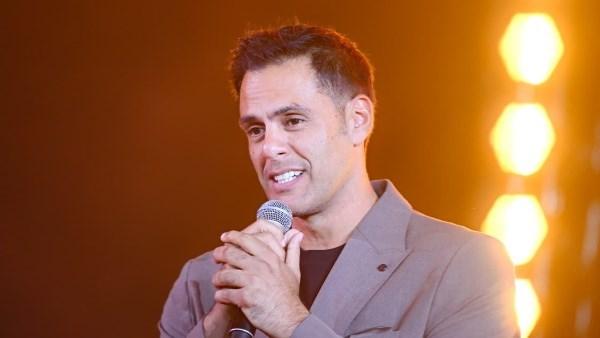
In April 2026, Kharma returned to the Cairo Opera House’s Main Hall for a major concert accompanied by an orchestra and joined by several performers. The program showcased a selection of his original compositions and highlighted his contemporary fusion approach.
❤️ What makes Hisham Kharma different?
Kharma’s distinctive quality lies in his ability to create a bridge between familiar musical traditions and modern production.
His music is not limited to piano, electronics or orchestral arrangements alone. Instead, he combines these elements to create an atmosphere that can appeal to younger listeners while remaining accessible to audiences who appreciate classical and live instrumentation.
🎶 His music is therefore less about a single genre and more about creating an emotional journey.
🌟 A musical journey that continues
From First Voyage and Arabesque to Al Yaqeen, Kun, soundtracks and major concerts, Hisham Kharma has continued to develop an identity based on experimentation, fusion and emotional storytelling.
His career demonstrates how modern technology can coexist with traditional instruments without sacrificing musical character.