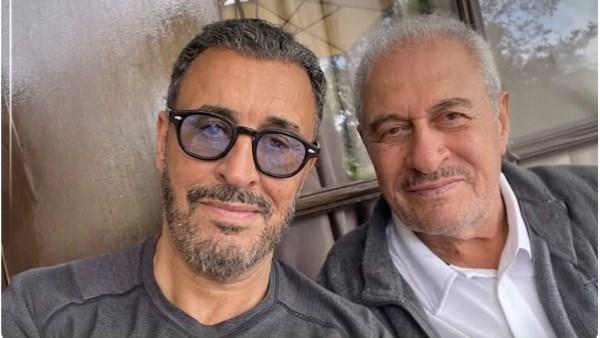

✨ Hussein Jabbar Explains Why He Deleted the Post
Hussein Jabbar Ibrahim, the brother of Iraqi singer Kadim Al Sahir, has clarified why he deleted a previous social media post discussing his brother’s absence from Iraq.
Jabbar said the decision came after realizing that parts of the audience had interpreted his words differently from what he intended. According to his clarification, some reactions introduced political and sectarian interpretations that were not part of the original message.
📝 He explained that the discussion had gradually moved away from the central idea of his post and turned into a broader argument that no longer served the purpose for which he had written it.
For that reason, he decided that deleting the post was the most appropriate step.
Jabbar also stressed that deleting the post did not mean abandoning his love for Iraq or his hope that his brother would return. Rather, he said he did not want Kadim Al Sahir’s name or his own words to be used in political or sectarian disputes.
🇮🇶 What Did Kadim Al Sahir’s Brother Say About His Return?
Before deleting the post, Hussein Jabbar had reopened the long-running discussion about Kadim Al Sahir’s departure from Iraq and the reasons behind his continued absence.
Reports about the deleted post said Jabbar questioned whether the commonly circulated explanation linking the singer’s departure in 1998 primarily to pressure associated with Uday Hussein was sufficient to explain why Al Sahir did not return after the political changes that followed in 2003.
The question shifted the discussion from a single historical event toward a broader examination of the circumstances surrounding an artist’s decision to leave and remain abroad.
🎼 The Cultural Environment at the Center of the Discussion
A major part of Jabbar’s argument focused on the cultural and professional environment available to artists.
He discussed challenges involving cultural infrastructure, artistic institutions and the broader conditions needed for musicians and performers to continue their work.
🎭 From his perspective, returning to a country is not simply a matter of physically going back. It also involves the environment awaiting the artist and whether that environment provides stability, safety and the ability to continue a professional artistic career.
Jabbar also referred to social and sectarian tensions and to religious rhetoric that he characterized as hostile toward music and the arts. These points represent his stated views and concerns, rather than an independent assessment in this article.
🕰️ Why Does 1998 Remain Important?
Kadim Al Sahir’s departure from Iraq in 1998 has remained part of the public conversation surrounding his career.
Over the years, the singer established a major career across the Arab world while living outside Iraq, becoming one of the region’s most recognizable voices.
The latest discussion, however, approached his absence from a wider perspective.
Rather than focusing on one explanation, Jabbar described a combination of artistic, cultural, social and security-related considerations that he believes are relevant when discussing the possibility of a return.
⚠️ It is important to distinguish between established historical accounts and Jabbar’s own interpretation of the circumstances. His deleted post presented his perspective, while his subsequent statement focused on why he no longer wanted the discussion to continue in a political or sectarian direction.
🏛️ Rule of Law and Respect for the Arts
One of the most notable themes in Jabbar’s comments was the relationship between a possible return and the presence of state authority, rule of law and a cultural environment that respects the arts.
According to his position, returning home should involve more than simply returning geographically. It should also mean having conditions that allow an artist to work, perform and continue developing professionally.
✨ His comments therefore expanded the discussion beyond Kadim Al Sahir personally and toward a broader question about the relationship between Iraqi artists and their home country.
The issue also touches on the role of cultural institutions in encouraging artists and intellectuals living abroad to reconnect with Iraq.
🎤 Kadim Al Sahir and His Iraqi Identity
The renewed discussion comes against the backdrop of Kadim Al Sahir’s long-standing position in Arab music.
Throughout his career, the singer has performed songs in Iraqi Arabic, Modern Standard Arabic and other Arab musical styles, building an audience across the region.
His connection to Iraq has remained an important part of his public identity, even during years spent outside the country.
For many listeners, therefore, the question of his return represents more than a change of residence. It also touches on the relationship between an internationally recognized Iraqi artist and his homeland.
💬 Why Did the Post Generate So Much Debate?
The controversy surrounding the post can partly be understood through the different dimensions of the subject.
Kadim Al Sahir’s return involves personal and family considerations, but it also intersects with artistic, cultural and historical questions.
Hussein Jabbar’s latest clarification attempted to draw a line between those issues and political or sectarian debates.
📌 By deleting the original post, he said he wanted to prevent his words from continuing to circulate in contexts that did not reflect his intention.
❤️ Deleting the Post Does Not Mean Abandoning the Hope of Return
In his clarification, Jabbar emphasized that deleting the post should not be interpreted as abandoning his hope that his brother will return to Iraq.
Instead, he presented the decision as an attempt to prevent Kadim Al Sahir’s name from becoming part of disputes unrelated to his artistic career.
🎶 The question of whether the “Caesar of Arabic Song” will return to Iraq therefore remains open, while his brother has made clear that, from his perspective, such a return should take place under conditions that provide artists with security, stability and the ability to practice their profession.