
The Egyptian crime drama “Game of Hell” has generated significant discussion following the release of its three episodes, particularly because of its true-crime inspiration and its exploration of the dangers of manipulation, digital spaces and psychological exploitation. 🎬🔥
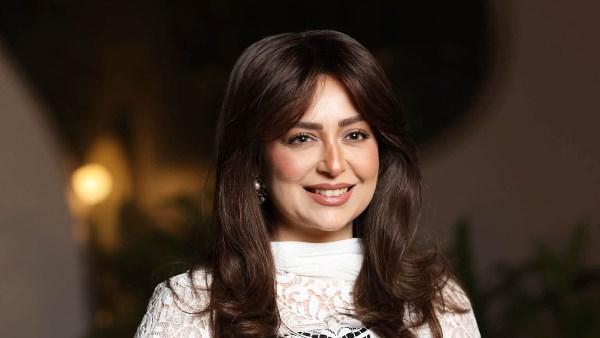
Amid the debate surrounding the series, prominent Egyptian critic Magda Khairallah offered a different perspective, defending the artistic approach used by the filmmakers.
She argued that the strength of the series does not come from directly showing violence, but from creating tension through cinematic language and allowing viewers’ imagination to complete the picture.
🎭 Magda Khairallah Responds to the Controversy
Khairallah addressed the discussion surrounding “Game of Hell,” focusing on the difference between criticizing people who exploit religious appearances to manipulate others and mocking genuine religious commitment.
She referred to the classic Egyptian film “Sidewalk Number Five” as an example of how Egyptian cinema previously portrayed characters who used a respectable religious appearance to hide criminal behavior.
For Khairallah, presenting such a character is not necessarily an attack on religion itself.
Instead, it can be a dramatic warning against those who use religious appearances as a tool for deception.
🧠 “Game of Hell” and the Dark Side of the Digital World
“Game of Hell” combines crime, psychological drama, mystery and the digital world.
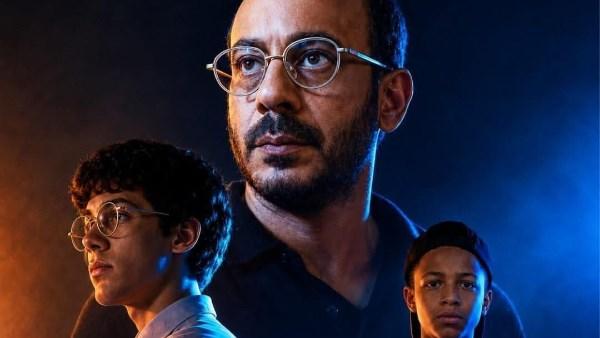
The story follows Sheikh Alaa, played by Mohamed Farrag, and Selim, portrayed by young actor Omar Raziq.
Their paths intersect through the internet, but what initially appears to exist within a virtual environment eventually develops into a real-life tragedy.
The story explores how digital platforms can be exploited to manipulate people and target their weaknesses.
The technology itself is not necessarily the source of the danger.
The real danger comes from the people using it and the intentions behind their actions. 💻⚠️
🔥 Praise for Mohamed Farrag and Omar Raziq
Khairallah particularly praised the confrontation between Mohamed Farrag and Omar Raziq, describing it as one of the strongest moments of the story.
The scene gains its power from the psychological transformation of the characters and the realization that the events have gone far beyond what they initially expected.
Rather than presenting a conventional physical confrontation, the sequence works as a psychological clash.
The characters are forced to confront the consequences of manipulation, temptation and their own decisions.
🎬 Mohamed Farrag’s Psychological Performance
Farrag delivers a particularly challenging performance as Sheikh Alaa.
The role relies heavily on psychological tension and internal instability rather than straightforward physical action.
Farrag previously explained that he worked closely with director Islam Khairy and writer Naglaa El Hadidy while developing the character.
Their preparation focused on his appearance, speech, movement and interactions with other characters, as well as his psychological and mental state.
This type of performance depends heavily on small details.
A look, pause, change in tone or movement can communicate something that dialogue does not.
👦 Omar Raziq at the Center of the Game
Omar Raziq plays Selim, a highly intelligent teenager who becomes increasingly involved in a dangerous online game.
His character illustrates how intelligence, ambition and personal desires can be manipulated.
Raziq’s performance received attention after the release of the story, particularly for the gradual psychological transformation of his character.
His scenes with Farrag therefore feel less like a conventional confrontation and more like a battle of psychological control. 🔥
💡 Why Does Khairallah Say There Is No Direct Violence?
The central point in Khairallah’s analysis is that violence does not have to be explicitly shown to make an audience feel its presence.
Cinema has several other tools for creating fear and tension.
💡 Lighting can create anxiety.
🎥 Camera angles can suggest danger.
🎵 Music can intensify suspense.
🎭 Acting can make viewers anticipate something terrible.
🧠 And the audience’s imagination can complete the image.
Sometimes, what is not shown can be more disturbing than what is placed directly in front of the camera.
🎥 Islam Khairy’s Directorial Approach
Khairallah also praised director Islam Khairy for using visual and audio elements to create psychological tension.
The direction does not simply present events.
It attempts to create an emotional atmosphere around them.
Lighting, music, editing and camera positioning become storytelling tools, particularly in a drama built around mystery and psychological pressure.
The idea is simple: a director does not always need to show everything.
Sometimes, not showing an event can make it more powerful.
📺 “Game of Hell” and “The Full Story”
“Game of Hell” serves as the first story in “The Full Story,” an anthology built around crime stories inspired by real events.
Each story consists of three episodes and features a different cast and creative team.
The cast of “Game of Hell” includes Mohamed Farrag, Omar Raziq, Monzer Mehran, Karima Mansour and Yasser Ezzat.
Naglaa El Hadidy wrote the story, Islam Khairy directed it, and Magdy El Hawary produced it.
The three episodes were released together on Shahid, generating considerable discussion across social media. 📱🔥
⚖️ Violence, Suggestion and Modern Drama
Khairallah’s comments raise a broader question about crime drama.
Does a production need to show every violent detail to create an emotional impact?
Or can suggestion be more powerful?
“Game of Hell” appears to choose the second approach.
Instead of relying entirely on graphic imagery, it uses psychological tension, performances, music, lighting and camera work while leaving room for the audience to imagine what the camera does not show.
This creates a different kind of viewing experience in which the audience becomes part of the storytelling process.
📱 Social Media Adds Another Layer
Since its release, “Game of Hell” has generated conversations online about its characters, performances, crime storyline and directing style.
Viewers have not simply discussed what happened.
They have also analyzed the motivations behind the characters and debated the messages presented by the series.
This type of audience engagement demonstrates how contemporary crime dramas can continue beyond the screen and become subjects of wider social discussion.
Ultimately, Magda Khairallah’s perspective emphasizes that the strength of a dramatic scene cannot always be measured by the amount of violence shown.
Sometimes, the real power lies in the ability to make the viewer imagine what happened.
✨ In “Game of Hell,” lighting, music, camera angles and performances transform what remains unseen into a complete image inside the audience’s imagination.
Continuation.