
🎭 Mohamed Sobhi: “An Insult Leaves a Wound Even After the Conflict Ends”
Excerpt
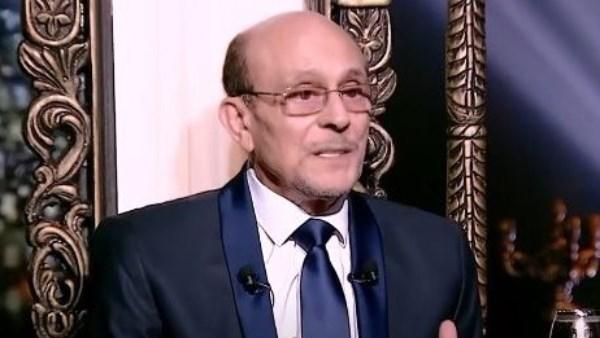
Egyptian actor Mohamed Sobhi sparked a conversation about the limits of disagreements and the lasting impact of hurtful words. He emphasized that differences in opinion are a normal part of relationships, but insults can cross a line and leave emotional wounds that may remain even after reconciliation. His remarks come shortly after receiving Egypt’s 2026 State Appreciation Award in Arts, recognizing his decades-long contribution to Egyptian theater and television.
Content
💬 Mohamed Sobhi Draws a Line Between Disagreement and Insult
Egyptian actor Mohamed Sobhi shared a thought-provoking message about the way people handle disagreements.
He emphasized that differences of opinion are inevitable, whether between friends, family members or colleagues. However, he believes there is a significant difference between having an argument and crossing the line into personal insults.
🗣️ Sobhi wrote on Facebook that people can disagree as much as they want, but insults should remain a red line because they can create a wound that does not completely heal even after the relationship returns to normal.
The short statement carried a broader social message about the power of words and their ability to affect relationships long after an argument has ended.
🩹 Why Can Insults Leave a Deeper Impact?
Disagreements can often be resolved through conversation, compromise or simply accepting that two people may have different opinions.
However, personal insults can affect a person’s dignity and self-image.
❤️🩹 Even when an apology follows, the memory of the words may remain.
This is the central idea behind Sobhi’s message: reconciliation may end the conflict, but it does not necessarily erase every emotional consequence of what was said.
🧠 A Message That Goes Beyond the Entertainment Industry
Although Sobhi is widely known for addressing social issues through theater and television, this time he delivered his message directly through social media.
📱 His statement touched on a situation experienced by many people in everyday life, where a disagreement can escalate because of anger and eventually become much harder to repair.
The message encourages people to distinguish between defending their opinions and attacking the dignity of another person.
🤝 Disagreement Does Not Have to Mean Hostility
The idea behind Sobhi’s message is that people can disagree while maintaining mutual respect.
Two people may have completely different perspectives without humiliating or belittling one another.
✨ In many relationships, the way a disagreement is handled can ultimately matter as much as the disagreement itself.
🏆 Mohamed Sobhi Receives the 2026 State Appreciation Award
Sobhi’s message comes during an important period in his artistic career.
He was named among the recipients of Egypt’s 2026 State Appreciation Award in Arts, following the announcement of the State Awards by the Supreme Council of Culture.
The award recognizes his extensive artistic career and contributions to theater and Egyptian drama.
🎭 Following the announcement, Sobhi expressed his gratitude and thanked the state, the Actors’ Syndicate and Cairo University for nominating him.
🎬 A Career Built on Theater
Mohamed Sobhi’s career extends beyond acting.
He has worked as an actor, director, writer and producer, with theater remaining one of the most important areas of his artistic identity.
After studying at the Higher Institute of Dramatic Arts, he worked in theater before establishing Studio 80 with playwright Lenin El-Ramly in 1980.
🎭 Their collaboration produced several memorable productions, including “The Joker,” “Enta Hor,” “El-Mohag,” “Takhareef” and “Weghat Nazar.”
⭐ Characters That Became Part of Popular Culture
Sobhi created numerous theatrical and television characters that remained strongly associated with his name.
Among the best known are:
🎭 Zaki El-Dabour in “The Joker”
🎭 Arafa El-Shawaf in “Weghat Nazar”
🎭 Hassan Ashour Abu Tabaq in “Le‘bet El-Set”
🎭 Ali Bey Mazhar
🎭 Wanees in “Yawmiyat Wanees”
🎭 Senbel in “Rehlat El-Million”
Many of these characters combined comedy with social observation, allowing audiences to engage with serious issues through accessible storytelling.
📺 “Yawmiyat Wanees” and Family Drama
One of Sobhi’s most recognizable television projects is “Yawmiyat Wanees.”
The series presented him as a father dealing with family life, parenting and the challenges of raising children.
👨👩👧👦 Through humor and everyday situations, the show explored a variety of family and educational issues.
His television career also included productions such as “Rehlat El-Million,” “Senbel Baad El-Million,” “Fares Bela Gawad” and “Ayesh Fel Gheebouba.”
🎭 Theater Remains Central to His Legacy
Theater has remained one of the defining elements of Sobhi’s artistic journey.
His productions frequently combined comedy with social criticism, creating stories that addressed questions related to society, family, education and human behavior.
Among his notable stage works are:
🎭 “Enteha El-Dars Ya Ghaby”
🎭 “The Joker”
🎭 “El-Mohag”
🎭 “Takhareef”
🎭 “Weghat Nazar”
🎭 “Mama America”
🎭 “Le‘bet El-Set”
🎭 “Carmen”
🎭 “Sekket El-Salama”
🎭 “Ghazal El-Banat”
🎭 “Khebetna”
🏅 A New Honor in a Long Artistic Journey
The 2026 State Appreciation Award represents another milestone in Sobhi’s decades-long career.
Rather than recognizing a single performance, the award came in recognition of a broader artistic journey and contribution to Egyptian cultural life.
🎖️ For an artist whose career has included theater, television and cinema, the honor adds another significant chapter to a long professional history.
💭 From Artistic Messages to Everyday Life
Sobhi’s comments about respect and insults also reflect a theme that has appeared repeatedly throughout his artistic career: the relationship between individuals and society.
His work has often used comedy to examine family life, education, social behavior and other issues affecting everyday people.
🎭 Theater, in particular, has remained an important platform for him because of its direct relationship with audiences.
🌟 A Short Statement With a Wider Meaning
Mohamed Sobhi’s message was brief, but its meaning extends beyond one disagreement or one relationship.
💬 Can an apology completely erase the impact of hurtful words?
Can a relationship return to exactly the same place after personal boundaries have been crossed?
These questions remain open for discussion, while Sobhi enters another important chapter of his artistic journey following his receipt of the 2026 State Appreciation Award in Arts. ✨