Mona El Shazly Exposes Fake AI Photos Claiming Mohamed Ramadan and Elderly Woman Appeared on “Maakom” 🤖📺
Mona El Shazly has put an end to speculation surrounding viral photos that allegedly showed Mohamed Ramadan and the elderly woman who attracted attention at his recent North Coast concert appearing on “Maakom Mona El Shazly.” The presenter confirmed that the images were fabricated using artificial intelligence.


Egyptian television presenter Mona El Shazly has clarified the truth behind a series of viral social media images allegedly showing her hosting singer and actor Mohamed Ramadan and the elderly woman who recently attracted widespread attention at his North Coast concert. 📺🚨
The images spread rapidly online and appeared, at first glance, to show the three figures together inside the studio of “Maakom Mona El Shazly.”
Some social media users interpreted the images as evidence that a new episode featuring Mohamed Ramadan and the elderly woman had already been recorded or was being prepared for broadcast.
However, the story was not real.
Mona El Shazly directly denied the authenticity of the images and confirmed that they had been fabricated using artificial intelligence technology. 🤖❌
📸 How Did the Story Begin?
The controversy originated from a real incident at Mohamed Ramadan’s recent North Coast concert.
An elderly woman attracted attention after appearing among the audience and attempting to get closer to the singer.
Videos of the moment quickly circulated across social media, particularly after Ramadan interacted with her and helped her move through the crowded area.
The emotional nature of the moment made the woman one of the most talked-about figures connected to the concert. ❤️👏
Soon afterward, however, the story took an unexpected turn when fake images allegedly showing her inside the “Maakom” studio began circulating.
🤖 AI-Generated Images Create a Fake TV Appearance
The images were designed to look similar to authentic television photographs.
They appeared to show Mona El Shazly alongside Mohamed Ramadan and the elderly woman inside the familiar environment of a television studio.
Because the pictures looked convincing at first glance, some users shared them without verifying their authenticity.
Mona El Shazly later clarified that the images were fabricated through artificial intelligence, putting an end to the speculation.
The incident highlights one of the biggest challenges facing social media users today: distinguishing authentic visual evidence from AI-generated content. ⚠️🤖
🗣️ Mona El Shazly Sends a Clear Message
Rather than allowing the rumors to continue, Mona El Shazly shared one of the circulating images with her audience.
The image was marked with the phrase “Don’t believe it,” while she also delivered a direct warning to followers: “Don’t believe everything you see or read.”
Her message was particularly relevant because the fake images were connected to a recognizable television program and well-known public figures.
The incident demonstrates how quickly fabricated content can become believable when it is built around a real event. 📱🔍
🎤 Why Was Mohamed Ramadan Connected to the Story?
The connection to Mohamed Ramadan came from his recent concert in the North Coast.
The large-scale show featured music, choreography and elaborate visual performances, as well as a number of unusual stage elements.
Ramadan performed several of his popular songs while interacting with a large audience.
Among the most widely discussed moments, however, was his interaction with the elderly woman.
He reportedly helped her move away from the crowded area near the stage and also intervened to help other people in congested areas.
The moments quickly became part of the online conversation surrounding the concert. ❤️
🌟 From Concert Moment to Social Media Trend
The story demonstrates how quickly a real-life moment can evolve online.
First, audiences focused on the elderly woman at the concert.
Then videos of her interaction with Mohamed Ramadan spread across social platforms.
Finally, AI-generated images created an entirely fictional television appearance involving Mona El Shazly.
This sequence shows how social media can transform a genuine moment into an expanding narrative that may eventually contain completely fabricated elements. 📱🔥
📺 Mohamed Ramadan and Mona El Shazly Have Met Before
Another reason some users may have believed the fake images is that Mohamed Ramadan has previously appeared with Mona El Shazly.
He has been a guest on “Maakom” before, including a New Year’s episode where he discussed aspects of his career and personal journey.
He also appeared on the program in 2025 while discussing his Ramadan television project.
As a result, the idea of Mohamed Ramadan returning to the program did not seem impossible to many viewers.
That familiarity may have made the fabricated images easier to believe.
⚠️ The Growing Challenge of AI Misinformation
Artificial intelligence has made it increasingly easy to create realistic images involving public figures.
A fabricated photograph can place celebrities in locations they have never visited or create meetings that never happened.
This means that visual content can no longer automatically be treated as proof.
Users should verify major claims through official accounts, verified announcements and reliable reporting before sharing them.
In the case of the alleged “Maakom” appearance, the direct clarification from Mona El Shazly provided the necessary answer. ✅
🧠 How Can Users Identify Fake Content?
When encountering a suspicious image, users should avoid immediately sharing it.
They can first look for inconsistencies in facial features, hands, text, lighting and background details.
However, visual inspection alone is not always enough because AI image-generation technology continues to improve rapidly.
The safest approach is to search for confirmation from official sources or verified accounts associated with the people involved.
🎬 The Real Story Behind the Viral Images
Following Mona El Shazly’s clarification, the situation became clear.
The alleged television appearance involving Mohamed Ramadan and the elderly woman was not real, and the viral images were fabricated using AI.
The genuine story began at Mohamed Ramadan’s North Coast concert, where the elderly woman became the focus of widespread attention after interacting with the performer.
The fake images then transformed that real moment into a fictional television scenario.
🔥 A Viral Lesson for Social Media Users
The incident is another reminder that social media moves much faster than traditional news.
A photograph can be shared thousands of times before anyone stops to question whether it is authentic.
That is why Mona El Shazly’s message remains particularly relevant: not everything seen or read online should automatically be believed. 🔍✨
As AI-generated content becomes more sophisticated, digital awareness and verification will become increasingly important for everyone.
Follow the latest entertainment news and tell us: Have AI-generated images made it harder for you to distinguish real stories from fake ones? 👇📱
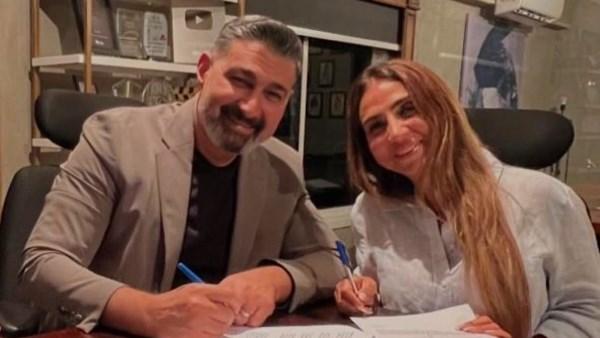
Actor Yasser Galal is preparing to compete in the Ramadan 2027 drama season with “Al-Waswas,” in a new collaboration with producer Maha Selim, as audiences await details of the story and character.

“Maser Egypt” is preparing to welcome audiences in the coming period as development and preparation work continues, with Ehab Fahmy inspecting the latest progress.

Lebanese superstar Elissa and Egyptian singer Tamer Ashour are preparing for a major joint concert on August 21 at U Arena in New Alamein as part of the 2026 Yalla Sahel summer events. The highly anticipated night will bring together two of the Arab music scene’s most popular voices for an evening filled with romance, emotion and fan-favorite hits.

TV presenter Mona El Shazly has settled the controversy surrounding circulating photos showing her with Mohamed Ramadan and the elderly woman, revealing that the images were fabricated using artificial intelligence.
