
New Talks Over Public Performance Rights 🎬
Egypt’s entertainment industry is witnessing new developments in the ongoing debate over public performance rights.
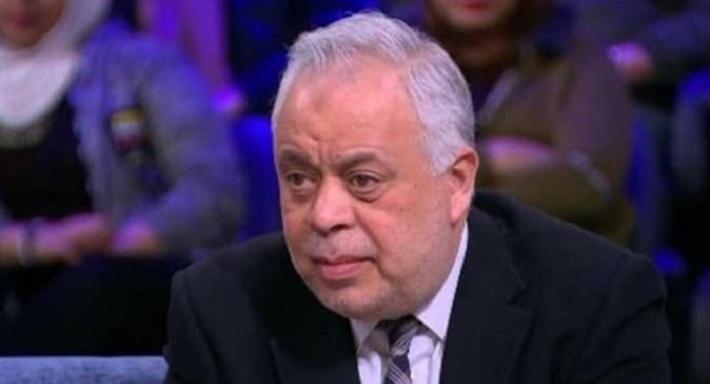
Actor and Actors’ Syndicate president Ashraf Zaki recently met with several television drama producers, alongside Filmmakers’ Syndicate president Mosaad Fouda and actor and senator Yasser Galal, to discuss possible mechanisms for implementing these rights.
The meeting is part of a broader series of discussions involving artists, writers, producers, professional syndicates, and organizations concerned with intellectual property.
The main objective is to find a practical framework that protects creators while taking into consideration the financial and production realities of Egypt’s entertainment industry.
What Are Public Performance Rights? 🤔
Public performance rights are connected to the ability of creators and performers to receive compensation when their artistic work continues to be publicly exploited under applicable intellectual property rules.
A television series, for example, may continue to generate value long after its original broadcast through reruns, television channels, digital platforms, and other forms of distribution.
Supporters of activating these rights argue that creators should benefit from the continued use of their work rather than receiving compensation only during the initial production stage.
Ashraf Zaki has previously described the right as an important guarantee that allows artists to receive financial compensation when their works are rebroadcast through television channels and different platforms.
Why Has the Issue Become Controversial? 🔥
The dispute is not simply about whether artists should receive additional compensation.
The more complicated questions involve how the system should work, who should pay, how payments should be calculated, and how existing contracts should be interpreted.
Artists and professional organizations argue that the objective is to implement rights recognized under Egyptian law.
Some producers, however, have expressed concerns that an unclear system could create additional financial burdens on an industry already facing significant production costs.
Producer Gamal El Adl, for example, called for all sides of the industry to discuss the matter together and reach a formula that protects artists without harming production.
The Role of Professional Syndicates 📝
The Actors’ Syndicate and Filmmakers’ Syndicate have played a central role in the discussions.
Yasser Galal has also been active in the issue through his work in the Egyptian Senate, while meetings have included representatives of organizations concerned with drama writers and the families of Egyptian artists.
Earlier discussions also examined the possibility of developing clearer contract models to prevent artists from unintentionally surrendering intellectual property rights.
In July 2026, the Actors’ Syndicate announced the activation of public performance rights under Egypt’s Intellectual Property Law No. 82 of 2002, describing the development as an important step toward protecting artists’ rights.
Yasser Galal Continues His Efforts 🎭
Yasser Galal has continued to participate in discussions surrounding the issue.
His position, as reflected in previous statements and meetings, has focused on establishing mechanisms that protect artists’ rights without creating unnecessary conflict with producers.
He has participated in meetings with Ashraf Zaki, Mosaad Fouda, and representatives of organizations dealing with writers’ and artists’ rights.
Ayman Bahgat Kamar Enters the Debate ✍️🔥
Screenwriter and songwriter Ayman Bahgat Kamar has also commented on the controversy.
Kamar criticized some of the proposals circulating around public performance rights, arguing that the issue requires precise understanding of intellectual property law.
He also questioned interpretations surrounding existing contracts and the rights they may or may not have transferred.
His comments added another dimension to the debate, highlighting the legal complexity surrounding contracts signed years ago.
What About Older Contracts? 📑
One of the most sensitive questions concerns older artistic contracts.
The industry is now debating how rights should be treated when a series or film was produced years ago and continues to be commercially exploited.
Questions include whether the original payment received by an artist or writer was intended to cover all future uses, or whether certain rights remain available under the law depending on the wording of the contract.
Because contracts can differ significantly from one production to another, the issue requires careful legal examination rather than a single blanket interpretation.
This is why many industry observers believe that clear rules are necessary to reduce future disputes.
Why Is the Producers’ Meeting Important? 🤝
The latest meeting is particularly important because it brings producers directly into discussions with professional syndicates and rights holders.
Any practical system will require cooperation between the major parties in the entertainment industry.
Producers finance, market, distribute, and commercialize productions, while artists, writers, directors, and other creators contribute the creative work that gives those productions their long-term value.
A successful framework therefore needs to clearly determine:
📌 Who is entitled to compensation?
📌 How should payments be calculated?
📌 Who collects the money?
📌 Who distributes it?
📌 How should older contracts be treated?
📌 How should new contracts address these rights?
Is the Dispute Moving Toward a Solution? 👀
The continued meetings suggest that the issue is moving toward more structured discussions, although several important questions remain unresolved.
Direct dialogue between producers and professional organizations could help reduce tensions and move the debate away from public statements toward practical solutions.
The key question is gradually shifting from “Who owns the right?” to “How can the right be implemented fairly and legally?”
Conclusion ❤️🎬
The public performance rights debate remains one of the most important issues facing Egypt’s entertainment industry.
With Ashraf Zaki, Mosaad Fouda, and Yasser Galal continuing discussions with producers and other industry representatives, efforts are underway to find a system that protects artists and creators while preserving the stability of film and television production.
Older contracts, payment calculations, collection mechanisms, and distribution remain among the most important issues requiring clarification.
The coming period could therefore be decisive in determining how public performance rights will ultimately be implemented across Egypt’s entertainment industry. ✨