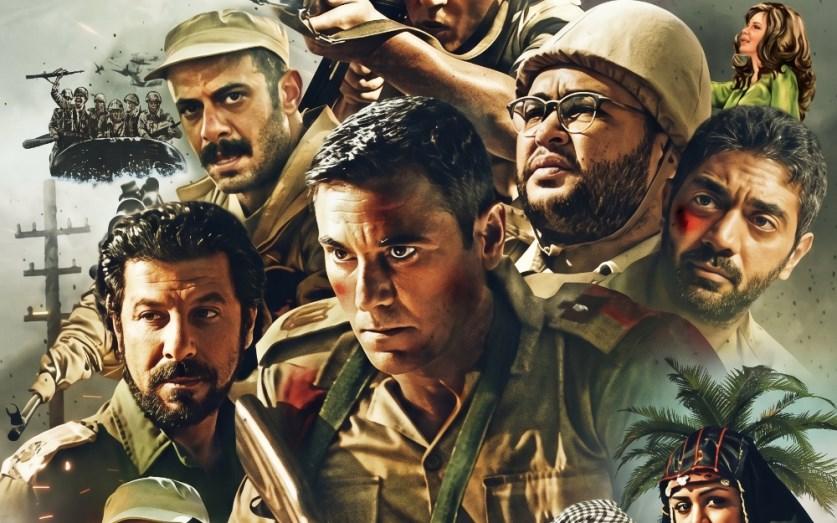

Egyptian cinema did not wait long after the 1973 October War to begin transforming the events of the conflict and the years leading up to it into stories for the screen.
These films did not follow a single approach. Some focused on the soldier and his experience at the front, while others explored the impact of war on families, relationships and society. Later productions returned to military operations and the War of Attrition from different perspectives.
The Bullet Is Still in My Pocket
The Bullet Is Still in My Pocket is one of the most prominent Egyptian films dealing with the October War. It was released on October 6, 1974, one year after the war.
The film follows Mohamed, an Egyptian soldier who experiences the aftermath of the 1967 defeat before returning to military service and taking part in the October War.
The story eventually reaches the crossing of the Suez Canal and the breaching of the Bar Lev Line.
The film starred Mahmoud Yassine, Nagwa Ibrahim, Hussein Fahmy, Youssef Shaaban, Saeed Saleh and Salah El-Saadany, combining the military events with social and human dimensions.
Sons of Silence
Sons of Silence was among the Egyptian films released in 1974 that explored the atmosphere of war and the years preceding the October victory.
The film focused on soldiers and their experiences during the War of Attrition while connecting their lives at the front with the human stories surrounding them.
These early films represented some of the first attempts to portray the war shortly after it happened, combining military scenes with stories about soldiers and society.
Until the End of Life
With Until the End of Life in 1975, Egyptian cinema moved toward a more human-centered approach to war.
Rather than focusing exclusively on military operations, the film explored how the circumstances of war affected its characters, their lives and their relationships.
The film reflected a broader tendency in Egyptian cinema during the 1970s to portray the consequences of war through personal emotions and relationships rather than relying solely on direct battle scenes.
Life Is a Moment
Life Is a Moment, released in 1978, continued to explore the atmosphere and consequences of war from a different perspective.
The story focused on journalist Neamat and her relationship with her editor-in-chief husband amid the political and social changes of the period.
This approach expanded the scope of Egyptian war cinema, allowing films to explore society, everyday life and personal relationships alongside the military conflict.
The Road to Eilat
After the direct presence of the October War gradually became less prominent on the screen, Egyptian cinema returned to military stories through productions dealing with the War of Attrition.
The Road to Eilat, released in 1994, portrayed an operation carried out by Egyptian frogmen during the War of Attrition against targets in the port of Eilat.
The film offered a different approach from the productions of the 1970s by focusing on a specific military mission and the preparation, execution and risks surrounding it.
The Passage
In 2019, The Passage returned to the period of the War of Attrition and the military events that preceded the October War.
Its production and visual approach differed from the films of the 1970s, particularly through the use of modern cinematic techniques in constructing battle sequences.
The film brought military and war cinema back into contemporary Egyptian filmmaking while presenting the historical period through a modern production style.
How Did Egyptian Cinema Portray the October War?
The history of October War films shows that Egyptian cinema presented the conflict through multiple perspectives.
Some productions focused on soldiers and their experiences at the front, while others examined families, relationships and the social consequences of war. Later films returned to military operations and the War of Attrition.
Because direct cinematic filming during the battles was not generally available, many productions made after the war relied on reconstructed scenes and recreated military events. Accounts discussing October War cinema have also noted the support available from the military establishment in producing battle-related sequences.
Over the years, October War films therefore became more than simple recreations of a military battle. They developed into stories that connected the battlefield with individuals, families and society while also revisiting military operations that preceded the victory.
What was one of the earliest Egyptian films about the October War?
The Bullet Is Still in My Pocket is among the earliest prominent films about the October War and was released on October 6, 1974.
Which films addressed the War of Attrition?
Notable examples include Sons of Silence, The Road to Eilat and The Passage, each approaching the period from a different perspective.
Did October War films focus only on battles?
No. Films such as Until the End of Life and Life Is a Moment explored the human and social consequences of war.
When was The Road to Eilat released?
The Road to Eilat was released in 1994 and focused on a military operation during the War of Attrition.
Which film returned to the War of Attrition in 2019?
The Passage, released in 2019, presented a modern cinematic treatment of the War of Attrition and its related military events.