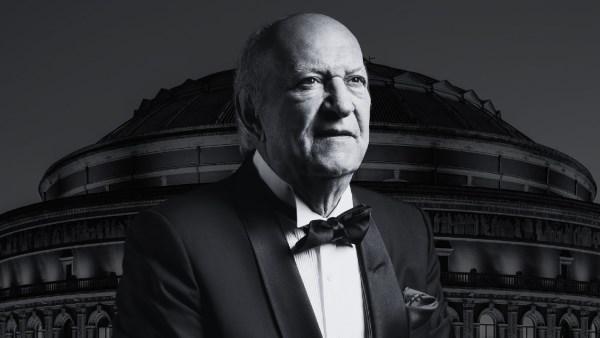

The Cairo Opera House is preparing to welcome one of Egypt's most celebrated composers, Omar Khairat, for two consecutive musical evenings on the Main Hall stage.
The concerts will take place on Sunday, October 4, and Monday, October 5, 2026, beginning at 8 PM.
The performances are part of Khairat's recurring musical meetings with his audience, where he presents a selection of compositions that have become deeply connected with the memories of generations of Egyptian and Arab listeners.
🎼 Omar Khairat Concert Dates
The two concerts are scheduled for:
📅 Sunday, October 4, 2026
📅 Monday, October 5, 2026
📍 Venue: Main Hall, Cairo Opera House
⏰ Time: 8 PM
Khairat will perform a selection of his best-known compositions accompanied by an orchestra.
Current ticket prices range from EGP 1,750 to EGP 3,000, depending on the seating category.
🎻 What Can Audiences Expect?
Omar Khairat's music has moved far beyond the world of film and television.
Many of his compositions became independent musical works that audiences continue to enjoy even outside their original dramatic context.
His concerts therefore attract both film and television fans and listeners who appreciate orchestral and contemporary classical music.
🎹 His live performances offer audiences the opportunity to experience familiar melodies in a different setting, performed by an orchestra in one of Cairo's most important cultural venues.
🌟 Omar Khairat's Musical Journey
Born in 1948, Omar Khairat developed a passion for music from an early age and eventually established a distinctive musical identity within Egypt and the Arab world.
His career has included film and television scores, concert works and original compositions.
His contribution to Egyptian and Arab musical culture has also been recognized through numerous awards and honors.
In 2023, he was selected as the Cultural Personality of the Year for the Sheikh Zayed Book Award's 17th edition, recognizing his long creative career and cultural contribution.
🎬 Faten Hamama and the Beginning of His Film Career
At the same time as his upcoming Cairo concerts, Omar Khairat has recently spoken about one of the most important turning points in his artistic journey: his collaboration with legendary Egyptian actress Faten Hamama.
During his appearance on the television program “Maakom Mona El Shazly,” Khairat recalled how Hamama accidentally heard him playing and improvising music at a gathering.
She was impressed by what she heard and wondered why his compositions were not reaching a wider audience.
📻 “Qatrat Al-Nada”.. The First Collaboration
A few days later, Faten Hamama contacted him and offered him an opportunity to compose the musical background for “Qatrat Al-Nada,” a radio project in which she performed poetry.
The collaboration became an important early step for Khairat because it provided him with an opportunity to reach a wider audience.
It also demonstrated Hamama's confidence in his musical talent at a time when he was still searching for his path in the professional music industry.
🎥 “Leilet Al-Qabd Ala Fatma”.. His First Film Score
The major breakthrough came later when Faten Hamama returned to cinema with “Leilet Al-Qabd Ala Fatma,” directed by legendary filmmaker Henry Barakat and released in 1984.
Hamama selected Omar Khairat to compose the film's score, even though it was his first experience creating a cinematic soundtrack.
For Khairat, the opportunity brought enormous happiness but also a major responsibility.
🎼 He had to create music capable of supporting the film's characters, emotions and dramatic events without overpowering the visual storytelling.
🎬 Why Khairat Visited the Film Set
Khairat explained that he made a point of visiting the filming locations so he could understand the scenes and atmosphere before developing the music.
His approach treated the soundtrack as an integral part of the story rather than simply background music.
This allowed him to create compositions that responded directly to the emotional rhythm of the film.
🎵 The Port Said Simsimiyya Inspiration
One of the most memorable details from the production came during filming in Port Said.
Khairat heard the traditional simsimiyya instrument being played and was inspired by its rhythm.
He incorporated that musical influence into the theme of “Leilet Al-Qabd Ala Fatma,” creating one of the most recognizable musical elements associated with the film.
The story illustrates Khairat's ability to draw inspiration from his surroundings and transform local musical elements into cinematic compositions.
📼 A Landmark for Film Soundtracks
The success of the film's music did not stop with the movie itself.
Khairat has explained that the soundtrack was later released on an independent cassette, becoming, according to his account, the first Arabic film soundtrack to be commercially released separately for audiences to purchase and listen to.
This represented an important moment because it showed that film music could become an independent listening experience rather than remaining tied exclusively to the screen.
🎹 From Cinema to the Concert Stage
One of the defining features of Omar Khairat's music is its ability to exist beyond its original dramatic context.
Many of his compositions have become concert pieces in their own right.
His recurring performances at the Cairo Opera House allow audiences to hear these familiar melodies performed live by an orchestra, creating an experience that differs from listening to the original recordings.
✨ This is one reason his concerts continue to attract audiences from different generations.
❤️ A Musical Journey That Continues
Omar Khairat's career cannot be reduced to one concert or one soundtrack.
His journey began with a deep passion for music, followed by “Qatrat Al-Nada,” and then the breakthrough opportunity offered by Faten Hamama through “Leilet Al-Qabd Ala Fatma.”
From there, he developed a long career that established him as one of the most recognizable composers in Egyptian and Arab music.
🎼 Now, decades after those early beginnings, Khairat returns to the Cairo Opera House Main Hall on October 4 and 5, 2026, meeting an audience that has grown alongside his music.
🎹 From “Qatrat Al-Nada” to “Leilet Al-Qabd Ala Fatma,” and from the cassette era to the modern concert stage, Omar Khairat's musical journey continues to create new memories for his audience.