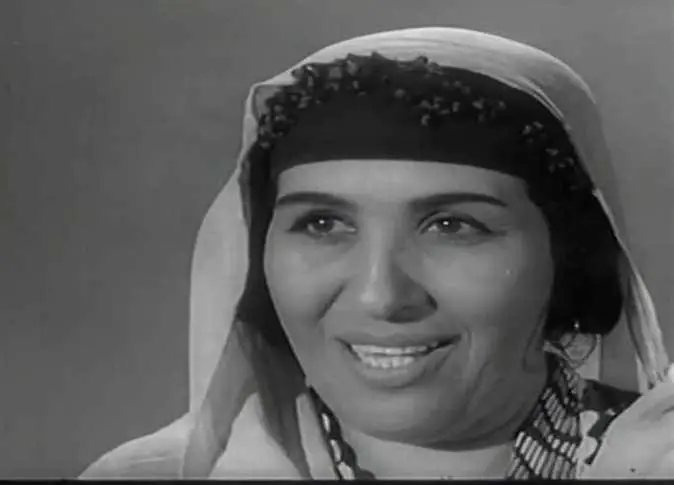

🎬 Amal Zayed and the Legacy of “Amina”
Today marks the death anniversary of actress Amal Zayed, one of the performers whose name became closely associated with the image of the Egyptian mother in the golden era of black-and-white cinema.
Although she appeared in different productions throughout her career, her portrayal of “Amina” in Naguib Mahfouz’s Cairo Trilogy remained the defining role of her artistic legacy.
Zayed played the character alongside legendary actor Yehia Shahin, who portrayed “Sayed,” creating one of the most recognizable cinematic pairings in Egyptian film history.
Her performance presented a wife and mother shaped by the social expectations of her time, giving the character an emotional presence that allowed audiences to connect with her beyond the boundaries of the story.
🎞️ The Beginning of Amal Zayed’s Career
Amal Zayed was born on September 27, 1910, and began her artistic career at the age of 29, embarking on a journey that would take her through different stages of Egyptian cinema and performing arts.
Among her early films were “Apple Seller” and “Dananir,” in which she appeared with legendary singer Umm Kulthum.
Zayed also joined the National Theatre Troupe, gaining additional experience through another important branch of Egypt’s performing arts.
These early years helped establish her as an actress capable of moving through different artistic experiences before she eventually found the role that would define her place in the public memory.
⏳ A 15-Year Absence from Cinema
Amal Zayed experienced a period away from cinema that lasted around 15 years, before returning to the screen in the film “For the Sake of My Love” with singer and actor Farid Al Atrash.
Her return marked the beginning of another important phase in her career, eventually leading to the opportunity that would transform her place in the history of Egyptian cinema.
Director Hassan El-Imam selected her to portray “Amina,” giving her the chance to bring one of Naguib Mahfouz’s best-known female characters to the screen.
That opportunity opened the door to one of the most memorable performances of her career.
⭐ Hassan El-Imam and the Role of “Amina”
Hassan El-Imam’s decision to cast Amal Zayed as “Amina” became a major turning point in her artistic journey.
The role was more than simply that of a wife and mother. Amina represented a particular social and family model from Egyptian society during the period depicted in the story.
Zayed portrayed her as a quiet and obedient wife who remained committed to her family despite the harshness and authority of “Sayed” inside the household.
Her restrained performance helped make the character emotionally believable, allowing audiences to see Amina not merely as a fictional figure, but as a recognizable human presence.
🎥 “Palace Walk” and the Beginning of an Iconic Character
Amal Zayed first appeared as “Amina” in “Palace Walk” in 1964, bringing the character from Naguib Mahfouz’s literary world to Egyptian cinema.
The role gradually became one of the most deeply rooted characters in Egyptian film history, particularly through its connection with “Sayed” and the family dynamics at the center of the Cairo Trilogy.
Zayed’s performance gave the character a sense of realism that made her memorable to generations of viewers.
❤️ Amal Zayed and the Image of the Egyptian Mother
Amal Zayed became strongly associated with the image of the Egyptian mother, combining tenderness, patience and quiet strength in her performance.
The success of “Amina” did not depend only on dialogue. Zayed’s facial expressions, tone of voice and restrained acting style all contributed to creating a complete portrait of a woman living within a household dominated by a powerful personality.
That is why “Amina” remained inseparable from Amal Zayed’s name long after the original films were released.
✨ A Legacy That Outlived the Black-and-White Era
Amal Zayed’s career remains an example of how an actor can leave a lasting impact through a relatively small number of defining moments.
She began her career with different artistic experiences, worked with the National Theatre Troupe, stepped away from cinema for a long period and then returned to deliver one of the most memorable performances in Egyptian screen history.
Her portrayal of “Amina” in Naguib Mahfouz’s Cairo Trilogy became a major part of her artistic legacy and ensured that her name remained connected with one of the most recognizable representations of the Egyptian mother.
On the anniversary of her passing, Amal Zayed is remembered not simply as the actress who played “Amina,” but as a performer who transformed a seemingly simple character into a lasting human portrait that continues to live in the memory of Egyptian cinema audiences.
What do you remember most about Amal Zayed: her iconic role as “Amina” or her earlier work in Egyptian cinema and theater? 🎬💬