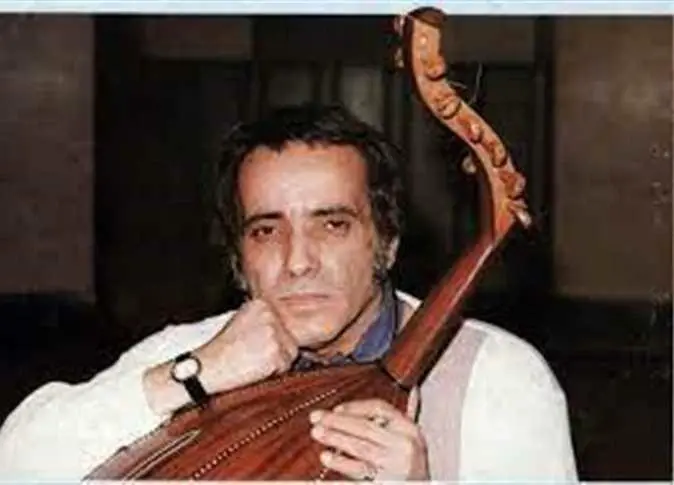

Baligh Hamdy.. A Name That Remains in Arab Music History
October 7 marks the birthday of the late Egyptian composer Baligh Hamdy, who was born in 1931 and left behind a remarkable musical legacy that continues to hold an important place in the history of Egyptian and Arab music.
Throughout his career, Baligh Hamdy developed a distinctive approach to composition, combining simplicity, emotional depth and versatility. This allowed him to connect with audiences while working successfully with singers from different musical backgrounds.
His legacy was never tied to a single song or singer. Instead, his melodies became closely associated with many of the Arab world’s leading voices, making him one of the composers who helped shape the sound of 20th-century Arabic music. 🎼✨
From the Oud in Childhood to the Study of Music
Born Baligh Abdel Hamid Hamdy Morsi on October 7, 1931, he later became widely known as Baligh Hamdy.
His passion for music began at an early age. He learned to play the oud when he was just nine years old, as his natural talent gradually developed from a childhood passion into a serious artistic pursuit.
Alongside his education at Shubra Secondary School, he pursued the study of music and joined Abdel Hafiz Imam’s School of Oriental Music, working to develop his understanding of musical traditions and techniques.
This early period provided an important foundation for his later career, particularly as he combined formal study with practical experience and a continuous interest in different forms of singing and music.
The “King of Melodies” and His Distinctive Style
Over the years, Baligh Hamdy became one of Egypt’s leading composers, with his name becoming closely associated with melodies that left a lasting impression on audiences.
His compositions were known for their ability to reach listeners without sacrificing their artistic character. He also possessed a remarkable ability to create melodies suited to the individual voice he was working with, allowing him to collaborate with a wide range of leading singers.
His artistic stature earned him several nicknames, including “Al-Bulbul,” “Ibn Al-Nile” and “King of Melodies,” reflecting the position he achieved in the world of Arabic composition.
Melodies That United the Greatest Singers
One of the defining features of Baligh Hamdy’s career was his work with some of the biggest names in Arabic singing, creating melodies that became an important part of their artistic legacies.
Working with such a wide range of singers was no simple task. Every singer had a distinct personality, style and vocal ability. Yet Hamdy was able to approach each voice differently and create music that reflected the performer’s individual character.
As a result, he became more than a composer providing songs for singers. He was an important creative partner in the making of musical experiences that remained deeply connected to the audience’s memory.
A Composer Whose Influence Crossed Generations
Baligh Hamdy’s influence did not end with the period in which he lived and created his music. His melodies continued to be heard and rediscovered by generations that followed.
Part of the strength of his work lies in his ability to create music that reflected its own era while retaining qualities that allow it to remain meaningful and enjoyable decades later.
For this reason, any discussion of the history of Egyptian music would be incomplete without examining Baligh Hamdy’s contribution and the role his melodies played in shaping an important part of Arab musical memory.
Remembering the “King of Melodies”
On his birthday, Baligh Hamdy’s name returns to the spotlight as one of the composers whose talent went beyond creating successful songs. He left a lasting artistic mark on the history of Arabic music.
From a child who fell in love with the oud at the age of nine to a composer whose name became associated with some of the greatest singers of his era, Baligh Hamdy’s journey remains one of the most remarkable stories in Egyptian music.
Decades after his rise to prominence, his melodies continue to evoke memories and take listeners back to a distinctive era in the history of Arabic song. 🎶❤️
Which Baligh Hamdy melody remains closest to your heart? And which singer do you think had one of his most memorable musical collaborations with him?