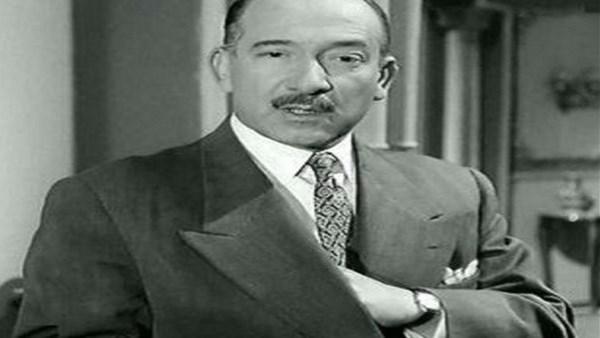

Today marks the death anniversary of Ahmed Allam, who left a distinctive mark on the history of Egyptian art through a long career that included a number of theatrical and cinematic roles that established his name among the leading artists of his generation. His career was not limited to acting, as he also explored directing and cultural work, making him one of the artists with a diverse professional experience.
Ahmed Allam was born in Sandabis, Qalyubia’s Qanater El Khayreya district, where his father served as the local mayor. He began his professional life as an employee at the Ministry of Justice, before eventually moving toward the arts. His artistic career began with Abdel Rahman Roshdy’s troupe in 1923, marking the beginning of a long journey in theater and the arts.
⭐ Ahmed Allam’s Beginnings in Theater
Ahmed Allam’s early artistic career was closely connected to theater, which was one of the most important artistic platforms of that period. He did not limit himself to appearing on stage as an actor, but also worked as a director for theatrical groups in secondary schools.
During this experience, he worked with several students who later became recognized figures in the Egyptian artistic community. Among his students was Fakher Fakher, the father of actress Hala Fakher, reflecting the lasting influence of his artistic and educational experience on later generations.
🎭 His Most Notable Theatrical Roles
Ahmed Allam portrayed a number of prominent characters on stage, demonstrating his ability to handle diverse roles as well as historical and literary figures.
Among his most famous theatrical roles were “Majnoun Layla,” “Mark Antony,” “Shajarat Al-Durr,” “Antarah ibn Shaddad,” and “Shahryar.” These characters required a strong stage presence and considerable acting ability.
At that time, theater depended heavily on an actor’s ability to communicate the character directly to the audience through performance, presence, movement, and expression. This environment helped Ahmed Allam establish his position among the leading performers of his era.
📢 His Experience in Arts Journalism
Ahmed Allam’s interest in the arts extended beyond acting and directing. He also entered the cultural field when he launched an artistic magazine in 1927.
Although the magazine did not continue for a long period, the experience reflected his broader interest in the artistic scene and his desire to contribute to cultural life beyond his work on stage.
🕊️ Ahmed Allam’s Story of Losing His Sight
One of the most difficult chapters associated with Ahmed Allam’s biography was the loss of his sight, an ordeal that represented a major challenge in his life, particularly because he had spent many years in an artistic profession that depended heavily on performing before audiences and using movement and expression to portray characters.
Despite this hardship, Ahmed Allam’s name remained present in the memory of Egyptian art because of the work he had delivered throughout his career and the artistic experiences he left behind.
🎬 His Final Theatrical Work
Ahmed Allam continued working in theater for many years, and one of his final theatrical productions was “Demou’ Iblis” in 1959. The play came during an advanced stage of his career, which had witnessed numerous artistic milestones.
Looking back at his journey, Ahmed Allam was more than simply an actor on the theatrical stage. He was an artist who worked in acting, directing, and cultural activities, building a career that spanned different stages of Egyptian artistic history.
Ahmed Allam’s legacy remains present through his theatrical roles and his long artistic journey, which reflects an important chapter in the history of Egyptian theater at a time when the stage was one of the most important platforms for creating and establishing stars. ✨