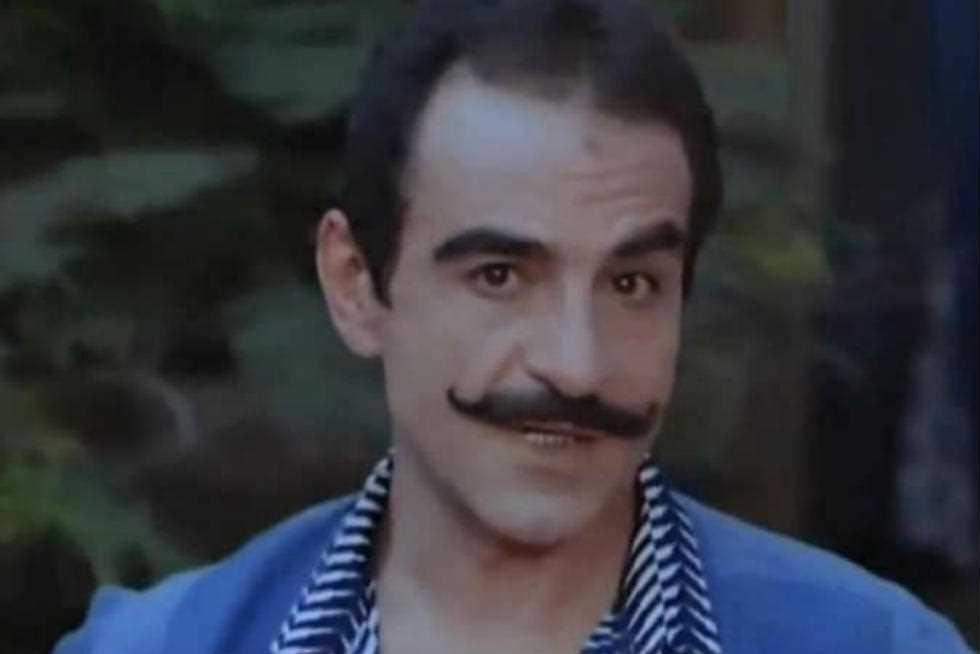

Magdy Wahba.. The Actor Who Made Villainous Roles Unforgettable
On the anniversary of Magdy Wahba’s death, audiences continue to remember an actor whose distinctive screen presence made him one of the recognizable figures of Egyptian cinema.
Wahba became particularly known for portraying complex characters, including corrupt officers, criminals and powerful figures.
Despite his relatively short life, he left behind a substantial body of work across cinema, television, theater and radio.
He died on February 4, 1990, in Hurghada after suffering acute heart failure.
👤 Who Was Magdy Wahba?
Magdy Metwally Wahba Mohamed was born on September 20, 1944.
He spent part of his childhood and youth in Beni Suef, where he became interested in acting while still a student.
He graduated from the Higher Institute of Dramatic Arts in 1967 and later obtained a degree in psychology from the Faculty of Arts.
His academic background gave him a different perspective on the characters he would eventually portray.
🎬 The Long Road Before Fame
Wahba did not become famous immediately after graduating.
For several years, he struggled to find meaningful acting opportunities. Egyptian cinema was going through difficult production conditions at the time, and leading roles were largely dominated by established stars.
Eventually, he began considering leaving Egypt to work as a teacher.
His career changed when director Nour El-Demerdash noticed him at a studio and offered him a role in the television series “Al-Baqiya Tati”.
The production helped introduce Wahba to producers and directors and opened the door to further opportunities.
🎭 Theater and the Development of His Acting Style
Wahba also developed his skills through theater.
He appeared in productions including Hamlet, Othello, The Man Who Said No and Ali Janah Al-Tabrizi.
His performance in the film “Layl wa Qudban” also attracted attention and led to more substantial roles in Egyptian cinema.
Gradually, Wahba became associated with complicated characters whose presence could dominate a scene even without being the central protagonist.
⭐ Magdy Wahba and His Famous Villainous Roles
One of Wahba’s greatest strengths was his ability to portray different forms of villainy.
He played corrupt officers, gang leaders, influential figures and other morally complicated characters.
Among his best-known films are:
🎬 Sun Strike
🎬 A Word of Honor
🎬 The Night and the Bars
🎬 Adrift on the Nile
🎬 On Whom Shall We Shoot?
🎬 Badr
🎬 The Quagmire
🎬 Bab Al-Nasr
🎬 Sons and Killers
🎬 The Guide
🎬 Hanafi Al-Abha
🎬 Sorry, I Refuse the Divorce
His filmography also includes a large number of television and theatrical productions.
📺 His Television Career
Wahba was also active in television.
Among his notable series were:
📺 “Muhammad, Messenger of God”
📺 “Hind and Dr. No’man”
📺 “The Holy Kaaba”
📺 “The Honorable Heirs”
📺 “Amr ibn Al-As”
📺 “Al-Baqiya Tati”
He also participated in radio productions and theater performances, making him a versatile performer across several forms of Egyptian entertainment.
💍 His Marriage and Only Daughter
Unlike many actors of his generation whose personal lives involved several marriages, Magdy Wahba reportedly married only once.
His wife was related to former Egyptian Queen Nariman, and the couple had one daughter, Manal Magdy Wahba.
Following her father’s death, Manal spoke publicly about his relationships with several prominent artists.
She recalled his close friendship with actors including Ahmed Zaki, Mahmoud Abdel Aziz, Nour El-Sherif, Hussein Fahmy and Mahmoud Yassin.
🤝 His Friendship with Ahmed Zaki
One of the most memorable details shared by his daughter was the close friendship between Magdy Wahba and Ahmed Zaki.
Their relationship extended beyond professional cooperation and reflected the strong personal connections that existed between many artists of that generation.
His daughter also recalled personal memories involving Mahmoud Abdel Aziz, offering a glimpse into the friendships that existed away from cameras and public appearances.
⚖️ The Drug Case and the Rumors
One of the most controversial chapters in Wahba’s life involved a drug-related case in 1983.
He was arrested and detained in connection with possession of drugs and reportedly spent time in custody during the investigation before the case ultimately ended with his acquittal.
After his death, rumors resurfaced claiming that he had died after taking an excessive dose of drugs.
However, accounts attributed to his daughter rejected that explanation and emphasized that the previous case had ended in acquittal and that his death resulted from an acute heart attack.
The distinction between the earlier legal case and the later rumors surrounding his death remains important when recounting his story.
🕯️ His Sudden Death in Hurghada
On February 4, 1990, Magdy Wahba died at a tourist village in Hurghada after suffering acute heart failure.
He was only in his mid-forties.
His sudden death shocked the Egyptian artistic community, especially because he remained professionally active and had the potential for many more performances.
Several productions connected to him continued to appear after his death because some projects had already been completed or were released later.
✨ Why Is Magdy Wahba Still Remembered?
Magdy Wahba did not need to be the leading actor in every film to make an impact.
His strength came from the smallest details: his voice, facial expressions, body language and ability to establish a character quickly.
🎭 He developed a distinctive approach to villainous roles.
🎬 He worked successfully across cinema, television and theater.
⭐ His performances became part of the memory of classic Egyptian entertainment.
🕯️ And decades after his death, his name continues to return whenever audiences revisit the films of Egypt’s golden era.
Magdy Wahba’s story remains that of an actor who achieved a lasting artistic legacy in a relatively short lifetime, proving that a memorable performance can outlive its performer.