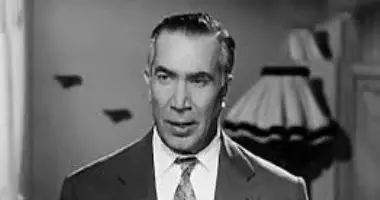

Today, October 17, marks the anniversary of the passing of Youssef Wahbi, the Dean of Egyptian Theater and one of the most influential figures in Arab arts. Born on February 14, 1898, in Fayoum, Wahbi grew up in a modest family but was destined for greatness, driven by his deep passion for acting and directing.
In 1923, Wahbi founded the Ramses Theater Company, which became a cornerstone in the evolution of Egyptian and Arab theater, nurturing generations of iconic artists. Known for his discipline, intellect, and pioneering vision, Wahbi was both a teacher and a reformer who saw art as a noble social mission.
One of the most touching anecdotes from his life involves Faten Hamama, then a young rising actress. During a meeting Wahbi organized to discuss forming a union for artists, actress Raqia Ibrahim brought along Faten. Upon seeing the young girl, Wahbi began his speech by saying, “I kindly ask colleagues who brought their children to please take them outside so we can begin.”
Embarrassed and tearful, Faten sat quietly until Raqia smiled and said: “Professor Wahbi, she’s not a child — she’s a star! This is Faten Hamama, who acted opposite Abdel Wahab.” Realizing his mistake, Wahbi immediately approached the young actress, apologized warmly, and encouraged her talent.
This encounter marked the beginning of a strong artistic friendship between the two, later reflected in their collaboration on the film “Angel of Mercy (Malak Al Rahma)”, where Faten played his daughter — a symbolic connection that mirrored their real bond.
Throughout his career, Wahbi performed in over 300 plays and several landmark films such as Son of the People and The Singing Bird. He also played a key role in establishing Egypt’s first artists’ syndicate, emphasizing professionalism and artistic integrity.
Youssef Wahbi passed away on October 17, 1982, at the age of 84, leaving behind a legacy of innovation, discipline, and timeless artistry that continues to inspire generations.