
A fictional underwater city has suddenly become one of the busiest “places” on Egyptian social media.
“Qaa El Hamour”, the Arabic name associated with the world of SpongeBob SquarePants, has turned into a massive online joke, with users pretending that Bikini Bottom is an actual Egyptian city filled with residents, neighborhoods, restaurants, workplaces and endless daily problems. 🌊😂
What started as a simple meme quickly developed into a wider social media phenomenon, as users began placing ordinary Egyptian experiences inside the colorful world of SpongeBob.
🐠 What Is the “Qaa El Hamour” Trend?
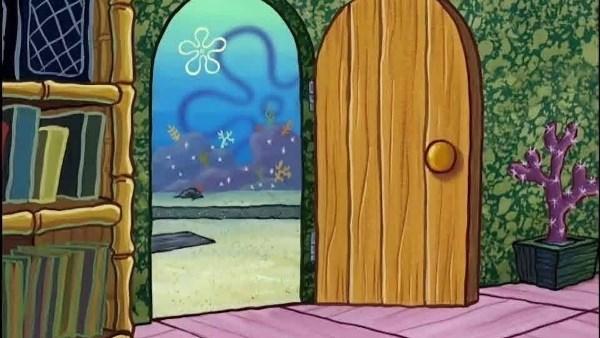
“Qaa El Hamour” refers to the fictional underwater city known internationally as Bikini Bottom, the main setting of SpongeBob SquarePants.
The city includes SpongeBob’s pineapple house, the Krusty Krab restaurant, Patrick’s home and many other familiar locations.
Because the fictional world already resembles a functioning community, social media users found it surprisingly easy to reinterpret it as an Egyptian neighborhood.
Suddenly, SpongeBob became a resident with everyday problems, Patrick became a neighbor, and the Krusty Krab became the kind of restaurant where customers could supposedly complain about prices and service. 😂
📱 The “Complaints of Qaa El Hamour Residents” Group
A major factor behind the trend was the spread of a Facebook group known as “Complaints of Qaa El Hamour Residents.”
The group attracted hundreds of thousands of users and created the idea that Bikini Bottom was no longer simply a cartoon setting.
Instead, it became a fictional Egyptian city where residents could post complaints, discuss problems and share funny stories.
The concept is extremely simple:
Take an ordinary problem from real life, place it inside the SpongeBob universe and present it as an official complaint from one of the city’s residents.
That simplicity made the format extremely easy to reproduce. 🔥
😂 Why Did the Trend Become Viral So Quickly?
One of the biggest reasons is its simplicity.
Users do not need professional filming equipment, advanced editing skills or complicated ideas.
A person can simply take a funny situation from everyday life and turn it into a “Qaa El Hamour complaint.”
Another important factor is the popularity of SpongeBob itself.
For many Egyptians, SpongeBob is not simply a cartoon character. It is connected to childhood memories, television afternoons and a familiar world that several generations grew up watching. 💛
That creates a powerful combination:
childhood nostalgia + modern Egyptian humor + everyday problems.
🧒 From Children’s Cartoon to Social Media Language
SpongeBob SquarePants first appeared in 1999 and was created by marine science expert and animator Stephen Hillenburg.
The series introduced audiences to SpongeBob, a cheerful yellow sea sponge living in a pineapple under the sea.
He works at the Krusty Krab restaurant and spends his days surrounded by characters such as Patrick Star, Squidward, Mr. Krabs and Sandy.
The personalities of these characters made them particularly useful for social media jokes.
Each one can represent a recognizable type of person from everyday life. 😂
🎭 Egyptian Celebrities Join “Qaa El Hamour”
The trend eventually moved beyond ordinary social media users and attracted several Egyptian celebrities.
Among the stars who participated were Ahmed Malek, Bassem Samra, Mostafa Gharieb, Hassan El Raddad, Amy Samir Ghanem, Hana El Zahed, Mirna Gamil, Amr Abdel Galil, Ruby and Ahmed Hatem.
Some celebrities appeared alongside SpongeBob in digitally created scenes, while others recreated characters or moments from their own previous television and film roles inside the fictional underwater city.
Celebrity participation gave the trend another major boost.
Once famous actors began sharing their own versions, fans became more interested in reposting the images and creating new jokes around them. ⭐
🤖 Artificial Intelligence Gives the Trend a New Dimension
Another striking element of the “Qaa El Hamour” phenomenon is the use of AI-generated and digitally edited images.
Instead of simply sharing screenshots from the cartoon, users can now place real people, celebrities and fictional characters into the Bikini Bottom environment.
This reflects the growing role of artificial intelligence in social media culture.
Creating a funny visual concept that once required considerable design work can now be done within minutes using modern AI tools. 🤖✨
As a result, users are no longer just consuming trends.
They are becoming creators themselves.
🏠 Why Does Bikini Bottom Work So Well as an Egyptian Community?
The fictional city already contains many elements of a real society.
There are employees, managers, restaurants, customers, neighbors, friends, businesses and arguments.
That makes it incredibly flexible.
A workplace conflict can become a complaint against Mr. Krabs.
A difficult neighbor can become a Bikini Bottom resident.
A restaurant problem can suddenly turn into a crisis at the Krusty Krab. 😂
The more relatable the situation, the more effective the joke becomes.
😅 Humor as a Way to Deal With Daily Pressure
The trend is not only about making people laugh.
It also reflects the way many social media users use humor to process everyday stress.
Work pressure, difficult relationships, housing problems, embarrassing situations and financial concerns can feel heavy when discussed seriously.
But turning them into a fictional complaint from “Qaa El Hamour” makes them lighter and easier to share.
Humor allows users to express frustration without necessarily turning the conversation into a serious complaint.
In that sense, the trend becomes a form of digital social commentary disguised as comedy. 💬😂
❤️ Nostalgia Is One of the Biggest Secrets Behind the Trend
The nostalgia factor cannot be ignored.
Millions of people grew up watching SpongeBob and already understand its characters, personalities and locations.
Seeing SpongeBob suddenly dealing with modern Egyptian problems creates a humorous contrast between childhood and adulthood.
The character who once represented carefree childhood entertainment can now be imagined as an employee complaining about work or a resident dealing with everyday problems.
That contrast is exactly what makes many of the memes so shareable. 🥹😂
🔥 Why Do People Feel the Need to Join?
Social media trends often become stronger because of the desire to participate before they disappear.
Once users see hundreds of posts about “Qaa El Hamour,” they naturally begin thinking about how they could create their own version.
The cycle is simple:
Post → Engagement → Share → New Version → More Engagement → Wider Reach.
Every new participant gives the trend another opportunity to spread.
Celebrity involvement makes that cycle even faster.
🧠 Is “Qaa El Hamour” Just Another Temporary Trend?
Like most social media trends, “Qaa El Hamour” may eventually disappear from the top of users’ feeds.
However, the phenomenon reveals something important about modern online culture.
People no longer want to simply consume content.
They want to participate in it, remix it and make it their own.
The strongest trends are therefore often those that provide users with a simple framework they can adapt to their own experiences.
That is exactly what “Qaa El Hamour” offers:
A familiar fictional world, recognizable characters and unlimited possibilities for turning everyday situations into comedy. 🌊✨
Ultimately, “Qaa El Hamour” has transformed the world of SpongeBob into a fictional Egyptian community combining memes, AI-generated visuals, nostalgia and everyday social satire.
And perhaps the funniest part of the entire phenomenon is that a fictional underwater city has suddenly become one of the busiest “places” on Egyptian social media. 😂🐠🔥