
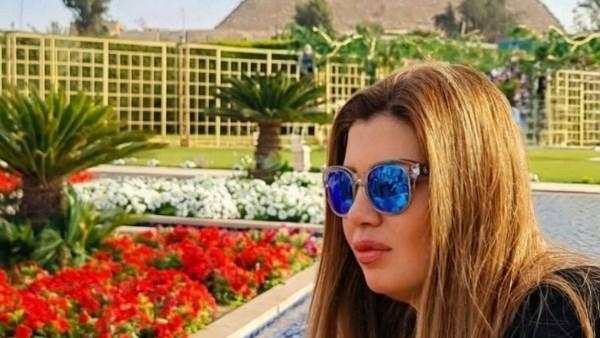

The funeral of Yasmin, daughter of actress Naglaa Fathy and actor Seif Abu El-Naga, has reignited discussion about the limits of media coverage and the importance of respecting the privacy of celebrities and their families during difficult personal moments. Actress Rania Farid Shawky was among those who criticized what happened during the funeral, expressing her sadness over the way some photographers dealt with the ceremony.
Rania Farid Shawky Criticizes the Funeral Coverage
Rania Farid Shawky expressed her dissatisfaction with what she described as professional and ethical violations during Yasmin’s funeral, stressing that the scenes were inappropriate given the nature of the occasion and the painful emotions experienced by her family.
In a post on her Facebook account, the actress described what happened at the funeral of Naglaa Fathy and Seif Abu El-Naga’s daughter as truly sad, arguing that treating a farewell ceremony in such a manner goes beyond simply reporting a news event and enters an area that affects the privacy of a family mourning the loss of their daughter.
Rania’s comments reflect an ongoing debate over how celebrity funerals are covered, particularly when private moments of grief are turned into photographs and videos that spread widely across social media platforms.
“Where Are the Responsible Authorities?”
Rania Farid Shawky’s criticism was not directed solely at photographers. She also questioned the role of the authorities responsible for regulating journalism and media, as well as professional unions, in establishing and enforcing clear boundaries for coverage in sensitive situations.
She questioned who is responsible for applying professional codes of conduct and ethical standards, warning that repeated violations can eventually lead to such behavior being treated as normal, which she believes is a serious issue that requires attention.
📢 According to Rania’s perspective, maintaining professional standards is not limited to the way a story is published. It also involves choosing the appropriate place and timing for taking photographs, particularly when covering a funeral or deeply private moments.
Rania Farid Shawky: “This Is Not a Scoop”
The clearest point in Rania Farid Shawky’s message was her objection to filming the funeral inside the mosque and during prayers.
She stressed that photographing parents while they are experiencing the loss of their daughter cannot simply be described as a journalistic scoop, arguing that bringing cameras into such intimate moments turns human pain into material for viewing and circulation.
In her message, she stated that filming inside the mosque during prayers, while parents are mourning the loss of their daughter, should not be considered a journalistic achievement but rather an exploitation of people’s grief and its transformation into content.
The comments come at a time when mobile phones and social media platforms have become central to real-time coverage, making the boundaries between journalism and personal privacy increasingly sensitive.
Celebrity Privacy During Times of Grief
The incident also opens a broader discussion about the right of artists, public figures and their families to privacy, particularly because fame does not necessarily mean giving up personal space during the most difficult moments of life.
⭐ Although the death of a family member of a well-known public figure may naturally attract public attention, this does not eliminate the family’s right to mourn and say goodbye without continuous media pressure or intrusive photography.
During such occasions, respecting the family’s emotions becomes an essential part of responsible coverage, along with distinguishing between information that is genuinely relevant to the public and private details that provide no real value to the story.
Renewed Debate Over the Ethics of Photography
Rania Farid Shawky’s comments have also raised an important question about professional responsibility in an era of rapidly spreading content, particularly as many news stories increasingly rely on photographs and videos shared across social media.
Once an image or video is published, it can spread within minutes, making it difficult to control its circulation or assess its impact on the people appearing in it. This makes the responsibility of photographers and publishers even more significant.
Balancing the public’s right to know with an individual’s right to privacy is also one of the major challenges facing modern journalism, particularly when covering death, funerals and deeply personal moments of loss.
Rania’s Message Goes Beyond the Incident
Rania Farid Shawky’s statement appears to be more than a reaction to Yasmin’s funeral. It represents a broader criticism of the way some highly emotional and sensitive occasions are handled when grief is at the center of the scene.
The actress believes that repeated incidents of this kind could gradually lead to a loss of professional and human sensitivity if clear standards are not established and respected by everyone involved.
✨ Ultimately, Rania Farid Shawky’s comments have sparked a discussion about the importance of respecting the sanctity of death and the emotions of grieving families, particularly during moments that can never be repeated.
The question remains: How far should media coverage go before reaching the boundaries of personal privacy, and can a balance be achieved between the public’s right to know and a family’s right to grieve away from the cameras?
