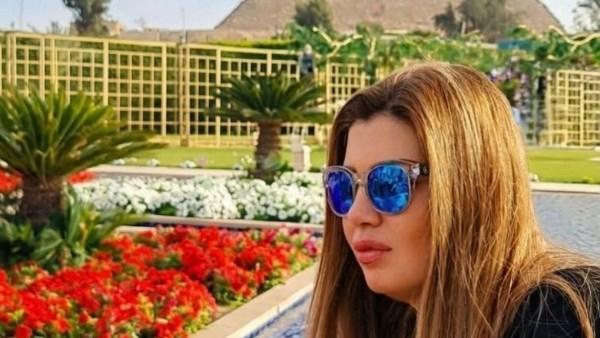

Egyptian actress Rania Farid Shawqi has sparked a wider discussion about media ethics and privacy after criticizing the way the funeral of Yasmin Abu El-Naga, the only daughter of actress Naglaa Fathy and Seif Abu El-Naga, was covered.
Her comments came shortly after Yasmin’s funeral, following her sudden death at the age of 44 after a severe cardiac crisis, leaving her family and friends in deep shock. 🖤
🕊️ Rania Farid Shawqi Criticizes Funeral Coverage
Rania expressed her sadness over what happened during the funeral, particularly the presence of cameras during highly private moments.
She argued that covering a funeral is one thing, but turning the grief of a family into widely circulated visual content is another.
Her strongest criticism focused on filming inside the mosque and during prayers, questioning whether such images should be treated as ordinary news material.
According to Rania’s argument, journalists and content creators should recognize that there are moments when humanity and privacy must come before views, clicks and social media engagement.
⚖️ Where Does Journalism Meet Privacy?
The incident raises a broader question: Does being a public figure mean losing the right to privacy?
Although celebrities and their families are frequently followed by the media, there are moments when their personal lives become particularly sensitive.
Death and mourning are among those moments.
The rapid growth of social media has made this issue even more complicated. Anyone with a smartphone can record an emotional moment and publish it within seconds. 📱
💔 Naglaa Fathy and Seif Abu El-Naga Chose Privacy
One of the key points in Rania’s statement was that Naglaa Fathy and Seif Abu El-Naga had deliberately stayed away from the spotlight for many years.
For that reason, Rania considered the presence of cameras during their daughter’s funeral especially painful.
Naglaa Fathy has largely maintained a private life in recent years, making her appearance at her daughter’s funeral an extremely personal and emotional moment.
👩👧 Who Was Yasmin Abu El-Naga?
Yasmin Abu El-Naga was the only daughter of actress Naglaa Fathy and actor and architect Seif Abu El-Naga.
She grew up in a family closely connected to Egyptian cinema, but she chose not to follow her parents into the entertainment industry.
Unlike many children of famous celebrities, Yasmin avoided acting and public appearances and preferred to maintain a private life away from the media.
That decision made her public appearances rare and preserved much of her personal life outside the spotlight.
🖤 Yasmin’s Sudden Death
Yasmin died at the age of 44 following a sudden cardiac crisis.
Later details indicated that she had experienced a heart-related health condition for years and had undergone a long medical journey before her final health deterioration.
Her father, Seif Abu El-Naga, later spoke about the difficult period surrounding her final days and described the profound shock experienced by her mother.
For Naglaa Fathy, the loss was particularly devastating because Yasmin was her only daughter and was reportedly extremely close to her.
🕯️ Yasmin’s Funeral
Yasmin’s funeral was held in Cairo and attended by members of her family, close friends and several figures from the Egyptian entertainment community.
Naglaa Fathy appeared deeply affected as she said goodbye to her daughter.
The emotional scenes surrounding the funeral highlighted the enormous personal loss facing the family. 🕊️
📸 Why Did Rania Object to the Filming?
Rania’s criticism was not necessarily directed at media coverage itself, but rather at the boundaries of filming and publication.
Journalism has a responsibility to report important events, but funerals require an additional level of sensitivity.
In the age of social media, emotional images can become viral within minutes, often reaching audiences far beyond the original context.
For a grieving family, however, those same images may become painful memories that continue appearing online.
📱 Social Media Versus Humanity
Social media platforms increasingly reward speed, emotional reactions and high engagement.
This environment can sometimes turn deeply personal moments into content designed primarily to attract attention.
Rania’s message raises an important question:
Does everything that can be photographed really need to be photographed?
And even if something is recorded, does it necessarily need to be published?
The balance between the public’s right to information and an individual’s right to privacy remains one of the most important challenges facing modern journalism and digital media.
❤️ A Message Beyond Yasmin’s Funeral
Rania Farid Shawqi’s statement ultimately goes beyond one funeral.
It highlights the need for greater awareness of professional ethics when covering death, grief and private family moments.
Responsible journalism is not only about reporting accurate information. It is also about understanding when to approach, when to ask permission and when to step back.
🕊️ In moments of grief, sometimes the most professional thing a camera can do is simply move one step away and allow a family to say goodbye in peace.