
🎶 Rania Farid Shawqi Remembers Sayed Darwish
Actress Rania Farid Shawqi commemorated the death anniversary of legendary Egyptian composer Sayed Darwish, highlighting his lasting influence on Egyptian music and his place in the country’s artistic history.
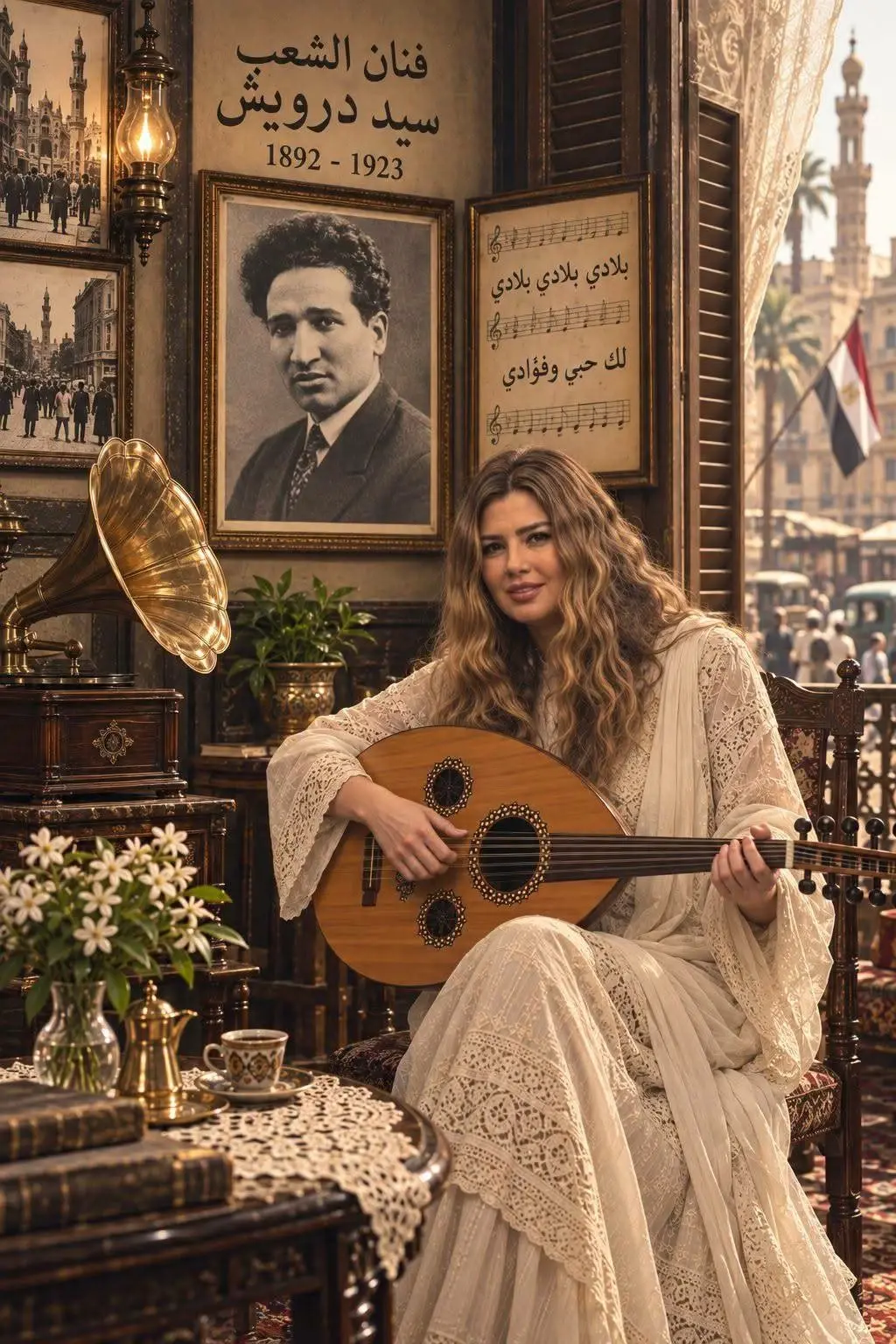
Rania shared a photo of herself holding an oud through her official Facebook account, accompanying the image with a message reflecting on Darwish’s remarkably short life and the lasting artistic legacy he left behind.
Her tribute focused on several aspects of his musical journey, particularly his ability to create songs that reflected everyday life, the concerns of ordinary people, and feelings of love, joy and patriotism.
🎻 “The People’s Artist” and a Lasting Legacy
Rania Farid Shawqi began her tribute by referring to the anniversary of Sayed Darwish’s death, describing him as “The People’s Artist” and noting that although he lived for only 31 years, the artistic impact he created during that relatively short period was much greater than his age.
She emphasized that Darwish was more than a composer ahead of his time. In her view, he understood the ability of music and song to become a voice for society and its people.
Rania wrote that he was not simply a composer who anticipated the future, but an artist who understood that a song could express the voice of an entire people.
❤️ Music That Reflected Ordinary People
Rania also highlighted the diversity of subjects that appeared in Sayed Darwish’s artistic work.
She pointed out that his music addressed love and happiness, while also giving space to workers, ordinary people and broader social concerns.
In her tribute, she wrote that Darwish brought politics, patriotism and the concerns of society into his songs, allowing art to tell the stories of what was happening in Egyptian streets.
Her comments present Darwish’s music as an artistic record that was closely connected to the people and the social environment around him.
🇪🇬 Sayed Darwish and the Spirit of Egypt
Another key part of Rania’s message was the connection between Darwish’s music and the idea of Egyptian identity and patriotism.
She described his songs and compositions as works that were ahead of their time and argued that his music helped change the shape of Egyptian music while opening a new path for generations of artists who followed.
Rania wrote that, despite the short period in which he worked, Darwish produced songs and melodies that anticipated later developments and influenced the course of Egyptian music.
🕊️ More Than a Century After His Death
Rania Farid Shawqi also recalled the date of Sayed Darwish’s death, noting that he died on September 15, 1923.
Despite his early death, she emphasized that his artistic influence continued long after his lifetime.
She wrote that Darwish may have passed away in 1923, but his impact has extended for more than a century, reflecting the continued presence of his name and music in Egyptian cultural memory.
Rania concluded her tribute with the famous patriotic phrase: “Bilady, Bilady, Bilady, You have my love and my heart,” connecting the remembrance of Darwish with one of the works most closely associated with Egyptian national sentiment.
🎼 A Photo With the Oud Accompanies the Tribute
The choice of a photo showing Rania holding an oud complemented the subject of her tribute, placing the focus on music while she reflected on the legacy of one of Egypt’s best-known historical composers.
Her message offered a personal appreciation of Darwish’s artistic contribution, particularly his ability to connect music with the experiences and concerns of ordinary Egyptians.
Through her post, Rania Farid Shawqi joined the ongoing remembrance of Sayed Darwish, highlighting a musical legacy that continues to be discussed and remembered more than a century after his death.
💬 What aspect of Sayed Darwish’s legacy interests you most: his melodies, his connection with Egyptian society, or his patriotic music? 🎶🇪🇬