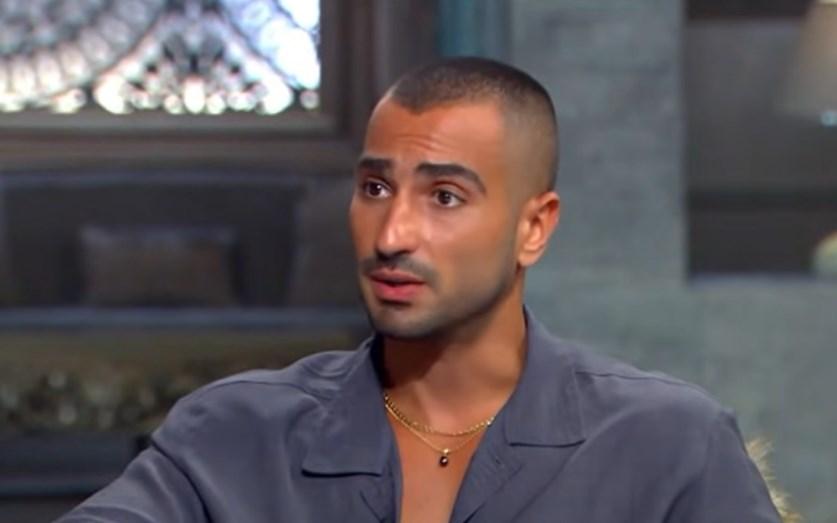

Saint Levant Opens Up About His Life and Music 🎤✨
Palestinian global artist Saint Levant, Marwan Abdelhamid, appeared as a guest on an extended interview with media host Mohamed Qais on the podcast “Qesseti,” where he discussed different aspects of his personality, private life and artistic journey, including the way he responds to criticism surrounding his music.
The episode attracted significant attention across social media platforms, particularly because of the level of openness Saint Levant displayed throughout the conversation. Rather than focusing exclusively on his artistic career, he also spoke about personal and emotional experiences, making the episode feel more intimate and relatable to his audience.
The appearance comes as Saint Levant continues to establish himself as one of the Palestinian and Arab artists attracting growing interest among younger listeners, particularly through a musical approach that brings together multiple influences, languages and cultural elements. That distinctive style has also placed him in an ongoing conversation between supporters and critics.
“Let Them Say Whatever They Want”.. How Does Saint Levant Handle Criticism? 🔥
During the interview, Saint Levant addressed criticism directed at his music, making it clear that he does not want other people’s opinions to control his artistic decisions or determine the direction of his work.
His position was summed up in the statement “Let them say whatever they want, I don’t care,” reflecting an approach based on maintaining independence in the face of differing opinions, particularly within a modern music landscape where every release can be judged and debated continuously across digital platforms.
Saint Levant appears to view criticism as a natural part of being an artist. When a musician attempts to offer something different or move outside familiar formulas, varied reactions are inevitable. Some listeners may consider the approach innovative, while others may find it difficult to connect with.
A Distinctive Sound That Generates Debate 📢
Saint Levant’s musical identity draws from multiple influences, helping him develop a style that feels distinct while also exposing him to a wide range of reactions from audiences.
When an artist introduces a different sound or combines influences from several musical and cultural backgrounds, differing responses are natural, particularly when the audience itself comes from varied backgrounds and listening preferences.
From this perspective, Saint Levant’s decision not to be consumed by criticism does not necessarily mean rejecting audiences or refusing to listen to different opinions. Instead, it can be understood as a desire to maintain artistic independence and avoid allowing every negative comment to dictate a change in direction.
Saint Levant Reveals a Difficult Chapter in His Love Life ❤️
The conversation did not remain focused on music and criticism. The Palestinian artist also opened up about his personal romantic life, revealing that he had recently gone through a difficult emotional experience that affected him.
Saint Levant explained that his most recent girlfriend decided to end their relationship and return to her former partner, an experience he presented as one of the painful situations he had encountered in recent times.
This part of the episode attracted considerable attention because the artist chose to discuss a deeply personal experience publicly, an area that many celebrities prefer to keep away from media coverage and social media.
The Breakup Offers a Glimpse of the Person Behind the Artist ⭐
Saint Levant’s comments revealed a different side of the image audiences usually see. Instead of appearing solely as a musician focused on his career and creative work, he spoke about a personal experience that is familiar to many people.
Such details allow audiences to see the human side of a public figure, particularly because fame can sometimes create an idealized or distant image of celebrities.
Talking openly about separation and emotional disappointment presents the artist in a more relatable way and shows that fame and success do not protect people from emotional pain or personal setbacks.
Why Did His Comments Generate Such a Strong Reaction? 🎥✨
Much of the attention surrounding the episode may be connected to the way Saint Levant discussed his experience, combining his views on music and criticism with personal details that audiences could easily relate to.
On social media, celebrities speaking openly about relationships and breakups often attracts strong engagement because such moments create a sense of closeness between the artist and followers while inviting audiences to connect with the human side of the public figure.
People may also respond differently to an artist discussing love compared with discussing music, because personal emotions are a universal subject that audiences can connect to through their own experiences.
Between Public Image and Private Life 🎭
The “Qesseti” episode highlighted the difference between the public image of an artist and the parts of their life that audiences do not always see on stage or through their music.
Saint Levant, whose public profile has largely been shaped by his songs and artistic work, appeared in a more personal setting, describing a romantic experience that ended in a way he had not wanted.
At the same time, he maintained his position toward artistic criticism, emphasizing that he does not want other people’s opinions to dictate what he should create or which direction he should take.
The combination of personal honesty and artistic independence gave the interview a distinctive character and allowed audiences to engage with it as an opportunity to discover the person behind the artistic name.
Criticism Is Part of Every Artist’s Journey ⭐
In music, no artistic experience can expect complete agreement, particularly when a performer chooses an unconventional sound or relies on approaches that differ from dominant trends.
For that reason, an artist’s relationship with criticism can become almost as important as the work itself. Some musicians choose to reconsider elements of their projects based on audience feedback, while others prefer to remain committed to their creative vision despite disagreement.
Based on Saint Levant’s comments, he appears to place artistic independence among his priorities and does not see every wave of criticism as a sufficient reason to reshape his identity or creative direction.
Saint Levant Between Personal Pain and Artistic Continuity 📢
Interestingly, his discussion of criticism and music came alongside his revelation about a painful romantic experience, showing how personal and professional life can intersect.
Regardless of the level of fame, an artist remains a human being who experiences situations that can affect them emotionally while still trying to continue their work and daily life.
This may be one of the reasons the episode generated such strong engagement. It did not present Saint Levant solely as the creator of a musical project, but also as a person with personal experiences, emotions and opinions.
A Conversation That Shows Saint Levant from a Different Perspective ❤️
The “Qesseti” podcast gave Saint Levant the space to speak openly about several aspects of his life, from his attitude toward music critics to the details of a recent romantic experience that proved difficult for him.
While the artist maintains that people are free to say whatever they want and that criticism will not control his career, he also revealed that behind the public artistic image is a person who goes through emotional experiences and challenges like anyone else.
Ultimately, the strong audience response to the episode reflects the growing interest in artists who present more authentic sides of themselves rather than relying only on the idealized image often created by fame. That may explain why Saint Levant’s statements have generated such wide discussion and engagement.
Do you think ignoring criticism is the best way for an artist to protect their identity? Or can audience and critic feedback sometimes help musicians develop their work? What do you think of Saint Levant’s openness about his personal life? Share your opinion with us.