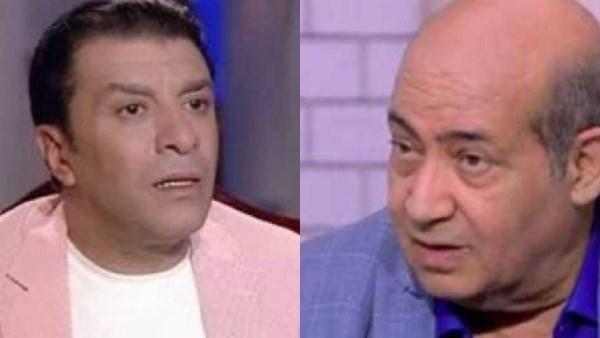

he Egyptian entertainment scene has recently witnessed widespread controversy following the dispute between art critic Tarek El-Shenawy and Mostafa Kamel, head of the Musicians Syndicate. The disagreement eventually came to an end through a reconciliation session that brought the two sides together at the Journalists Syndicate. However, ending the dispute did not prevent El-Shenawy from confirming that he still stands by his critical opinion regarding Mostafa Kamel’s voice, highlighting the difference between a personal disagreement and a critic’s right to express an artistic opinion. 📢
Tarek El-Shenawy Reveals Details of His Reconciliation With Mostafa Kamel
Tarek El-Shenawy explained that he had not been involved in a personal feud with Mostafa Kamel, stressing that the dispute began after he expressed an artistic opinion regarding the Musicians Syndicate chief’s voice and that he did not intend to personally insult him.
The art critic pointed out that the expression he used to describe Mostafa Kamel’s voice was made within the context of artistic criticism. He considers it a critic’s right to evaluate singing performance and present a personal viewpoint, even when that opinion does not agree with the artist or the person being discussed.
El-Shenawy stressed that the real problem for him was not the disagreement over the evaluation of the voice, but rather the offensive remarks directed at him during the dispute. He explained that insults and personal attacks are completely different from practicing artistic criticism.
“Your Voice Is Off-Key”.. Tarek El-Shenawy Stands by His Opinion
Despite the reconciliation, Tarek El-Shenawy surprised the audience by confirming that he still stands by his opinion regarding Mostafa Kamel’s voice, explaining that he would not abandon his artistic assessment simply because the two sides had reconciled.
El-Shenawy said that describing Mostafa Kamel’s voice as “off-key” was not, in his view, an insult, but rather an expression that falls within the scope of artistic criticism. He stressed that reconciliation does not necessarily mean that either side must abandon their personal convictions or opinions.
This point highlights an important aspect of the relationship between artists and critics, as a personal dispute can come to an end without eliminating differences in artistic viewpoints. ⭐
Mostafa Kamel’s Apology Brings the Dispute to an End
A reconciliation session between Tarek El-Shenawy and Mostafa Kamel was held at the Journalists Syndicate, with the head of the Musicians Syndicate and several syndicate members in attendance. During the meeting, Mostafa Kamel apologized to El-Shenawy for the remarks he made during the dispute.
El-Shenawy explained that Mostafa Kamel attended the Journalists Syndicate accompanied by several members of the Musicians Syndicate and apologized for the offensive remarks made against him, helping bring the personal side of the dispute to an end.
The art critic also noted that Mostafa Kamel withdrew the legal aspect of the dispute, allowing the matter to be settled and ending the conflict without further escalation.
The Difference Between Artistic Criticism and Personal Insult
The dispute once again brings attention to one of the recurring issues in the entertainment industry: the line between freedom of artistic criticism and personal insult. Criticism may naturally include strong opinions or evaluations that artists do not appreciate, but it remains fundamentally different from remarks aimed at attacking a person personally.
From this perspective, Tarek El-Shenawy’s position appeared clear in separating the two matters. On one hand, he accepted the reconciliation and the end of the personal dispute, while on the other hand, he saw no reason to withdraw his artistic assessment.
Meanwhile, Mostafa Kamel’s apology and withdrawal of the legal aspect of the dispute reflected a desire to put the controversy behind them, especially after the issue attracted significant attention from the public and entertainment followers.
Tarek El-Shenawy Maintains His Critical Position
Tarek El-Shenawy is known for expressing his critical views on artistic works and singers, making his statements a subject of interest among audiences and media outlets, particularly when they involve prominent names in the music industry.
His latest statements confirm that reconciliation does not necessarily require identical viewpoints. Instead, it can serve as a way to end personal disputes while preserving the right to express an independent opinion.
The incident also highlights the importance of responding to criticism calmly, particularly because disagreement over artistic evaluation is an essential part of the industry and can lead to broader discussions about the quality of songs, voices, and performances. ✨
The Dispute Ends, but the Debate Remains
Following the reconciliation session, the personal dispute between Tarek El-Shenawy and Mostafa Kamel appears to have reached an end, particularly after the Musicians Syndicate chief apologized and withdrew the legal aspect of the case.
However, El-Shenawy’s latest statements have kept the debate surrounding Mostafa Kamel’s voice alive, after he confirmed that he still stands by his opinion despite the reconciliation.
In this way, the personal dispute has ended, while the artistic disagreement remains, indirectly confirming that reconciliation does not necessarily require either side to abandon their convictions. 🎤
The incident remains another example of the interaction between criticism and entertainment, as well as the importance of separating professional opinions from personal disputes, especially in an era when statements spread rapidly and attract significant public engagement across social media platforms.