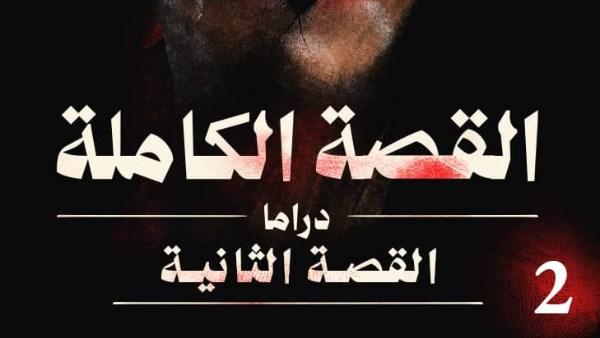

The Egyptian series “Al Qessa Al Kamelah” continues to attract viewers with a unique format built around independent stories inspired by real crimes and cases that generated widespread public attention.
Rather than following one long storyline, the series presents several separate stories, each with its own cast, director, writer and dramatic atmosphere. 🎬
The first season consists of five independent stories, with each story presented across three episodes. This structure allows the creators to focus on the central crime and its characters without unnecessary subplots or prolonged storytelling.
🔥 “What Uncle Beni Mazar Didn’t Tell”
The second story, “What Uncle Beni Mazar Didn’t Tell,” has become one of the most anticipated parts of the series.
The story is inspired by the infamous Beni Mazar massacre, a real criminal case that took place in Minya in 2005 and involved the killing of members of different families.
The case remained surrounded by questions and controversy, making it one of the most mysterious criminal incidents remembered by the Egyptian public.
Actor Ahmed Abdel Wahab leads the story alongside Ahmed Abdel Hamid, Safaa El Tokhy, Arefa Abdel Rasoul, Khaled El Sawy and Mourad Makram.
The story is written by Hany Sarhan and directed by Ahmed Nader Galal.
👀 Why Is the Beni Mazar Case So Mysterious?
The importance of the original case comes from the shocking nature of the crime, the number of victims and the circumstances surrounding the incident.
The dramatic adaptation therefore has a major challenge: presenting a real case while maintaining suspense and avoiding a simple chronological retelling.
“What Uncle Beni Mazar Didn’t Tell” explores the atmosphere surrounding the crime and the psychological dimensions of the people involved, turning the case into a dramatic mystery.
The central question remains:
What really happened, and what details were never fully revealed? 🤔
🎭 Mohamed Farrag Opens the Series With “Hell’s Game”
The series begins with “Hell’s Game,” starring Mohamed Farrag and directed by Islam Khairy.
The story is inspired by the infamous Torbini case, which shocked Egyptian society because of allegations involving the killing of children.
The dramatic adaptation attempts to explore the darker psychological and human dimensions of the case while transforming the real events into a concentrated television thriller.
“Hell’s Game” establishes the tone of the overall project by combining real criminal cases with suspense-driven storytelling.
⭐ Saba Mubarak Leads “Zamalek Crime”
Another highly anticipated story is “Zamalek Crime,” starring Saba Mubarak.
The story gained additional attention because it was described as the only female-led story within the initial group of stories.
Saba Mubarak stars alongside Ahmed Bahaa, Mohamed Ali Rizk and Hazem Ehab, while Mahmoud Abdel Tawab directs the story.
The production team completed filming the story in August, increasing anticipation for its eventual release.
❤️ “Jannat Iblis” and a Love Story That Turns Dark
One of the most distinctive stories in the project is “Jannat Iblis,” starring Nour El Nabawy.
Unlike stories that focus directly on a criminal investigation, this story is built around an impossible love relationship.
The relationship becomes the main driving force behind the characters’ decisions and conflicts, gradually leading them toward an unexpected fate.
Nour El Nabawy stars alongside Faten Saeed. The story is written by Maha El Wazir and directed by Ahmed Adel Salama.
The story adds another dimension to the series by showing how emotions and relationships can become the starting point for conflict and dramatic transformation.
👹 “The Three Devils”
The season concludes with “The Three Devils,” directed by Kawthar Younis.
The story completes the project’s broader approach of moving between different forms of crime, mystery and psychological conflict.
The variety of stories is one of the main strengths of the series because each chapter offers a different atmosphere and dramatic experience.
📺 Why Does the Series Use Short Stories?
The format of “Al Qessa Al Kamelah” reflects the changing habits of digital audiences.
Instead of asking viewers to follow dozens of episodes before reaching the conclusion, each story delivers a complete beginning, conflict, escalation and ending within a limited number of episodes.
This makes the series particularly suitable for streaming platforms, where viewers increasingly prefer concentrated stories and fast-moving narratives.
The project is also connected to real criminal cases previously explored by writer Sameh Sanad through his “Al Qessa Al Kamelah” project before being adapted into television drama under producer Magdy El Hawary.
📱 Social Media Adds Another Layer
The conversation surrounding the series has extended beyond the screen.
Social media users have shown strong interest in the stories, particularly because several of them are inspired by cases that remain familiar to the Egyptian public.
Each new story creates a fresh opportunity for discussion, speculation and comparison between the dramatic adaptation and the real events.
This makes “Al Qessa Al Kamelah” more than a crime series. It becomes a social-media conversation where viewers debate theories, characters and unanswered questions. 🔥💬
As the stories continue to unfold, audiences are waiting to discover how the creators will transform some of Egypt’s most controversial criminal cases into dramatic television.
Ultimately, the project is built around one powerful question:
What really happened—and what part of the story has never been told? 👀
Khan.Al Qessa Al Kamelah series featuring Ahmed Abdel Wahab in the Beni Mazar story