
🎭 African Theatre and Women’s Issues at the Isis Festival
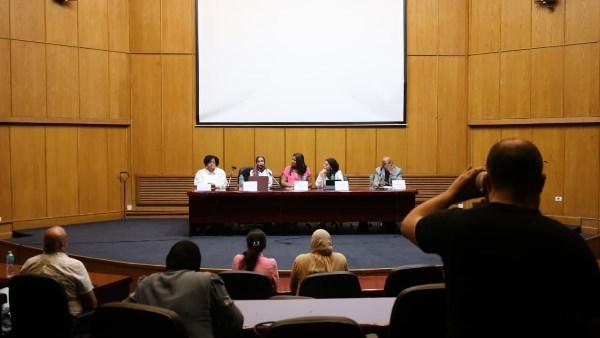
The fourth edition of the Isis International Women’s Theatre Festival hosted a discussion session titled “Women’s Issues in African Theatre” at the Tharwat Okasha Hall of the Academy of Arts.
The session brought together academics, researchers, theatre specialists and journalists to discuss the representation of women in African theatre and examine how theatrical texts address questions surrounding power, identity, the body, resistance and women’s participation in cultural life.
The discussion formed part of the festival’s intellectual program, which goes beyond theatrical performances to include workshops, research discussions, roundtables and cultural activities.
👩🎓 Academics Explore Women’s Representation
The session was moderated by Dr. Asmaa Yahya El-Taher, a drama and criticism lecturer at Capital University.
Participants included Dr. Mohamed Amin Abdel Samad, a researcher and playwright specializing in cultural anthropology and folk arts; Dr. Rasha Khairy, assistant professor and head of the Drama and Theatre Criticism Department at the Higher Institute of Dramatic Arts; and researcher Reham Ahmed, a drama and criticism lecturer specializing in African theatre and women’s representation in theatrical discourse.
The diversity of academic backgrounds created a broader discussion that connected theatrical analysis with social, cultural and artistic questions.
🔎 Body, Power and Resistance in South African Theatre
The first research paper was presented by Dr. Reham Ahmed under the title “Representations of Women, Power and Resistance in a South African Play” by playwright Zakes Mda.
The paper addressed themes including the body, economic independence, waiting for a solution and the attempt to create action.
✨ These themes offer a way to examine female characters beyond traditional passive roles, focusing instead on their ability to confront circumstances, make choices and influence the development of events.
The discussion also highlighted the relationship between individual experience and wider social structures, demonstrating how theatre can become a space for exploring women’s experiences through dramatic conflict.
🌍 Development Theatre as a Participatory Space
The second paper, presented by Dr. Rasha Khairy, focused on development theatre as a participatory space in which women can move from being recipients to becoming active participants.
This approach views theatre not merely as a finished performance presented to an audience, but as a space for dialogue, participation and knowledge production.
🎭 Development theatre can transform everyday experiences and community issues into material for discussion and creative expression, giving women greater opportunities to communicate their perspectives and experiences.
This makes theatre a tool for interaction and participation rather than simply a final artistic product.
🇳🇬 Feminist Theatre in Nigeria
The third research paper, presented by Dr. Mohamed Amin Abdel Samad, examined Nigerian feminist theatre, focusing on the relationship between women’s writing and feminist theory, with particular attention to the work of Tess Onwueme.
The discussion raised questions about how women write about their own experiences and how theatrical texts can offer female characters perspectives that differ from conventional representations.
📚 Nigerian theatre also represents one part of the diverse African theatrical landscape, where artistic experiences are shaped by different cultural, historical and social contexts.
Studying feminist theatre in Nigeria therefore provides an opportunity to explore questions of identity, representation, language, power and the right to speak about women’s experiences.
🎤 Research Papers to Be Made Available
Festival artistic director Abir Ali confirmed that the research papers presented during the session will be made available through the official Isis International Women’s Theatre Festival website.
The move is intended to extend access to the intellectual content beyond the duration of the event, allowing researchers and theatre enthusiasts to engage with the studies and discussions.
🎬 A Festival Combining Theatre and Intellectual Dialogue
The discussion was part of the fourth edition of the Isis International Women’s Theatre Festival, which is being held in Cairo from September 25 to October 2, 2026.
This edition is named after the late Egyptian actress Sanaa Gamil and features Egyptian, Arab and international theatrical productions, alongside workshops and intellectual activities.
The program also includes productions presented through the Nihad Selaiha Incubator, as well as intellectual sessions addressing women in theatre and professional opportunities within the theatrical field.
✨ Isis Festival and Women’s Creative Expression
The Isis Festival describes itself as a specialized festival for theatrical productions addressing women’s issues, as well as works created by women that reflect the diversity of female artistic experiences.
Its current edition demonstrates that discussions surrounding women in theatre can extend beyond social problems to broader questions of creativity, representation, freedom, participation and the right to expression.
🎭 The festival’s intellectual program therefore provides an opportunity to connect theatrical practice with academic research and cultural dialogue.
🔥 Theatre as a Space for Dialogue
The “Women’s Issues in African Theatre” session highlights the role that intellectual programs can play alongside artistic festivals.
Instead of simply watching theatrical performances, audiences and specialists are given opportunities to analyze theatrical experiences, discuss their meanings and discover artistic practices from different cultural environments.
The discussion also introduces African theatrical experiences to Arab audiences, creating opportunities to explore how different societies represent women and address questions of power, identity and participation.
🎭 The central questions remain open for further discussion: How are women represented in African theatre? When does a woman move from being a subject within a play to becoming an active voice? And how can theatre create spaces for participation and cultural change?