China Develops World's First “Pregnant” Robot with Artificial Womb and Umbilical Cord Simulation
In a groundbreaking leap in biotech and AI, China unveils a robot capable of simulating human pregnancy with an artificial womb and nutrient system mimicking the umbilical cord—offering a futuristic alternative to traditional childbirth.
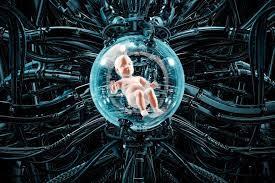

In a bold fusion of artificial intelligence and reproductive science, China has taken a dramatic step toward reshaping the future of human reproduction.
A Chinese biotech company has revealed the development of the world's first "pregnant" robot—a machine equipped with a fully functional artificial womb capable of nurturing a human embryo from fertilization to full-term birth. Spearheaded by Dr. Zhang Zhifeng, a robotics and AI specialist, the project is expected to launch within a year, with an estimated price tag below 100,000 yuan (around $13,900).
The robot mimics the entire gestation process, maintaining the embryo in a synthetic amniotic fluid environment and delivering nutrients through a tube that simulates the function of an umbilical cord. The system aims to replicate every phase of pregnancy, offering a viable alternative to natural or surrogate pregnancies.
Unlike traditional IVF or surrogacy methods, this innovation integrates AI to continuously adapt to the biological needs of the developing fetus, making the artificial womb far more dynamic and responsive.
The innovation holds promise for individuals unable to conceive naturally and could revolutionize reproductive healthcare by offering safe, medically supervised alternatives to high-risk pregnancies. However, the project has ignited widespread debate online.
While some praised the invention as a liberating breakthrough for women, others raised ethical concerns, especially around the emotional disconnect between mother and child and the implications for family dynamics and human relationships.
To address these concerns, Dr. Zhang confirmed that discussions with Guangdong authorities are already underway to navigate the legal and ethical framework needed to support such technology.
Still, reproductive health experts have cautioned against overestimating the robot's capabilities, noting the immense complexity of mimicking biological processes such as hormonal regulation, immune response, and neural development—factors critical to fetal health.
This isn't the only development in robotic parenting. Elon Musk’s “Optimus” robot, introduced in late 2024, hinted at future childcare functions as part of a global trend to use technology to reduce pregnancy-related risks and enhance reproductive options in underserved areas.
Ultimately, China’s “pregnant robot” may redefine what it means to bring life into the world, raising profound questions about the future of childbirth, family, and human evolution in the age of intelligent machines.
Chinese robotic system with artificial womb simulating human pregnancy

Misdemeanor and felony cases are among the most important and serious types of criminal cases in Egyptian law, as they are directly related to individuals’ freedom and rights. Handling such cases requires precise legal expertise and strong ability in analyzing evidence and building a solid legal defense, which is what lawyer Amira Samir provides through her practical experience in criminal cases.

Many citizens search for the best lawyer in Beheira who can handle different types of legal cases, whether real estate, criminal, or family law. Choosing the right lawyer is a crucial step to ensure the protection of rights and achieving the best possible legal outcome.

A khula case is one of the most common family law cases in Egypt. It is filed by a wife when marital life becomes impossible. Many women search for the procedure of filing a khula case in Giza in a clear and simple way, which is what we explain in this legal guide.

Criminal Investigations Between Prosecution Authority and the Guarantees of Presumption of Innocence
Counselor Nevin Wahsh emphasizes that criminal investigations, despite their importance in the initial detection of crimes, cannot be considered fully-fledged evidence in criminal proceedings. Not every piece of information recorded in investigation reports rises to the level of legal proof, and the belief formed by law enforcement officers cannot, on its own, justify a criminal conviction.
