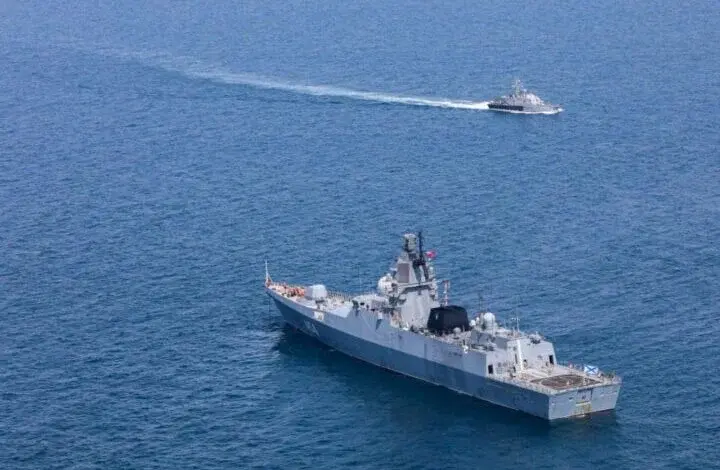

🔥 Iran concluded its “Smart Control” naval drill and immediately joined Russia for joint exercises in the Strait of Hormuz, the Arabian Sea, and the northern Indian Ocean 🌊⚓. This move signals Tehran’s readiness to assert control over one of the world’s most strategic waterways.
💥 The joint drills included simulations of seizing strategic maritime areas, with modern weapons and 24/7 intelligence monitoring. The goal is to enhance operational coordination and maritime security between Iranian and Russian forces.
📡 Iranian Revolutionary Guard Commander Ali Reza Tangsiri said:
“Our surveillance of the Strait of Hormuz is continuous above, below, and in the air. Any threat will be met with decisive response” ⚠️.
🌪️ U.S. President Donald Trump warned Iran of a 10–15 day deadline to reach a nuclear agreement, threatening severe consequences if talks fail. The U.S. has deployed its largest military presence in the Middle East since the 2003 Iraq invasion 🇺🇸🚀.
⚡ Kremlin spokesman Dmitry Peskov emphasized Russia’s commitment to political and diplomatic solutions despite rising tensions, highlighting the importance of peaceful conflict resolution.
🛡️ Strategic Analysis
The Strait of Hormuz is a vital link connecting the Persian Gulf with the Arabian Sea, through which 20% of the world’s oil passes. The Iran-Russia drills demonstrate Tehran’s readiness for rapid response and showcase strategic control over critical maritime routes.
✨ Key Takeaways
-
Conclusion of Iran’s “Smart Control” drill
-
Start of joint naval exercises with Russia
-
U.S. issues 10–15 day nuclear deal warning
-
Increased U.S. military presence in the region
-
Iran demonstrates rapid-response capability and strategic deterrence