Solar Eclipse 2027: Countdown to a Rare Astronomical Event
The total solar eclipse on August 2, 2027, is approaching, with parts of Egypt, Saudi Arabia, and Yemen set to witness totality, lasting nearly six minutes in some locations
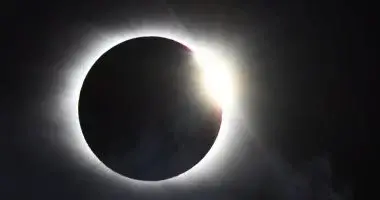
The countdown has begun for one of the most anticipated astronomical events of 2027. On August 2, 2027, parts of the Arab world will witness a Solar Eclipse, with several areas experiencing totality.
Egypt, Saudi Arabia, and Yemen will be among the countries where the eclipse can be observed, while other parts of the region will experience a partial eclipse.
The event is expected to attract astronomers, researchers, and skywatchers from around the world because of the unusually long duration of totality in some locations.
When Will the Total Solar Eclipse 2027 Occur?
The total Solar Eclipse will take place on Monday, August 2, 2027.
A total solar eclipse occurs when the Moon passes directly between Earth and the Sun and completely blocks the Sun's disk for observers located within the Moon's central shadow.
The entire eclipse will last for several hours from beginning to end, while the period of totality will last only a few minutes and will vary depending on the observer's location.
How Long Will Totality Last?
The duration of totality will be particularly impressive in parts of Saudi Arabia. In Jeddah, for example, totality is expected to last approximately 5 minutes and 53 seconds.
In some other locations along the path of totality, the duration will approach six minutes, providing scientists with a valuable window for astronomical observations.
Solar Eclipse in Jeddah
Jeddah will be one of the Saudi Arabian cities located within the path of totality.
The eclipse will begin as a partial eclipse before reaching totality around the early afternoon. The total phase in Jeddah is expected to last approximately 5 minutes and 53 seconds.
The path of totality will also cross several other areas in western and southwestern Saudi Arabia, giving residents and visitors multiple opportunities to witness the event.
Other Saudi Areas in the Path of Totality
The path of totality will include several cities and areas, including Mecca, Jeddah, Taif, and Khamis Mushait.
The exact timing and duration will vary from one location to another depending on its position within the eclipse path.
Other parts of Saudi Arabia will experience the eclipse partially rather than completely.
Will Egypt See the Solar Eclipse?
Yes. Egypt will be among the countries able to observe the Solar Eclipse on August 2, 2027.
Several Egyptian locations will fall within the path of totality, while other areas will see only a partial eclipse.
Locations such as Siwa Oasis, Asyut, and Luxor are expected to provide opportunities to observe totality, while Cairo will experience a partial eclipse.
Why Is the Eclipse Important for Egypt?
The event represents a significant opportunity for astronomers, researchers, and astronomy enthusiasts in Egypt to observe a rare celestial phenomenon.
Areas located within the path of totality may become gathering points for scientific observations and astronomical activities surrounding the event.
How Does a Total Solar Eclipse Occur?
A total eclipse occurs when the Moon moves between Earth and the Sun and aligns in such a way that the Moon completely covers the Sun's disk for observers inside the path of totality.
During totality, direct sunlight is temporarily blocked, allowing the Sun's outer atmosphere, known as the corona, to become visible.
The Main Stages of a Solar Eclipse
The phenomenon can be divided into several main stages.
Partial Eclipse
The eclipse begins when the Moon starts covering part of the Sun's disk. The partial phase continues until totality begins.
Total Eclipse
The total phase begins when the Moon completely covers the visible disk of the Sun for observers within the path of totality.
This is the most dramatic stage of the event, when daylight temporarily becomes much darker and the solar corona can be observed.
End of the Eclipse
After totality ends, the eclipse returns to a partial phase as the Moon gradually moves away from the Sun's disk.
The phenomenon eventually ends completely when the Moon no longer overlaps the visible solar disk.
Why Is the Solar Eclipse 2027 Scientifically Important?
A total Solar Eclipse provides researchers with a unique opportunity to study the solar corona and observe phenomena that are difficult to examine under normal daylight conditions.
Scientists can also investigate changes in the Earth's atmosphere caused by the sudden reduction in solar radiation during totality.
The event may therefore support a wide range of scientific observation programs and astronomy projects.
How Can You Watch the Solar Eclipse Safely?
Watching the Solar Eclipse during its partial phases requires certified solar eclipse glasses or specialized solar-viewing equipment.
Looking directly at the Sun without appropriate eye protection can cause serious and permanent retinal damage.
During totality, however, the Sun can be viewed with the naked eye only while the Sun's bright disk is completely covered by the Moon. Eye protection must be put back on immediately as soon as any part of the solar disk becomes visible again.
Solar Eclipse 2027: An Event for Astronomy Enthusiasts
The total Solar Eclipse on August 2, 2027, will be a major astronomical event for Egypt, Saudi Arabia, Yemen, and other areas across the region.
With the date approaching, astronomers and skywatchers are expected to focus their attention on locations along the path of totality.
For those fortunate enough to witness it, the event will offer several extraordinary minutes when daylight dramatically changes and the Sun's corona becomes visible, creating one of the most spectacular sights in the night-sky and astronomy calendar.
When will the total solar eclipse occur in 2027?
The total solar eclipse will occur on August 2, 2027.
Can the total eclipse be seen in Egypt?
Yes. Several areas of Egypt will be within the path of totality, while Cairo will experience a partial eclipse.
Will Jeddah experience a total solar eclipse?
Yes. Jeddah will experience totality, with the total phase expected to last approximately 5 minutes and 53 seconds.
How long will the total eclipse last?
The duration varies by location, with totality approaching six minutes in some areas of Saudi Arabia.
Is it safe to look directly at the Sun during an eclipse?
No. During the partial phases, proper certified solar eye protection is required. The Sun can only be viewed safely with the naked eye during the brief total phase when its bright disk is completely covered.
Learn about the crime of thuggery under Egyptian law, including its definition, legal elements, and conditions, as well as the difference between thuggery and ordinary disputes or altercations, with Counselor Mohamed El Omda, Criminal Cassation Lawyer and Founder of El Omda Law Firm.

Learn why a power of attorney is not a title deed, whether a special power of attorney constitutes a sale, and the legal obligations of an attorney-in-fact.

Learn about the legal rules governing a guardian's disposal of a minor's assets and the importance of the source of the property and required procedures.

Qyodas Egypt Law Office addresses the key legal aspects of Unified Insurance Law No. 155 of 2024 in Egypt, including insurance sector regulation, policyholder rights, insurance disputes, and the legal obligations of companies and entities operating in the sector.
