Thousands Appeal Thanaweya Amma Results… and the Number Keeps Rising!
35,000 students appeal Thanaweya Amma 2025 results.


Over 35,000 Students File Appeals Against Thanaweya Amma 2025 Results
Sources within the Ministry of Education and Technical Education have revealed that more than 35,000 students have submitted appeals regarding their Thanaweya Amma 2025 exam results during the first few days of the appeals window, reflecting growing concern among students and parents.
Appeals Window Open for 15 Days
The Ministry officially announced that students may submit appeals for their first-round exam results starting Sunday, July 27, 2025, and continuing until Sunday, August 10, 2025. This period provides affected students a fair opportunity to review their answer sheets and ensure the accuracy of their results.
Appeals Process and Payment
-
Students must pay EGP 300 per subject they wish to appeal, through approved payment channels (Egypt Post, Fawry, or e-Finance) to the Education Projects Support and Funding Fund.
-
After payment, students must access the official online platform to submit their appeals at:
https://tazalom.emis.gov.eg -
Students select the subjects and choose their viewing appointment via the website.
On-Site Review Procedures
-
Only the student and their legal guardian may attend the review session; teachers are not permitted.
-
Students must adhere strictly to the assigned schedule. Failure to attend invalidates the appeal.
-
A clear copy of both the student’s and guardian’s national ID cards must be presented.
-
Students will review a scanned copy of their bubble sheet and essay responses (if any), along with the official answer key.
-
Observations and concerns are to be recorded on the designated section of the form.
Post-Review Process and Outcome
-
A specialized technical committee will thoroughly review submitted notes.
-
If a grading error is confirmed, the student’s score will be amended, and the appeal fee refunded.
-
All grade changes are formally approved by the Chief or Deputy Chief of Exams and forwarded to the university admissions office (thanaweya coordination).
Additional Support and Services for Students
The Ministry has provided several facilities to ease the process:
-
An online platform for result notifications and appointment scheduling.
-
On-site services for instant photo printing, police record issuance, and stamp sales.
-
A detailed guidebook outlining each step of the appeal process.
-
A direct phone line for inquiries:
(0224109102) – (02241091)
The Ministry reaffirmed its commitment to fairness and transparency, ensuring that all students receive their rightful scores in accordance with established academic standards.

Misdemeanor and felony cases are among the most important and serious types of criminal cases in Egyptian law, as they are directly related to individuals’ freedom and rights. Handling such cases requires precise legal expertise and strong ability in analyzing evidence and building a solid legal defense, which is what lawyer Amira Samir provides through her practical experience in criminal cases.

Many citizens search for the best lawyer in Beheira who can handle different types of legal cases, whether real estate, criminal, or family law. Choosing the right lawyer is a crucial step to ensure the protection of rights and achieving the best possible legal outcome.

A khula case is one of the most common family law cases in Egypt. It is filed by a wife when marital life becomes impossible. Many women search for the procedure of filing a khula case in Giza in a clear and simple way, which is what we explain in this legal guide.
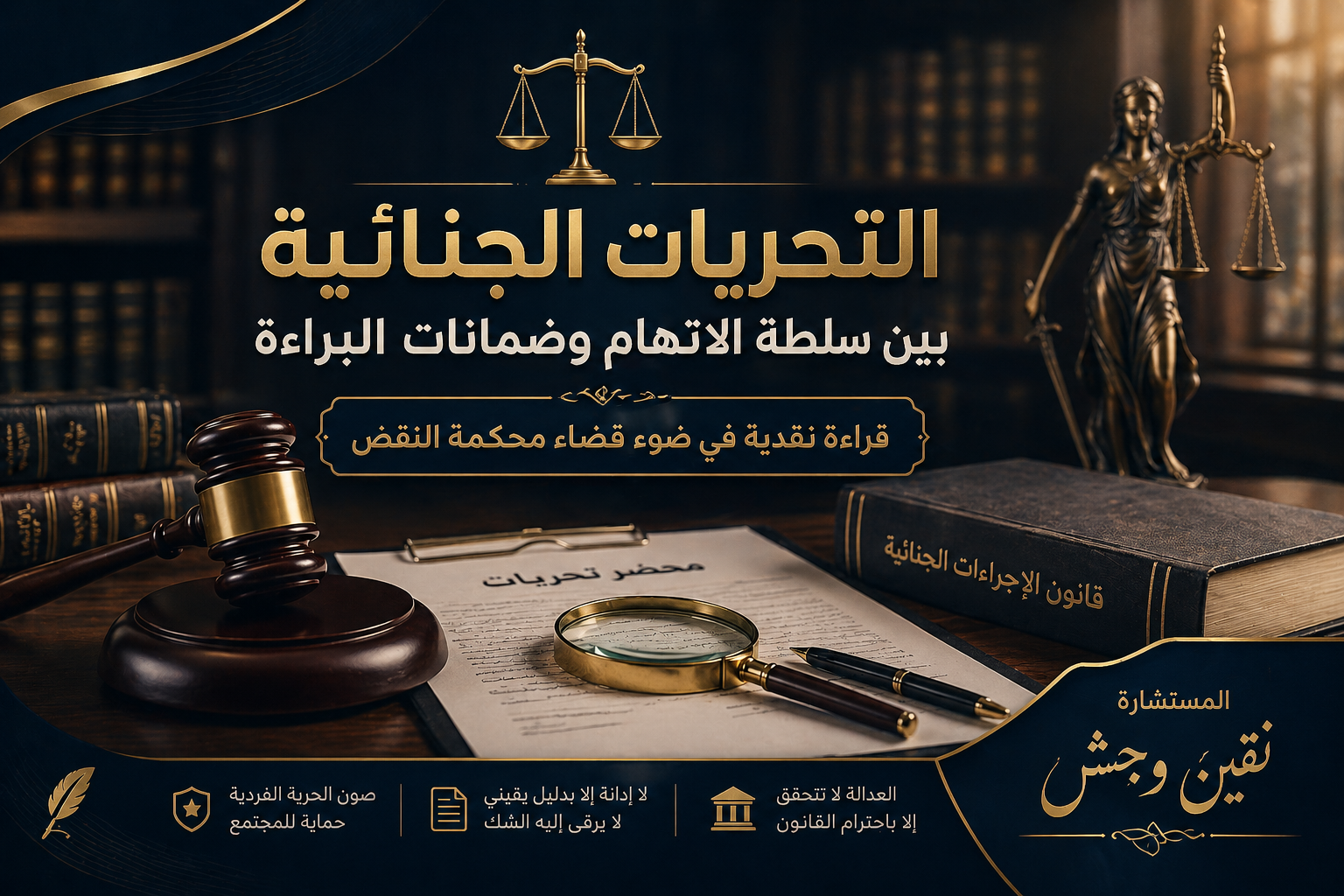
Criminal Investigations Between Prosecution Authority and the Guarantees of Presumption of Innocence
Counselor Nevin Wahsh emphasizes that criminal investigations, despite their importance in the initial detection of crimes, cannot be considered fully-fledged evidence in criminal proceedings. Not every piece of information recorded in investigation reports rises to the level of legal proof, and the belief formed by law enforcement officers cannot, on its own, justify a criminal conviction.
