
🦿 Types of Modern Prosthetics and How Technology Has Improved the Lives of Patients After Amputation
✨🩺 Losing a limb is not the end of life, but the beginning of a new stage of adaptation made possible by the rapid development of prosthetic technology. Today, prosthetic limbs are no longer just replacement tools; they are advanced systems that help patients regain movement, confidence, and a near-normal lifestyle.
In this article, we explore the main types of modern prosthetics and how technology has improved the lives of patients after amputation.
🦿 1. Bionic Limbs (Smart Prosthetics)
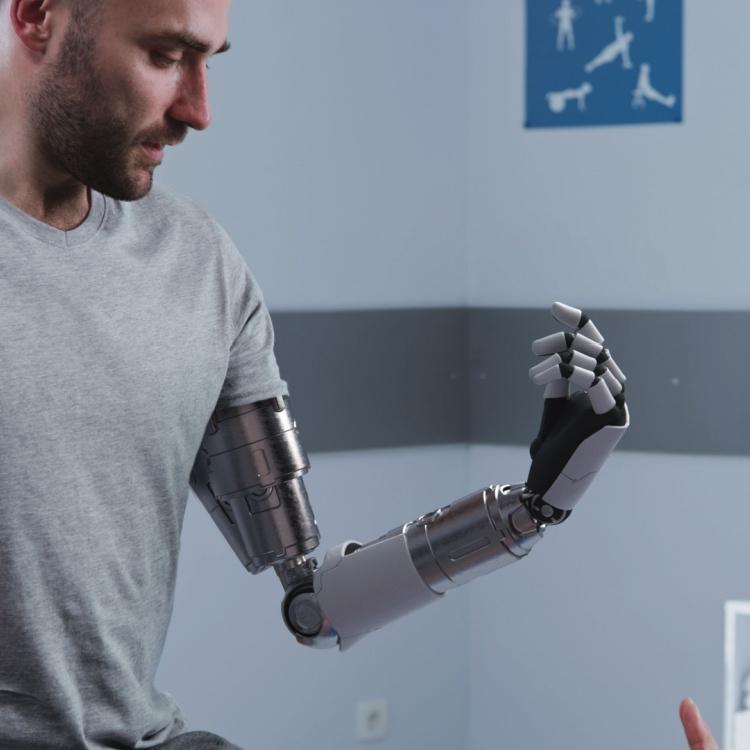
🧠✨ Bionic limbs are among the most advanced innovations in this field, as they rely on artificial intelligence technologies.
✔️ Learn from the user’s movement patterns over time
✔️ Automatically adapt to walking speed and different terrains
✔️ Provide high precision in motion control
✔️ Offer movement that feels closer to natural human motion
📌 These prosthetics represent a major breakthrough because they do not only rely on manual control but continuously adapt to the user.
⚡ 2. Myoelectric Prosthetics (Electromagnetic / Muscle-Controlled)

🩺💡 This type relies on electrical signals generated by the muscles of the body.
✔️ Captures tiny neural and muscle electrical signals
✔️ Amplifies them using rechargeable batteries
✔️ Converts signals into precise prosthetic movements
✔️ Provides smooth and accurate control
📌 This type is ideal for users who need near-natural control of hand or arm movements.
🎭 3. Silicone Prosthetics (Cosmetic Prosthetics)
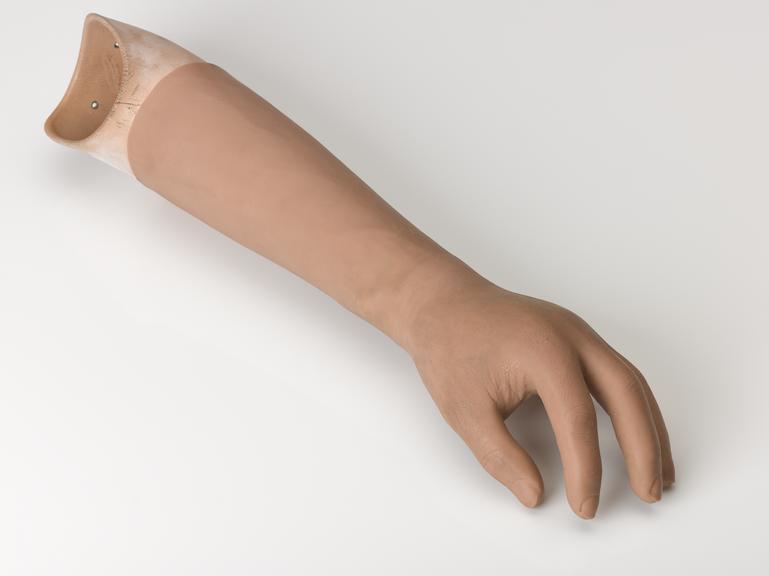
🧤✨ This type focuses mainly on aesthetic appearance.
✔️ Made from advanced silicone materials
✔️ Mimics human skin color and texture
✔️ Includes fine details like nails and natural skin lines
✔️ Static in movement but highly realistic in appearance
📌 Although it does not provide movement, it plays a major psychological and social role by restoring confidence and natural appearance.
🦾 4. Body-Powered Prosthetics (Mechanical Prosthetics)
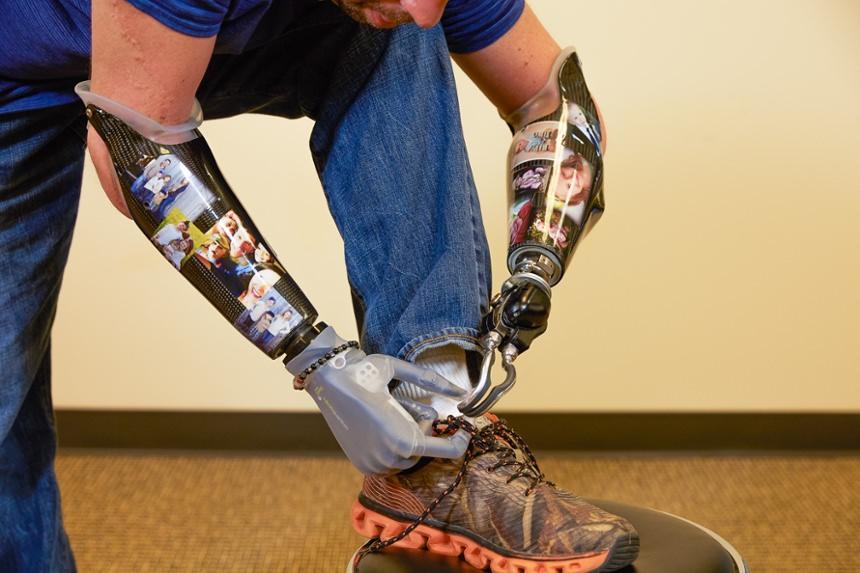
🔧💪 One of the traditional yet still widely used types.
✔️ Controlled through natural body movements
✔️ Operated using mechanical cables
✔️ Allows opening and closing of the hand
✔️ Lightweight and easy to use
✔️ Does not require batteries
📌 This type is suitable for users who prefer simplicity, durability, and everyday usability.
💙 How Technology Has Transformed Patients’ Lives
🧠 The evolution of prosthetic technology is not just technical improvement—it is a real life transformation, as it has:
✔️ Restored mobility and independence
✔️ Reduced psychological impact after amputation
✔️ Rebuilt self-confidence
✔️ Enabled return to work and daily life
✔️ Provided customized solutions for each case
🦿 Conclusion
✨ Modern prosthetics today represent a powerful combination of technology and humanity, aiming to restore natural life as closely as possible.
🩺 With continuous advancements in artificial intelligence and materials science, the future promises even more natural and efficient mobility solutions.
💙 Life does not stop after amputation… it simply begins again in a stronger and more advanced form.