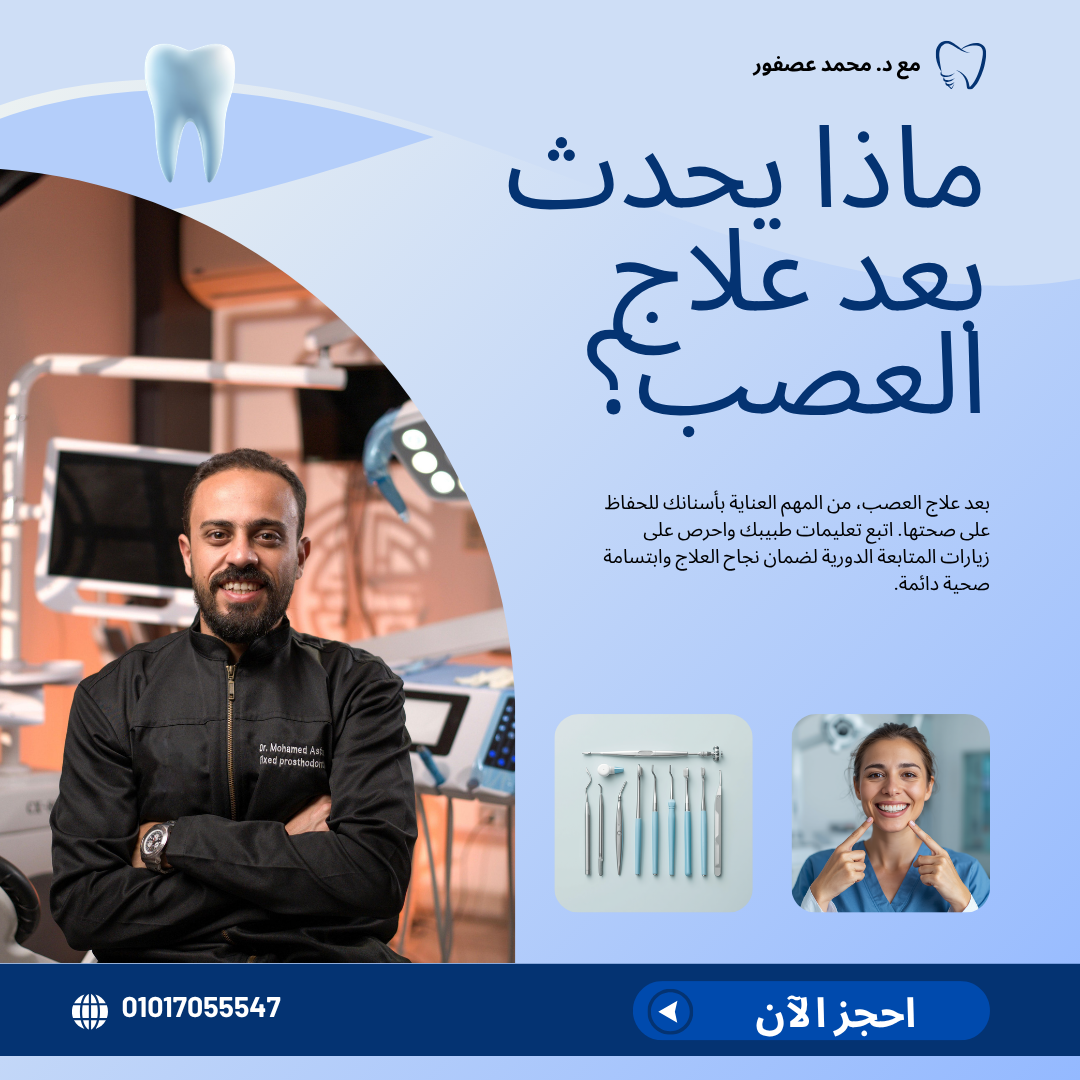

After Root Canal Treatment: Why the Journey Doesn’t End Here
Your Complete Guide to Protecting Your Tooth with Dr. Mohamed Asfour
Many patients believe that once root canal treatment is completed, the problem is fully solved. However, medically speaking, root canal therapy is only the beginning of an important phase to preserve and protect the tooth from future complications.
Dr. Mohamed Asfour explains that the success of root canal treatment does not depend only on cleaning and sealing the root canals, but also on proper restoration, protection, and follow-up care to ensure long-term survival of the tooth.
What is Root Canal Treatment?
Root canal treatment is a dental procedure performed when decay or infection reaches the inner nerve of the tooth, causing severe pain or inflammation that may affect the surrounding bone.
During the procedure, the dentist:
- Removes infected or damaged pulp
- Cleans the root canals thoroughly
- Disinfects the internal structure of the tooth
- Seals the canals with a special filling material
The main goal is to save the natural tooth instead of extracting it.
Why Does the Tooth Become Weaker After Root Canal?
According to Dr. Mohamed Asfour, a tooth becomes weaker after root canal treatment due to:
- Loss of tooth structure due to deep decay
- Removal of the infected pulp
- Previous cracks or structural damage
- Reduced natural strength of the tooth
This is why additional protection is essential after treatment.
Is Root Canal Treatment Alone Enough?
The answer is no.
Root canal therapy treats the internal infection, but it does not restore the lost tooth structure. Therefore, restoration is a crucial step for long-term success.
Without proper restoration, the tooth may:
- Fracture easily
- Get reinfected
- Fail over time
- Require extraction
Important Steps After Root Canal Treatment
1. Permanent Filling
A permanent filling is placed to seal the tooth and prevent bacterial leakage.
2. Dental Crown (Cap)
In many cases, especially back teeth, Dr. Mohamed Asfour recommends placing a crown to protect the weakened tooth.
- Strengthens the tooth
- Prevents fractures
- Restores chewing function
- Extends the lifespan of the tooth
Is Pain Normal After Root Canal?
Mild pain or sensitivity after treatment is normal and usually temporary. However, persistent pain, swelling, or severe discomfort should be evaluated by a dentist.
What Happens If You Ignore Restoration?
- Tooth fracture
- Reinfection
- Failure of root canal treatment
- Possible tooth loss
Watch the Video
Dr. Mohamed Asfour explains the essential steps after root canal treatment to maintain a healthy and strong tooth for years.
Dr. Mohamed Asfour
Specialist in dental surgery and root canal treatments, providing advanced techniques for preserving natural teeth and ensuring high-quality dental care with patient comfort as a top priority.