
AI-Powered Skin and Hair Analysis in Fifth Settlement | Magenta Dermatology & Aesthetics Clinic
Skin and hair assessment is no longer limited to visual examination alone. Advances in imaging and digital analysis have made it possible to use modern devices that capture and analyze a broader range of skin and scalp characteristics. Some of these systems use advanced imaging technologies and artificial intelligence algorithms to analyze images and measurements in a more structured way.
At Magenta Dermatology & Aesthetics Clinic, digital skin and hair assessment technologies can be used as part of the clinical evaluation process to help understand the nature of a concern, identify relevant indicators, and support the development of an appropriate plan based on the patient's individual condition.
Magenta Dermatology & Aesthetics Clinic Information
📍 Address:
North 90th Street, Trivium Business Complex, 2nd Floor, Clinic 211, Fifth Settlement, New Cairo.
📱 Phone / WhatsApp:
01023454040 / 01023453444
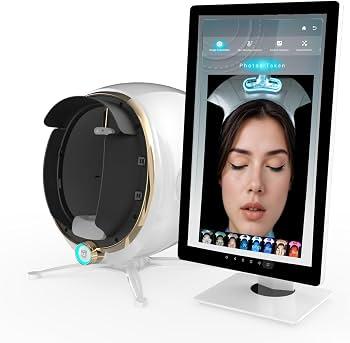
How Can Artificial Intelligence Help Assess the Skin?
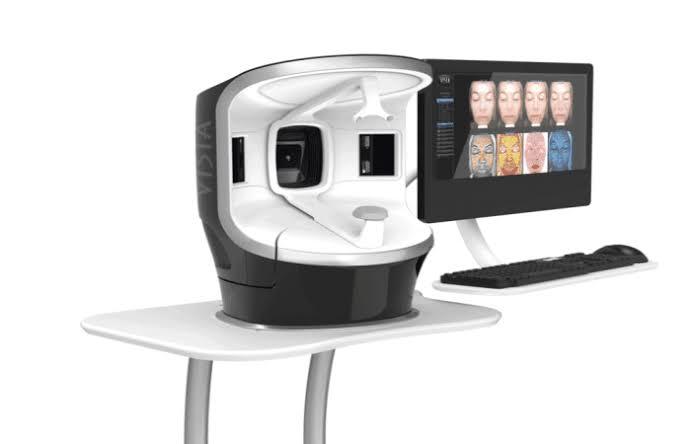
Digital skin analysis systems use standardized imaging or measurements and analyze different characteristics that may be difficult to assess accurately through visual inspection alone.
Depending on the system, analysis may include indicators such as:
- Pigmentation and its distribution.
- Pore appearance.
- Wrinkles and fine lines.
- Uneven skin tone.
- Certain redness-related indicators.
- Skin texture.
- Changes that can be monitored over time.
Recent research suggests that AI models can estimate certain skin features from images and correlate them with selected physiological measurements. However, performance varies depending on the feature being assessed, image quality, and image-acquisition method.
What Does Analysis of Less Visible Skin Details Mean?
When discussing analysis of less visible skin details, this does not mean that a device can directly see every layer of the skin or provide a definitive diagnosis on its own.
Some advanced imaging technologies can provide additional information about skin characteristics compared with conventional photographs, while other systems analyze images and data to identify indicators that may be difficult to estimate visually.
Therefore, these results should be considered supporting clinical information, rather than a replacement for medical examination and medical history when needed.
What Skin Concerns Can Digital Analysis Help Assess?
Digital analysis may be useful when assessing several visible skin characteristics, including:
Pigmentation and Uneven Skin Tone
Digital imaging and analysis can help document the distribution of pigmentation and compare it during subsequent visits, which may be useful for monitoring changes during treatment.
Pores and Skin Texture
Some skin analysis systems can assess pore appearance and surface characteristics, helping provide a more structured picture of the skin condition.
Wrinkles and Fine Lines
Digital analysis can be used to document certain signs of skin aging and monitor changes over time.
Redness and Other Color Changes
Imaging technologies may help identify color differences and areas of redness more clearly, although these findings must be interpreted in the context of the patient's complete clinical condition.
How Can Artificial Intelligence Be Used to Assess Hair Problems?
AI applications in scalp and hair analysis are increasing, particularly with specialized imaging and trichoscopic or magnified images.
These technologies may help assess indicators such as:
- Hair density.
- Hair distribution across different scalp areas.
- Hair shaft thickness in some analysis systems.
- Hair-loss patterns.
- Changes over time.
- Treatment response through quantitative or visual comparisons.
Recent reviews indicate promising applications of AI in hair-disorder analysis, severity assessment, and treatment monitoring, while further validation and external studies remain important before some systems can be used independently in clinical practice.
How Can Hair Analysis Devices Help Monitor Hair Loss?
It can sometimes be difficult to determine whether hair density has actually changed over time based on visual impressions alone.
Standardized images and digital analysis can therefore help compare specific scalp areas across different visits.
Recent research has used deep-learning techniques to automatically analyze hair images and measure hair density and hair-shaft width, with meaningful correlations between some automated measurements and clinician assessments.
This type of monitoring can provide more structured data when comparing results over time.
Can Artificial Intelligence Diagnose a Skin or Hair Condition on Its Own?
AI results should not be treated as a definitive diagnosis by themselves.
Dermatological assessment involves more than an image. It may include symptoms, medical history, clinical examination, and additional investigations when necessary.
Recent studies also show that AI performance varies according to the condition being assessed, image source, and image quality, while some models still require further validation before independent clinical use.
Why Are Modern Analysis Devices Useful Before Developing a Treatment Plan?
The purpose of digital analysis is not simply to produce a number or image. It can provide information that the dermatologist may use as part of a broader clinical assessment.
It may help to:
- Identify indicators that require closer attention.
- Document the condition before treatment.
- Compare changes during follow-up.
- Evaluate certain outcomes in a more structured way.
- Support the selection of an appropriate treatment approach.
The final treatment plan should still be based on medical evaluation rather than the device result alone.
Can Skin and Hair Analysis Help Monitor Treatment?
Yes. Digital analysis can be particularly useful for follow-up because it allows certain characteristics to be documented before treatment and compared with later results.
The value of these comparisons increases when imaging and measurements are performed under similar conditions during each visit, because differences in lighting, camera angle, or image quality can affect some results.
Why Can Skin Analysis Results Differ Between Devices?
Not all analysis devices are the same. They may differ in:
- Imaging technology.
- Camera or sensor resolution.
- Lighting method.
- Algorithms used.
- Parameters that can be measured.
- Quality of the input images.
- How results are interpreted.
Recent research has also shown that image quality and acquisition methods can affect the performance of AI-based skin analysis models.
Can Home AI Applications Be Used to Determine Skin Treatment?
It is not advisable to rely on an automated application alone to diagnose a skin condition or select treatment without appropriate medical assessment.
The American Academy of Dermatology emphasizes the importance of rigorous scientific testing for digital diagnostic tools, including evaluating their accuracy across different skin tones and protecting patient data.
The value of a device used within a structured medical setting is therefore different from a general application that relies only on a smartphone photograph.
How Can Technology Support Personalized Treatment?
Digital data can provide a more detailed picture of the patient's condition and may be useful when combined with symptoms and clinical examination.
Based on the complete assessment, the dermatologist can determine whether the condition requires medication, a cosmetic procedure, monitoring, or additional testing, depending on the individual case.
This is where the combination of modern technology and medical expertise becomes important, rather than treating artificial intelligence as a replacement for the dermatologist.
What Should Patients Know About the Accuracy of AI Analysis?
Accuracy is not a single fixed value for every device or every condition. A system may perform well when measuring one parameter and less accurately when assessing another.
AI results can also be affected by image quality, the device used, and the characteristics of the datasets on which the system was trained. Recent reviews in dermatology and trichology highlight the continuing need for clinical validation and external testing before some applications are widely implemented.
Conclusion
AI-powered skin and hair analysis devices are becoming part of the rapid development of modern dermatology and aesthetic medicine. They can provide images, measurements, and analytical data that help document certain characteristics of the skin and scalp and monitor changes over time.
At Magenta Dermatology & Aesthetics Clinic, these technologies can be incorporated into the clinical assessment process as supportive tools for understanding a concern and monitoring changes, while diagnosis and treatment planning remain based on medical examination and the dermatologist's evaluation of each individual case.