
Anemia: Symptoms, Treatment, and Key Prevention Methods
Introduction
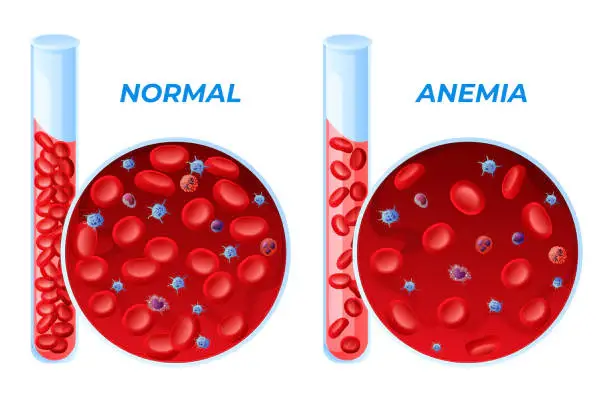
Anemia (iron deficiency anemia) is one of the most common medical conditions worldwide. It occurs when the number of red blood cells or the hemoglobin level in the blood is lower than normal, leading to reduced oxygen delivery to the body’s tissues. This oxygen shortage causes symptoms that affect daily activity and overall health.
What is Anemia?
Anemia is a medical condition that occurs when the blood does not contain enough hemoglobin, the protein responsible for carrying oxygen throughout the body. As a result, the person feels tired and generally weak.
Symptoms of Anemia
The symptoms of anemia vary depending on its severity, but the most common include:
- Persistent fatigue and tiredness.
- Pale or yellowish skin.
- Dizziness or lightheadedness.
- Shortness of breath, especially during physical activity.
- Rapid or irregular heartbeat.
- Cold hands and feet.
- Frequent headaches.
- Poor concentration and difficulty focusing.
Causes of Anemia
There are several causes of anemia, including:
- Iron deficiency (the most common cause).
- Vitamin B12 or folic acid deficiency.
- Blood loss due to bleeding or heavy menstruation.
- Chronic diseases that affect red blood cell production.
- Genetic blood disorders.
Diagnosis of Anemia
Anemia is diagnosed through a Complete Blood Count (CBC) test, which measures hemoglobin levels and red blood cell count. Additional tests such as iron levels and vitamin B12 tests may be required to determine the underlying cause.
Treatment of Anemia
The treatment of anemia depends on its underlying cause. Common treatment methods include:
- Iron supplements: for iron deficiency anemia.
- Vitamin B12 and folic acid supplements: for vitamin deficiencies.
- Dietary changes: eating iron-rich foods such as red meat and spinach.
- Treating the underlying cause: such as stopping bleeding or managing chronic diseases.
- Blood transfusion: in severe cases only.
Foods That Help Treat Anemia
- Liver and red meat.
- Spinach and leafy green vegetables.
- Lentils, beans, and legumes.
- Eggs.
- Vitamin C-rich fruits like oranges to improve iron absorption.
Prevention of Anemia
- Maintain a balanced diet rich in iron and vitamins.
- Include foods that enhance iron absorption.
- Regular health checkups, especially for children and pregnant women.
- Proper management of bleeding conditions and chronic diseases.
When Should You See a Doctor?
You should consult a doctor if symptoms such as severe fatigue, dizziness, or pale skin persist, as anemia may indicate an underlying health condition that requires prompt treatment.
Conclusion
Anemia is a common but easily treatable condition when detected early. Proper diagnosis, appropriate treatment, and a healthy diet play a major role in improving the condition and restoring energy and vitality.