
Back Curvature Treatment and Posture Correction in Mohandessin | Dr. Hadeer Sami
If you have noticed changes in your posture, a rounded back, or difficulty maintaining an upright position, you may be wondering whether these changes are related to poor posture or another condition that requires medical assessment.
Back curvature treatment and posture correction depend on identifying the cause of the problem, assessing its severity, and determining the most appropriate approach for each individual. Early evaluation can help clarify the nature of the condition and the available treatment options.
If you are looking for posture correction services in Mohandessin, Giza, you can contact Dr. Hadeer Sami to inquire about appointment availability and discuss your concerns.
📞 For appointments and inquiries:
01143477710 – 01206666199
Contact us through WhatsApp to inquire about available appointments and the services provided at the clinic.
🔎 What Is Back Curvature?
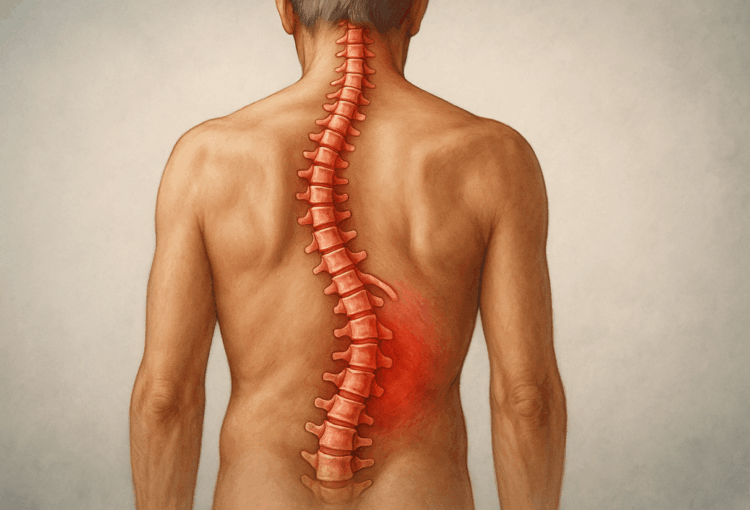
Back curvature refers to changes in the normal alignment of the spine. These changes may affect the appearance of the back, the position of the shoulders, or the way a person stands and moves.
Some postural changes may be associated with daily habits, such as prolonged sitting or looking down at a phone for extended periods. Other cases may be related to structural changes in the spine that require a more detailed medical assessment.
It is important to distinguish between postural habits and spinal conditions because the appropriate management depends on the underlying cause.
⚠️ What Are the Common Signs of Poor Posture?
Postural changes can appear gradually, and some people may not notice them until they begin to affect daily activities.
Common signs may include:
-
Rounded shoulders.
-
A forward head position.
-
Difficulty maintaining an upright posture.
-
A visibly rounded upper back.
-
Neck or back discomfort after prolonged sitting.
-
Uneven shoulder or body positioning.
-
Fatigue when standing or sitting for extended periods.
These signs do not necessarily indicate a specific spinal condition. A proper assessment is needed to understand their cause and determine whether treatment is required.
🩺 What Causes Back Curvature and Postural Changes?
Several factors may contribute to changes in posture, and more than one factor may be involved.
Prolonged Sitting
Spending long periods sitting at a desk or using electronic devices without changing position may contribute to poor postural habits.
Incorrect Daily Habits
Repeatedly bending the head forward, slouching while sitting, or using an unsuitable workstation may affect the way a person holds their body.
Muscle Weakness or Imbalance
Differences in muscle strength and flexibility may influence posture and make it more difficult to maintain a comfortable upright position.
Structural Spinal Conditions
Some cases of back curvature are associated with structural changes in the spine, such as scoliosis or kyphosis. These conditions require appropriate assessment to determine their nature and severity.
Because the causes vary, treatment should not be selected based on appearance alone.
🧍 Why Is Posture Correction Important?
Maintaining appropriate posture can support comfortable movement and reduce unnecessary strain during everyday activities.
Posture correction may help address habits such as slouching, prolonged static positions, and unsuitable workstation arrangements. Depending on the assessment, a treatment plan may also include exercises or other interventions recommended by a qualified healthcare professional.
However, posture correction is not the same as treating every structural spinal condition. The appropriate approach depends on the cause of the curvature, the patient's age, symptoms, and examination findings.
🔍 How Is Back Curvature Assessed?
A proper assessment helps identify the nature of the postural change and determine whether additional investigations are needed.
The evaluation may include:
Medical History
The clinician may ask when the changes began, whether they are becoming more noticeable, and whether pain or other symptoms are present.
Postural Assessment
The position of the head, shoulders, back, and pelvis may be assessed to identify visible postural changes.
Movement and Physical Assessment
Depending on the case, the evaluation may consider flexibility, movement, muscle function, and any limitations affecting daily activities.
Additional Investigations
If a structural spinal condition is suspected, the clinician may recommend further assessment or imaging when appropriate.
The findings help determine which treatment options should be considered.
🩺 What Treatment Options May Be Considered?
Treatment depends on the cause and severity of the condition. Not every patient with poor posture or back curvature needs the same approach.
Depending on the assessment, management may include:
-
Guidance on improving sitting and standing habits.
-
Adjustments to workstation and screen positioning.
-
Exercises recommended for the individual's condition.
-
Measures to improve movement and flexibility when appropriate.
-
Further medical assessment for suspected structural spinal conditions.
-
Referral for specialized care if the findings indicate that it is necessary.
It is important not to rely on exercises or online advice alone when back curvature is significant, worsening, or associated with other symptoms.
💻 How Can Daily Habits Affect Posture?
Daily habits may influence how a person sits, stands, and moves throughout the day.
Some practical steps that may support healthier postural habits include:
-
Adjusting the chair and desk to support a comfortable sitting position.
-
Keeping screens at a suitable viewing height.
-
Taking regular breaks from prolonged sitting.
-
Changing position rather than remaining still for long periods.
-
Avoiding prolonged downward head positioning while using a phone.
-
Following an appropriate exercise plan when recommended by a healthcare professional.
These measures may help improve postural habits, but they do not replace assessment when a structural spinal condition is suspected.
👧 Back Curvature in Children and Adolescents
Changes in posture during childhood and adolescence deserve attention, particularly when they become more noticeable during periods of growth.
Parents may observe uneven shoulders, changes in the shape of the back, or difficulty maintaining a comfortable upright position.
Although some postural habits can be improved, visible spinal curvature may sometimes be associated with a structural condition that requires further evaluation.
If a child's posture changes noticeably, or if the curvature appears to be progressing, a healthcare professional can assess the situation and advise on the appropriate next steps.
🚨 When Should You Seek Medical Assessment?
It is advisable to seek medical assessment if you notice:
-
Back curvature that is becoming more pronounced.
-
Persistent back or neck pain.
-
Significant changes in shoulder or body alignment.
-
Difficulty with normal movement or daily activities.
-
New weakness, numbness, or tingling.
-
Postural changes in a growing child or adolescent.
Seek urgent medical attention if back pain is accompanied by new severe weakness, difficulty walking, loss of bladder or bowel control, or other sudden neurological symptoms.
Early assessment can help clarify the cause and identify the appropriate course of action.
👩⚕️ Dr. Hadeer Sami for Back Curvature and Posture Assessment in Mohandessin
If you are looking for back curvature treatment and posture correction in Mohandessin, Giza, you can contact Dr. Hadeer Sami to inquire about available services and appointments.
The appropriate treatment depends on the findings of the individual assessment. When contacting the clinic, you can explain the nature of the postural change, how long it has been present, and whether you experience pain or other symptoms.
📞 Phone and appointment inquiries:
01143477710
01206666199
📍 Clinic Address in Mohandessin, Giza
9 Abdel Hamid Lotfy Street, off El-Batal Ahmed Abdel Aziz Street, Mohandessin, Giza, Egypt.
Please contact the clinic before visiting to confirm appointment availability and whether the service you require is provided.
📞 Book an Appointment for Posture Assessment
Back curvature and postural changes can have different causes, so identifying the underlying problem is an important first step.
If you have noticed changes in your posture or are concerned about the alignment of your back, contact Dr. Hadeer Sami to inquire about an assessment and the services available at the clinic.
📍 9 Abdel Hamid Lotfy Street, off El-Batal Ahmed Abdel Aziz Street, Mohandessin, Giza.
Contact us through WhatsApp to ask about appointments and available services.
This article is intended for general educational purposes and does not replace medical assessment. The appropriate approach to back curvature and posture correction depends on the cause, symptoms, and individual examination findings.