
Closing Gaps Between Teeth in New Cairo | The Best Solutions for Upper and Lower Jaw Gaps for a Natural Smile
Do you notice gaps between your teeth that make you feel less confident when smiling or speaking? Are you looking for the best way to close gaps between teeth without compromising the natural appearance of your smile? If you live in New Cairo or are searching for teeth gap treatment in New Cairo, you're in the right place.
Many people believe that gaps between teeth are only a cosmetic concern. However, in many cases, they can also affect your oral health by allowing food particles and bacteria to accumulate, increasing the risk of gum disease and tooth decay. They may also impact speech and chewing in some individuals.
Fortunately, modern dentistry has advanced significantly, making it possible to treat gaps between teeth using various techniques such as orthodontic treatment (braces), porcelain veneers, cosmetic composite bonding, or dental implants in certain cases. The most suitable treatment is always selected based on each patient's individual condition.
Achieve a More Balanced and Confident Smile
If you have gaps between your upper or lower teeth, early diagnosis can help determine the most suitable treatment before the condition worsens. Achieving natural-looking cosmetic results begins with understanding the underlying cause of the gaps and creating a personalized treatment plan, along with careful follow-up throughout every stage of your treatment to preserve both your oral health and the beauty of your smile.
Book Your Appointment Today
📍 Address: Ozone Medical Mall – New Cairo
📞 For Appointments & Inquiries: 01144966663
📞 Call Now to Book Your Visit
What Are Gaps Between Teeth?
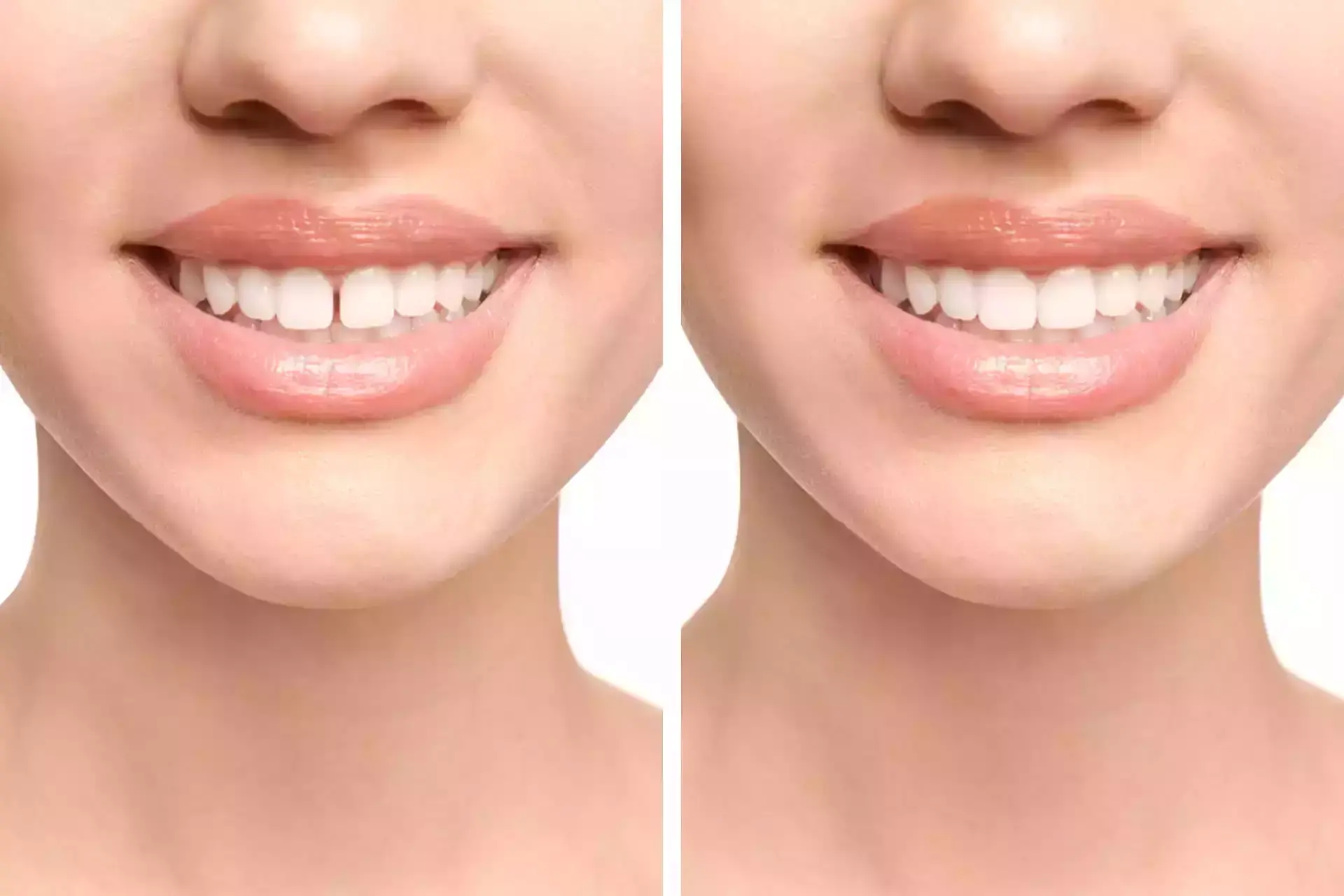
Dentists refer to gaps between teeth as Diastema, which are spaces that develop between two or more teeth. These gaps may be very small and barely noticeable, or they may be large enough to affect both the appearance of the smile and the function of the teeth.
These spaces can occur anywhere in the mouth but are most noticeable when they appear between the upper front teeth because they directly influence the appearance of the smile.
Diastema is not limited to a specific age group. It may appear in children during the transition from baby teeth to permanent teeth, as well as in teenagers and adults due to various causes that require professional evaluation.
Are Gaps Between Teeth a Health Problem or Just a Cosmetic Issue?
One of the most common questions patients ask is:
Should gaps between teeth be treated even if they don't cause pain?
The answer depends on the underlying cause and the size of the gap.
In some situations, tooth gaps are completely normal and do not require treatment, particularly in children during normal dental development.
However, in other cases, they may indicate an underlying condition that requires treatment, including:
- Gum disease
- Missing teeth
- Bite misalignment (malocclusion)
- Tooth movement from its natural position
- Abnormal pressure on the teeth
Many patients also seek treatment purely for cosmetic reasons, especially when gaps affect their self-confidence or make them uncomfortable smiling in public.
Therefore, the decision to treat tooth gaps is not based solely on pain but on a comprehensive evaluation of the teeth, gums, and jawbone.
How Can Gaps Between Teeth Affect Your Daily Life?
Although tooth gaps may initially seem like a minor issue, they can affect several aspects of everyday life.
1. Smile Appearance
A smile is one of the first things people notice. Visible gaps between the teeth may cause some individuals to feel dissatisfied with their appearance or lose confidence in social situations and photographs.
2. Food Accumulation
The wider the gap between teeth, the greater the chance that food particles become trapped, which may lead to:
- Plaque buildup
- Bad breath
- Gum inflammation
- Increased risk of tooth decay
3. Speech Difficulties
In some cases, particularly when there is a large gap between the upper front teeth, speech may be affected, making certain sounds such as "S" more difficult to pronounce clearly.
4. Chewing Problems
When gaps develop due to missing teeth or tooth movement, chewing forces may become unevenly distributed, placing excessive pressure on certain teeth.
5. Psychological Impact
Research has shown that an attractive smile plays an important role in self-confidence. Many patients report feeling more comfortable speaking, smiling, and interacting with others after completing treatment.
What Causes Gaps Between Teeth?
Before selecting the most appropriate treatment, your dentist will determine the exact cause of the gaps, since treating the underlying cause is essential for achieving long-lasting results.
1. Genetic Factors
Genetics play a significant role in determining jaw size and tooth size. Some individuals inherit a larger jaw with relatively smaller teeth, naturally creating spaces between the teeth.
2. Mismatch Between Tooth Size and Jaw Size
When teeth are smaller than the available space within the jaw, gaps may develop even if the teeth are otherwise properly aligned.
3. Missing Teeth
If a missing tooth is not replaced promptly, neighboring teeth may gradually drift toward the empty space, creating additional gaps and affecting overall alignment.
4. Gum Disease
Advanced gum disease can damage the bone supporting the teeth, causing teeth to loosen and shift, resulting in gaps that were not previously present.
5. Harmful Oral Habits
Certain oral habits may gradually contribute to tooth movement, including:
- Tongue thrusting during swallowing
- Prolonged thumb sucking during childhood
- Using teeth to open packages or bite hard objects