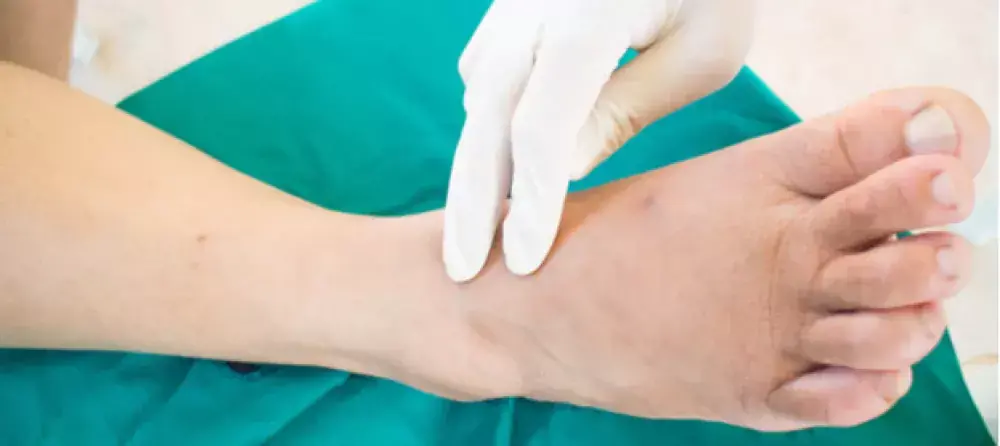

What Is Diabetic Foot?
Diabetic foot refers to a group of foot problems that can occur in people with diabetes, particularly when peripheral neuropathy, poor circulation, or foot deformities are present.
A minor cut or wound can become more serious if it is not detected and treated properly. Regular foot assessment and early management are therefore important parts of diabetic foot care.
For inquiries and appointments with Dr. Ahmed Gharib in Gesr El Suez, call 01022693460 or 01030303225.

What Causes Diabetic Foot Problems?
Several factors can contribute to diabetic foot complications, including:
- Peripheral neuropathy and loss of protective sensation.
- Poor blood circulation.
- Foot deformities or areas of increased pressure.
- Untreated wounds or ulcers.
- Infection.
- A previous history of diabetic foot ulcers.
Neuropathy may make it difficult for a patient to notice an injury, while reduced blood flow can interfere with wound healing.
What Are the Warning Signs?
Important warning signs include:
- An open wound or ulcer.
- Redness or swelling.
- Increased skin temperature.
- Discharge from a wound.
- Changes in skin color.
- Numbness or loss of sensation.
- Burning or pain.
- Unusual coldness of the foot.
The ADA recommends urgent evaluation for people with diabetes who develop an open ulcer, unexplained swelling, redness, or increased foot temperature.
How Is Diabetic Foot Diagnosed?
Evaluation may include examination of the skin and wound, assessment of sensation and circulation, evaluation for infection, and additional tests or imaging when necessary.
The goal is to determine the cause of the problem and develop an appropriate treatment plan.
What Is the Latest Treatment for Diabetic Foot?
There is no single "latest treatment" that is appropriate for every diabetic foot case. Modern treatment is based on identifying the specific cause of the problem and addressing the factors that prevent healing.
Important treatment approaches include:
Pressure relief: Reducing pressure on an ulcer is an essential part of treatment when pressure contributes to the wound.
Wound cleaning and debridement: Non-viable or dead tissue may need to be removed by a qualified medical professional.
Infection treatment: Diabetic foot infections should be assessed according to their severity and treated appropriately. Severe infections may require urgent medical or surgical management.
Circulation assessment and treatment: Poor blood flow can prevent healing, so vascular assessment and, when appropriate, revascularization may be part of the treatment plan.
Advanced wound therapies: For chronic ulcers that fail to heal despite appropriate standard care, selected advanced treatments may be considered, including negative-pressure wound therapy, certain bioengineered skin products, and topical oxygen therapy.
Does Every Diabetic Foot Case Require Surgery?
No. Treatment depends on the severity and cause of the problem.
Some patients can be treated through wound care, pressure relief, infection management, and circulation management. Other cases may require surgery, particularly when there is severe infection, an abscess, extensive dead tissue, or a vascular problem requiring intervention.
Can Diabetic Foot Be Treated Without Amputation?
In many cases, early diagnosis and appropriate treatment aim to control the problem and preserve the foot whenever possible.
However, advanced infections, severe tissue damage, or critical circulation problems may require more complex interventions. The outcome depends on the individual case.
How Can Diabetic Foot Be Prevented?
People with diabetes should:
- Inspect their feet every day.
- Check for cuts, blisters, redness, or color changes.
- Wear appropriate footwear.
- Avoid walking barefoot.
- Avoid treating corns or wounds aggressively at home.
- Follow their diabetes-management plan.
- Have regular foot examinations.
- Seek medical attention promptly when a wound develops.
The ADA recommends at least an annual comprehensive foot evaluation, with more frequent monitoring for people at higher risk.
Diabetic Foot Treatment in Gesr El Suez, Cairo
If you are looking for diabetic foot treatment in Cairo or need an evaluation for a diabetic foot wound or ulcer, you can contact Dr. Ahmed Gharib in Gesr El Suez.
📍 Location: Cairo – Gesr El Suez
📞 Appointments and inquiries:
Frequently Asked Questions
What is the best treatment for diabetic foot?
Treatment depends on the cause, ulcer severity, infection, circulation, and nerve function. There is no single treatment suitable for every patient.
What are the latest diabetic foot treatments?
Advanced wound-care options may include negative-pressure wound therapy, selected skin substitutes, and topical oxygen therapy for appropriate chronic wounds that have not responded to standard care.
Does diabetic foot always lead to amputation?
No. Early diagnosis and appropriate treatment can help prevent progression and preserve the foot in many cases.
Is a diabetic foot ulcer dangerous?
It can become serious, particularly when infection or poor circulation is present. Medical evaluation is important.
Can diabetic foot complications be prevented?
Regular foot inspection, appropriate footwear, diabetes management, and early treatment of wounds can reduce the risk of complications.
Book an Appointment with Dr. Ahmed Gharib
If you have a diabetic foot wound, ulcer, swelling, infection, or unexplained change in the foot, early medical evaluation is important.
For appointments with Dr. Ahmed Gharib in Gesr El Suez, Cairo:
Conclusion
Diabetic foot complications require careful evaluation because a seemingly minor wound can become more serious when neuropathy, infection, or poor circulation is present.
The latest treatment approach is not based on one technique. Instead, it combines wound assessment, pressure relief, infection management, circulation assessment, and selected advanced therapies when appropriate.