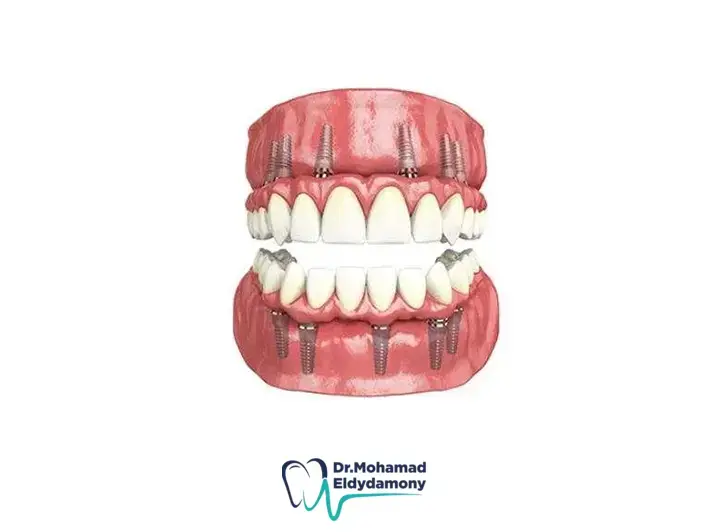

Full-Jaw Dental Implants: A Solution for Missing Teeth | Damas Dental Clinic
If you have lost several or most of your teeth and are looking for a stable way to replace them, full-jaw dental implants may be one of the options worth discussing with a dental specialist. At Damas Dental Clinic, you can schedule a consultation to assess your teeth, gums, and jawbone and determine the most suitable treatment plan.
📍 6th of October Branch: La Cite Mall – First Floor
📍 Sheikh Zayed Branch: Agora Mall – Second Floor
🕐 Working Hours: Daily from 1 PM to 10 PM
📞 Phone / Emergency: 01011806864
Dental implants are designed to replace missing tooth roots and support artificial teeth. The exact treatment approach depends on the number of missing teeth, the condition of the gums and jawbone, and the overall oral condition.
What Are Full-Jaw Dental Implants?
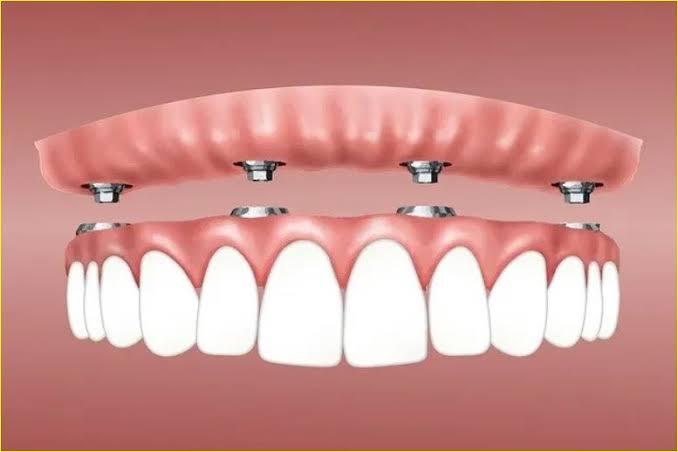
The term full-jaw dental implants generally refers to replacing many or all missing teeth in one jaw using dental implants that support a fixed or removable dental prosthesis.
Unlike traditional dentures that rest mainly on the gums, dental implants are placed into the jawbone and can provide a stable foundation for replacement teeth. The implant itself acts as an artificial tooth root, while the final prosthetic teeth are attached after the necessary healing stages.
The number and positioning of implants are not the same for every patient. They are determined after examining the jawbone, remaining teeth, gums, bite, and overall oral condition.
When Might Full-Jaw Dental Implants Be Considered?
Full-jaw implant treatment may be considered when a patient has:
- Lost several teeth or most of the teeth in one jaw.
- Teeth that cannot be restored and may need to be removed.
- Difficulty using conventional dentures.
- Insufficient natural tooth roots to support traditional dental replacements.
- Adequate jawbone volume to support implants or the possibility of preparing the bone when necessary.
However, not every patient needs the same treatment. A dental examination is essential before deciding whether implants are appropriate.
Why Is Jawbone Condition Important?
The condition of the jawbone is one of the important factors when planning dental implants.
Implants need sufficient bone to provide a stable foundation. If the bone is too thin or does not have enough volume, a bone graft may sometimes be recommended before or during implant treatment.
The need for bone grafting depends on the individual condition of the jawbone and the planned implant position. In some cases, additional bone preparation may require a healing period before the implants can be placed.
This is why a proper assessment and treatment plan are important before starting the procedure.
Does Everyone Need a Bone Graft?
No. Bone grafting is not required for every dental implant patient.
The dentist evaluates the available bone and determines whether it can provide adequate support for the planned implants. If the bone is insufficient, grafting may be considered to create a more suitable foundation.
In some situations, minor bone grafting may be performed at the same time as implant placement. In other cases, the bone may need time to heal before the implant procedure continues.
How Are Full-Jaw Dental Implants Performed?
The treatment is usually planned in several stages, although the exact sequence can vary from one patient to another.
1. Examination and Treatment Planning
The first step is a comprehensive assessment of the mouth, gums, remaining teeth, and jawbone.
The dentist determines the condition of the available bone and develops an implant plan based on the patient's individual needs.
2. Preparing the Jawbone When Necessary
If the jawbone does not provide enough support, bone grafting or another bone-preparation procedure may be considered.
The goal is to create an adequate foundation for the implants. The healing period depends on the patient's condition and the procedure performed.
3. Implant Placement
The dental implants are surgically placed into the jawbone. They function as artificial tooth roots and provide support for the future dental prosthesis.
The exact number and location of implants depend on the treatment plan and the condition of the jaw.
4. Osseointegration and Healing
After implant placement, the jawbone gradually forms a connection with the implant surface. This process is known as osseointegration.
It is an important stage because it helps establish a stable foundation for the replacement teeth. Bone healing can take several months, depending on the individual case.
5. Attaching the Final Prosthetic Teeth
Once the implants and surrounding tissues have healed sufficiently, the next stage is preparing and attaching the artificial teeth.
The final restoration is designed according to the patient's oral condition and treatment plan.
What Is the Difference Between a Single Implant and Full-Jaw Implant Treatment?
A single dental implant is generally used to replace one missing tooth. It consists of an implant that replaces the missing root and a restoration that replaces the visible tooth.
Full-jaw implant treatment is different because it is planned to replace multiple or all missing teeth in a jaw. Several implants may be used to support a larger dental prosthesis.
The appropriate approach depends on the number of missing teeth, the condition of the jawbone, and the patient's individual needs.
What Are the Potential Benefits of Full-Jaw Dental Implants?
Depending on the individual case, implant-supported tooth replacement may provide several advantages, including:
- More stable support than conventional removable dentures in suitable cases.
- Replacement of multiple missing teeth.
- Support for artificial teeth through implants placed in the jawbone.
- Improved ability to chew compared with an unstable denture in some patients.
- A treatment approach that can be planned according to the patient's remaining teeth and jawbone condition.
However, the expected result varies from one patient to another. A dental professional should evaluate the case before determining whether full-jaw implants are suitable.
What Should You Do After Dental Implant Surgery?
Following the dentist's instructions is an important part of the recovery process.
Patients may need to:
- Maintain good oral hygiene according to their dentist's instructions.
- Follow the recommended diet during the initial healing period.
- Avoid habits that may interfere with healing.
- Attend follow-up appointments.
- Report unusual pain, swelling, bleeding, or other concerning symptoms to the dental team.
Good oral hygiene is also important for maintaining the health of the gums and tissues around dental implants.
Who May Not Be Immediately Suitable for Full-Jaw Implants?
Dental implants are not automatically suitable for every patient.
The dentist may need to address certain oral or general health factors before implant treatment can begin. The condition of the jawbone, gum tissues, healing ability, oral hygiene, and other individual factors can influence treatment planning.
For this reason, an examination is more important than relying on general information when deciding whether implants are the right option.
Full-Jaw Dental Implants at Damas Dental Clinic
If you are considering full-jaw dental implants, Damas Dental Clinic provides consultations at its branches in 6th of October and Sheikh Zayed.
📍 6th of October: La Cite Mall – First Floor
📍 Sheikh Zayed: Agora Mall – Second Floor
🕐 Daily: 1 PM–10 PM
📞 Phone / Emergency: 01011806864
A dental consultation can help determine the condition of your teeth, gums, and jawbone and identify the appropriate treatment plan for your case.
Conclusion
Full-jaw dental implants can be an option for people who have lost several or most of their teeth and need a stable replacement solution. The treatment depends on several factors, especially the condition of the jawbone and gums.
Not every patient requires bone grafting, and there is no single implant plan that works for everyone. A proper examination and individualized treatment plan are essential before starting the procedure.
If you are considering replacing missing teeth with implants, you can contact Damas Dental Clinic to schedule a consultation and discuss the options suitable for your case.