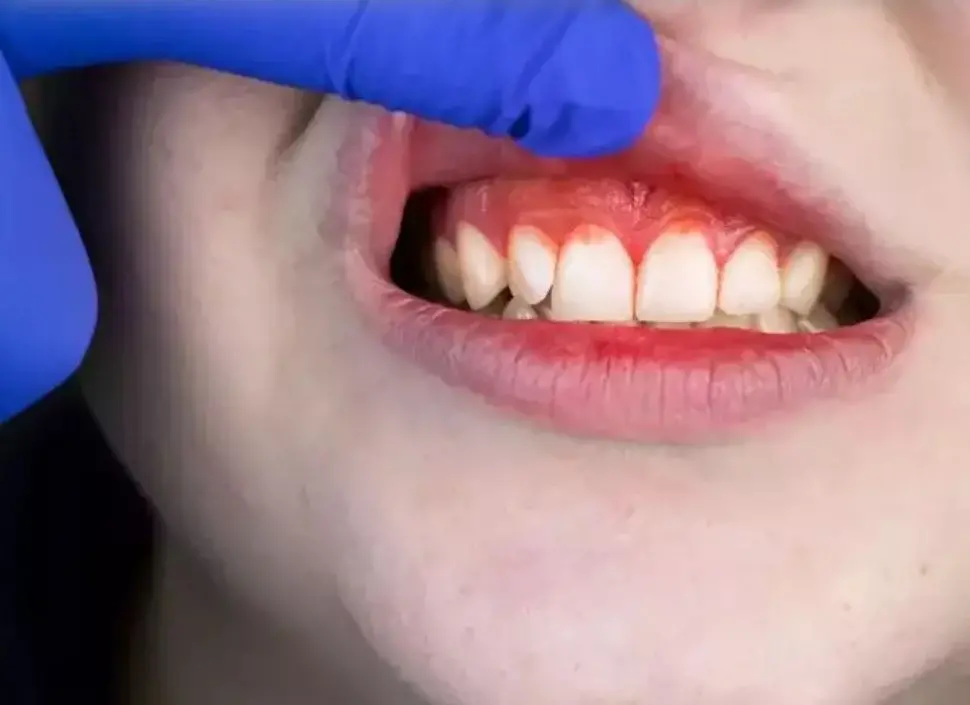

Healthy gums play a crucial role in anchoring teeth and protecting against bacterial infection. They are typically pink to coral in color, firm and non-glossy, and wrap tightly around the teeth without deep gaps. Healthy gums do not bleed or cause pain when brushed.
Signs of Unhealthy Gums:
-
Dark red or purplish color
-
Swelling along the edges
-
Bleeding during brushing or flossing
-
Gum recession creating pockets around teeth
-
Exposed roots and sensitivity when chewing or to hot/cold foods
Disease Progression:
Gingivitis affects the superficial tissue initially and can be reversed with proper care. Neglect can lead to periodontitis, causing permanent damage, loose teeth, and changes in bite alignment.
Warning Signals Not to Ignore:
-
Frequent bleeding when brushing
-
Persistent bad breath or unpleasant taste
-
Pain when chewing
-
Loose teeth
Causes of Gum Deterioration:
-
Plaque buildup turning into hard tartar
-
Smoking reducing saliva production
-
Diet high in sugar/fats and low in fiber
-
Vitamin (A, C) and mineral (calcium, zinc) deficiencies
-
High blood sugar, hormonal changes
-
Chronic stress, genetics, and excess weight
-
Certain medications causing dry mouth
Daily Prevention:
-
Brush twice daily with fluoride toothpaste for two minutes
-
Use floss or interdental cleaners daily
-
Drink sufficient water
-
Limit sticky sugary foods
-
Quit smoking
-
Eat a diet rich in vegetables and protein
-
Manage stress through exercise or relaxation techniques
-
Visit the dentist regularly for tartar removal
Treatment Options:
-
Remove plaque above and below gum line in early stages
-
Deep cleaning of tooth roots in advanced cases to help tissue reattachment
-
Early intervention is crucial to prevent tooth loss and bone deterioration