
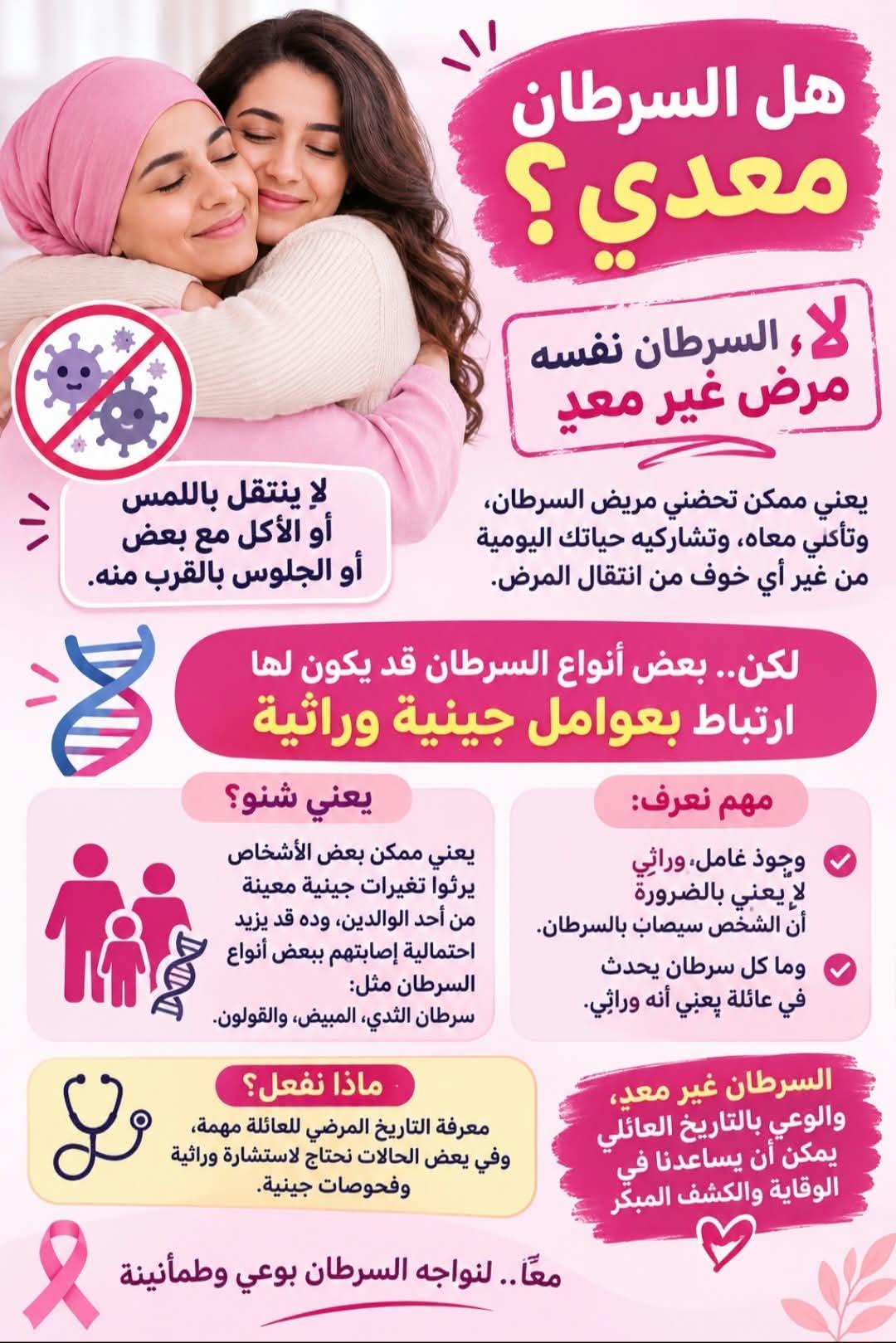

Is Cancer Contagious? The Truth About Cancer Transmission and Genetic Factors
Is Cancer Contagious and Can It Spread from One Person to Another?
Many people wonder: Is cancer contagious? Can the disease be transmitted through touching, kissing, or sharing meals with a cancer patient?
The clear medical answer is that cancer itself is not contagious and cannot be transmitted from one person to another through everyday contact or close interaction.
You can hug someone with cancer, sit next to them, share meals, and participate in daily activities without worrying about catching the disease.
Cancer develops as a result of abnormal and uncontrolled cell growth within the body. It does not spread in the same way as infectious diseases such as influenza or the common cold.
Can Cancer Spread Through Touching or Kissing?
Cancer cannot be transmitted through touching, kissing, sharing personal belongings, or eating and drinking with someone who has cancer.
Some examples of safe everyday interactions with cancer patients include:
-
Shaking hands and hugging.
-
Sitting beside them for extended periods.
-
Sharing meals and using the same dining table.
-
Living in the same household and sharing daily activities.
-
Talking to them and providing care and emotional support.
It is important to remember that cancer patients need support, compassion, and understanding rather than isolation or avoidance due to fear of infection.
Is Cancer a Hereditary Disease?
Although cancer itself is not contagious, some types of cancer may be associated with genetic and hereditary factors that increase the risk of developing the disease.
Some individuals inherit specific genetic changes from one of their parents. These changes may increase their risk of developing certain types of cancer.
Examples of cancers that may be associated with hereditary factors include:
1. Breast Cancer
In some families, breast cancer may be associated with inherited genetic mutations such as BRCA1 and BRCA2, which can increase the risk of developing breast and ovarian cancer.
2. Ovarian Cancer
Ovarian cancer may be associated with certain hereditary syndromes, particularly genetic mutations in BRCA1 and BRCA2. Therefore, knowing your family medical history can be important when assessing your risk.
3. Colorectal Cancer
Certain hereditary syndromes, such as Lynch syndrome and Familial Adenomatous Polyposis (FAP), may increase the risk of developing colorectal cancer.
Does Having a Family History of Cancer Mean You Will Develop the Disease?
No. Having family members who have been diagnosed with cancer does not necessarily mean that every family member will develop the disease.
It is important to distinguish between two conditions:
Inherited Genetic Predisposition to Cancer: This occurs when a person inherits a specific genetic mutation that may increase their likelihood of developing cancer.
Familial Clustering of Cancer: Multiple cancer cases may occur within the same family due to shared environmental factors, lifestyle habits, or multiple genetic factors, without a single identifiable inherited mutation.
Therefore, not every case of cancer occurring in multiple family members is necessarily hereditary.
How Can We Protect Ourselves from Cancer Associated with Genetic Factors?
Knowing your family medical history can help identify individuals who may need a more thorough medical evaluation.
Important steps include:
-
Identifying family members who have previously been diagnosed with cancer.
-
Determining the type of cancer and the age at diagnosis, especially when cancer occurs at a young age.
-
Consulting a doctor if there is a repeated family history of certain types of cancer.
-
Undergoing genetic testing when recommended by a healthcare professional.
-
Following appropriate screening and early detection programs based on age and individual risk.
-
Maintaining a healthy lifestyle and avoiding smoking.
Are There Viruses That Can Cause Cancer?
There is an important difference between cancer itself being transmitted and certain infections that may increase the risk of developing specific types of cancer.
Some viruses and bacteria are associated with an increased risk of cancer, including:
-
Human Papillomavirus (HPV): Certain types of HPV are associated with cervical cancer and several other types of cancer.
-
Hepatitis B and C Viruses: These viruses may increase the risk of developing liver cancer.
-
Helicobacter pylori (H. pylori): This bacterium is associated with an increased risk of certain types of stomach cancer.
It is important to understand that being infected with these organisms does not necessarily mean that a person will develop cancer. Furthermore, transmitting an infection associated with cancer risk does not mean that cancer itself is transmitted from one person to another.
When Should You Consult a Doctor?
You should consider consulting a doctor if there is a repeated family history of cancer, particularly when cases occur at a young age or when multiple family members develop types of cancer associated with the same hereditary syndrome.
You should also avoid ignoring unusual or persistent symptoms and make sure to follow appropriate routine screening recommendations based on your age and medical history.
Frequently Asked Questions About Cancer
Can Cancer Be Transmitted Through Kissing?
No. Cancer itself cannot be transmitted through kissing, saliva, or direct physical contact.
Can Eating with a Cancer Patient Cause Infection?
No. Sharing food and dining with someone who has cancer does not cause the disease to spread.
Can Cancer Be Transmitted Between Married Couples?
Cancer cannot spread from one spouse to another through sexual intercourse or everyday contact. However, certain infections associated with an increased risk of cancer, such as HPV, can be transmitted between partners.
Are All Types of Cancer Hereditary?
No. Most cancer cases are not caused by genetic mutations inherited from parents, although family history can increase the risk of developing certain types of cancer.
Can Hereditary Cancer Be Prevented?
Not all hereditary cancers can be completely prevented. However, genetic counseling, appropriate testing, and early detection may help reduce risks and improve the chances of identifying the disease at an early stage.
Conclusion: Cancer Is Not Contagious — Awareness Is Our First Line of Defense
Cancer is not a contagious disease and cannot be transmitted through touching, kissing, or sharing meals with a cancer patient. You can provide care and emotional support to someone with cancer without worrying about catching the disease.
Genetic factors, however, may increase the likelihood of developing certain types of cancer. Therefore, understanding your family medical history, seeking medical advice, and undergoing appropriate tests are important steps toward early detection and prevention.
Together, we face cancer with awareness, knowledge, and reassurance, supporting every patient without fear or discrimination.
Contact and Inquiries
Phone Number: 01003540816
Founder of the Vital Medicines Supply Group.
Operating Countries: Egypt, Sudan, Saudi Arabia, the United Arab Emirates, and Yemen.
-
Hand-to-hand delivery.
-
Official procedures.
-
Providing trusted medications.
Email: [email protected]
For Contact and Inquiries: 01003540816
This content is intended for health education and awareness purposes only. It does not replace consultation with a qualified healthcare professional or the necessary medical examinations.
