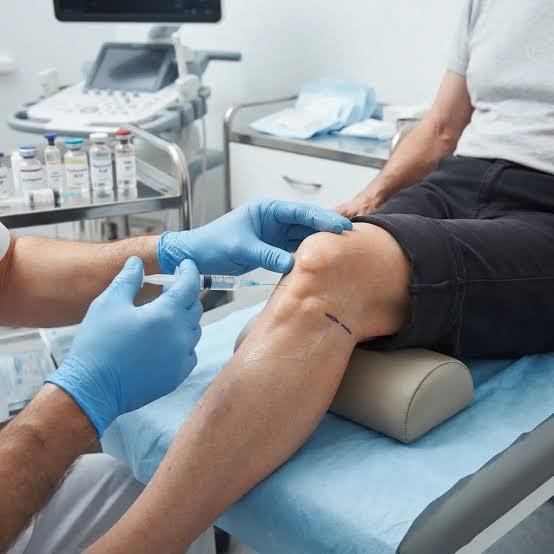

Knee Pain, Ultrasound Diagnosis, and Image-Guided Injections | Dr. Ahmed Osman
Knee pain is a common problem that can affect walking, climbing stairs, standing for long periods, and other daily activities. It may result from osteoarthritis, inflammation of surrounding tissues, ligament or tendon injuries, or fluid buildup within the joint. Identifying the underlying cause is an important step in choosing appropriate treatment rather than relying on painkillers or injections without a clear diagnosis.
Ultrasound can help assess several conditions that may contribute to knee pain. It can also be used to guide certain injections toward the intended target. Dr. Ahmed Osman evaluates each case to discuss appropriate options, including hyaluronic acid injections, commonly called “knee oil,” or platelet-rich plasma (PRP) injections for selected cases of knee osteoarthritis.
📍 Dr. Ahmed Osman Clinics and Appointment Details
Consultations are available in Mansoura, with a home-visit service also offered.
🏥 Meet Khamis Clinic – Mansoura
Address: Above Hasab El-Naby Pharmacy, next to Al-Mustafa Mosque.
Hours: Saturday to Wednesday, 5:00 PM–8:00 PM.
Consultation fee: EGP 370.
🏥 Delta Hospital Clinic – Mansoura
Address: Gehan Street, opposite the Emergency Department.
Hours: Saturday, Monday, and Wednesday, 3:00 PM–4:30 PM.
Consultation fee: EGP 400.
📞 Appointments and inquiries:
-
Phone and WhatsApp: 01284129114
-
Clinic numbers: 01017220328 – 01093361223 – 0502759082
.jpg)
What Causes Knee Pain?
Knee pain does not have a single cause. It may originate within the joint or in the surrounding tissues. Understanding the location and nature of the pain, when it occurs, and what makes it worse can help guide the assessment.
Common causes include:
-
Knee osteoarthritis: Gradual changes in the joint and cartilage may cause pain during movement, stiffness, and difficulty with daily activities.
-
Inflammation of surrounding tissues: Tendons or bursae may become irritated and cause pain during certain movements.
-
Ligament and tendon injuries: These may result from twisting, strain, or sports activities.
-
Fluid buildup: Fluid in or around the joint may cause swelling, pressure, and difficulty bending the knee.
-
Arthritis: Different inflammatory conditions can affect the knee and require assessment to determine their nature.
These conditions may have similar symptoms. The cause cannot be established from the location of the pain alone; clinical examination and imaging may be needed.
When Is Knee Ultrasound Useful?
Ultrasound is an imaging technique that helps assess certain tissues around the knee. It may be useful when the symptoms and physical examination suggest a problem that can be evaluated with this method.
Ultrasound may help assess:
-
Fluid buildup within or around the joint.
-
Signs of synovial inflammation in suitable cases.
-
Certain tendon and bursal problems.
-
Some injuries or changes in the soft tissues surrounding the knee.
-
The location of fluid collections when a guided procedure is needed.
However, ultrasound does not show every part of the joint equally well and cannot independently diagnose every cause of knee osteoarthritis or fully assess all cartilage and bone surfaces. X-rays, MRI, or other tests may be needed depending on the symptoms and examination findings.
How Can Ultrasound Help Identify the Cause of Knee Pain?
The assessment begins with questions about the pain, when it started, whether it worsens with movement or rest, and whether swelling or a previous injury is present. The clinician then determines whether ultrasound may help evaluate the suspected problem.
Ultrasound can show certain soft-tissue changes and fluid collections. It also allows the clinician to observe the target area in real time during the examination.
Its value lies in helping assess some possible causes of pain. However, it remains one part of the medical evaluation and does not replace a physical examination or other imaging methods when they are indicated.
What Are Ultrasound-Guided Injections?
Ultrasound-guided injections use real-time ultrasound imaging to help the clinician visualize the needle as it is directed toward the intended area.
This approach allows the surrounding tissues and needle position to be viewed during the procedure. It may improve targeting accuracy in suitable procedures, particularly when reaching a specific location is important.
The injected substance depends on the treatment goal. Some injections may be considered to help relieve symptoms of knee osteoarthritis in selected cases, while others may be used for different purposes according to the diagnosis.
Ultrasound guidance does not automatically make an injection appropriate for every patient. The diagnosis, potential benefits, risks, and alternatives should be assessed first.
Knee Oil Injections: What Is Hyaluronic Acid?
The term “knee oil injection” commonly refers to hyaluronic acid injections. This substance is injected into the joint in selected cases with the aim of helping relieve symptoms of knee osteoarthritis.
Responses vary from person to person. Medical evidence regarding its benefits is mixed, and not all clinical guidelines recommend routine use for every patient with knee osteoarthritis.
Before considering this procedure, the clinician needs to assess the severity of the condition, the symptoms, and the patient's general health. The expected benefits should be discussed alongside other treatment options.
Hyaluronic acid injections do not rebuild worn cartilage and cannot guarantee complete or permanent relief from pain.
PRP Injections for Knee Osteoarthritis
Platelet-rich plasma (PRP) is prepared from a sample of the patient's own blood. The sample is processed to produce a preparation containing a concentrated amount of platelets, which is then injected into the target area according to the treatment plan.
PRP may be discussed for some patients with knee osteoarthritis. However, its potential benefits vary according to the severity of the condition, the preparation method, and individual factors. Evidence regarding its effectiveness is also variable.
PRP should not be presented as a guaranteed way to regenerate cartilage or as a suitable replacement for all other treatments. Before making a decision, patients should understand the expected benefits, limitations, costs, and alternatives.
Ultrasound may be used to guide the injection when the clinician considers it appropriate for the procedure and the individual case.
What Is the Difference Between Knee Oil and PRP Injections?
The two treatments differ in the substance used, how it is prepared, and the purpose for which it may be considered.
Hyaluronic acid injections: A preparation injected into the joint that may be used to relieve symptoms in selected cases of knee osteoarthritis. Responses vary among patients.
PRP injections: A preparation derived from the patient's own blood that may be considered to help relieve symptoms in some patients with knee osteoarthritis. Evidence and outcomes vary.
There is no single option that is best for every patient. The decision depends on the diagnosis, severity of osteoarthritis, symptoms, previous treatment, and the patient's preferences after discussing the options with a clinician.
Can Ultrasound-Guided Injections Permanently Cure Knee Osteoarthritis?
A permanent cure cannot be guaranteed through ultrasound-guided injections or any injection alone. Osteoarthritis involves changes in the joint, and treatment generally aims to relieve pain, improve movement, and support daily function.
Depending on the case, management may include modifying activities that worsen pain, appropriate therapeutic exercises, weight management when relevant, suitable medication, selected injections, or other procedures.
The clinician determines whether an injection is appropriate after evaluating the knee. Patients should understand that responses vary and that other treatments may be needed.
What Should Be Assessed Before a Knee Injection?
Before an injection is considered, the clinician reviews the symptoms and medical history and examines the knee. Imaging or additional tests may be requested when necessary.
The assessment may include:
-
Identifying the location of pain, the degree of swelling, and the range of movement.
-
Assessing the possibility of osteoarthritis, inflammation, or another injury.
-
Reviewing existing imaging and requesting additional studies when needed.
-
Reviewing medications and medical conditions that could affect the safety of the procedure.
-
Discussing the injection type, expected outcomes, and alternatives.
If the knee is severely red, hot, or acutely swollen, or an infection within the joint is suspected, prompt assessment is essential. An injection into the joint should not be performed until infection has been appropriately considered and excluded.
When Should You Seek Medical Assessment for Knee Pain?
Medical assessment is recommended when knee pain persists, recurs, or begins to interfere with walking and everyday activities, particularly when swelling, stiffness, or restricted movement is present.
Sudden severe pain, an inability to bear weight, or a hot, red, swollen knee accompanied by fever requires urgent medical assessment.
An examination can help determine whether the problem is related to osteoarthritis, surrounding tissues, or another cause, and guide the selection of appropriate tests and treatment.
Knee Pain Assessment and Ultrasound-Guided Injections With Dr. Ahmed Osman
If you have knee pain or want to understand the cause of swelling or restricted movement, an assessment can help determine whether ultrasound or other investigations are needed. The suitability of hyaluronic acid or PRP injections for knee osteoarthritis can also be discussed based on the diagnosis.
You can contact Dr. Ahmed Osman to ask about appointments in Mansoura and the available home-visit service.
Meet Khamis Clinic: Above Hasab El-Naby Pharmacy, next to Al-Mustafa Mosque.
Hours: Saturday to Wednesday, 5:00 PM–8:00 PM.
Consultation fee: EGP 370.
Delta Hospital Clinic: Gehan Street, opposite the Emergency Department.
Hours: Saturday, Monday, and Wednesday, 3:00 PM–4:30 PM.
Consultation fee: EGP 400.
📞 Appointments: 01284129114
💬 WhatsApp: 01284129114
☎️ Clinic numbers: 01017220328 – 01093361223 – 0502759082
Knee pain may result from osteoarthritis, inflammation, tendon or ligament problems, or fluid buildup. Treatment therefore begins with identifying the underlying cause. Ultrasound can help assess certain tissues around the joint and can guide injections when appropriate.
The choice between knee oil and PRP injections depends on the condition of the knee, the available evidence, and the treatment goal. Neither option is a guaranteed solution for every case of osteoarthritis. Medical assessment and a discussion of treatment alternatives remain essential to selecting an appropriate plan.