
Minimally Invasive Heart and Chest Surgery: Benefits and Suitable Cases | Dr. Mohamed Hassan Abdullah
Minimally invasive surgery has become an important development in the field of cardiac and thoracic surgery. In selected cases, modern surgical techniques allow doctors to perform certain procedures through smaller incisions compared with traditional surgery. However, the appropriate technique depends on the patient's condition, the type of disease, and the surgical procedure required.
📞 For appointments and inquiries with Dr. Mohamed Hassan Abdullah – Consultant of Cardiothoracic Surgery:
Gardenia Clinics: 01119226555 / 0223621602
Damanhour Cardiac Center (DCC): 01028888719 / 0453333372 / 01028888716
Military Production Hospital: 0228167051
1. What Is Minimally Invasive Surgery?
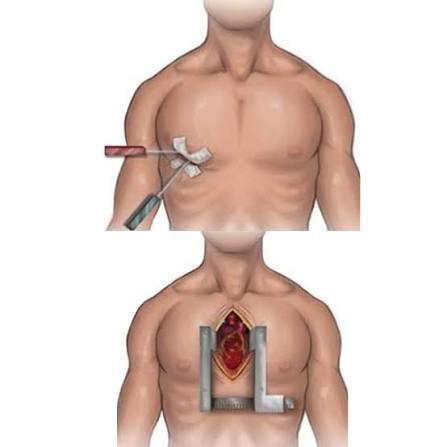
Minimally invasive surgery refers to surgical techniques that use smaller incisions or specialized approaches to reach the targeted area and perform the required procedure.
Compared with some traditional surgical techniques, minimally invasive procedures may involve smaller surgical openings and specialized instruments.
However, minimally invasive surgery is still a surgical procedure and is not necessarily suitable for every patient or every condition.
2. What Is the Difference Between Traditional and Minimally Invasive Surgery?
Some traditional operations require a larger surgical incision to provide the surgeon with adequate access to the affected organ or area.
Minimally invasive procedures, when appropriate, use smaller incisions and advanced surgical techniques to access the required area.
The difference between the two approaches depends on the type of surgery and the patient's condition. Therefore, minimally invasive surgery cannot automatically be considered the best option for every patient.
3. What Are the Potential Benefits of Minimally Invasive Surgery?
When a patient is an appropriate candidate, minimally invasive surgery may offer several potential benefits compared with certain traditional procedures.
These may include:
-
Smaller surgical incisions in selected procedures.
-
Smaller wounds.
-
Less postoperative pain for some patients.
-
A potentially shorter recovery period in certain procedures.
-
A gradual return to normal daily activities.
Recovery and outcomes vary from one patient to another depending on the type of surgery and overall health.
4. Is Minimally Invasive Surgery Suitable for Everyone?
No.
The choice of surgical technique depends on the specific details of each case. A comprehensive medical evaluation is necessary before determining whether minimally invasive surgery is appropriate.
Traditional surgery may be more suitable in some cases, particularly when the procedure requires wider surgical access or when the nature of the disease makes a minimally invasive approach unsuitable.
The surgeon therefore selects the appropriate technique after reviewing medical tests, imaging, and the patient's overall health.
5. Can Minimally Invasive Techniques Be Used in Heart Surgery?
Certain minimally invasive techniques can be used for selected types of heart surgery in appropriate patients.
The choice depends on the specific cardiac condition, the procedure required, and the patient's overall health.
The medical and surgical team determines whether a minimally invasive approach is suitable or whether traditional open-heart surgery would be more appropriate.
6. Minimally Invasive Techniques in Chest Surgery
Minimally invasive techniques are also used in selected chest surgeries.
One of the important approaches is Video-Assisted Thoracoscopic Surgery (VATS), which allows the surgeon to access the chest using a camera and specialized instruments through small incisions.
VATS may be used for certain conditions affecting the lungs, pleura, or other structures within the chest, depending on the patient's individual condition.
7. How Does the Doctor Choose the Appropriate Surgical Technique?
The choice of surgical technique should be based on medical assessment rather than the patient's preference alone.
The doctor may consider several factors, including:
-
The type of disease.
-
The location of the problem.
-
The severity of the condition.
-
Medical imaging and test results.
-
Heart and lung function.
-
The patient's overall health.
-
The type of surgical procedure required.
After evaluating these factors, the surgeon can determine the most appropriate approach for the individual patient.
8. How Does a Patient Prepare for Minimally Invasive Surgery?
Before surgery, the patient undergoes a comprehensive medical assessment to determine whether they are suitable for the procedure.
This may include reviewing the medical history and current medications, performing the necessary laboratory tests and examinations, and assessing heart and lung function when required.
The medical team also provides specific instructions regarding medications, food, physical activity, and other preparations based on the type of procedure.
9. What Happens After Minimally Invasive Surgery?
Recovery varies depending on the type of operation, the surgical technique used, and the patient's overall health.
In some cases, minimally invasive surgery may be associated with a shorter recovery period compared with certain traditional procedures. However, recovery differs from one patient to another.
Patients should follow their doctor's instructions regarding medications, physical activity, wound care, and follow-up appointments.
10. Does Minimally Invasive Surgery Have Risks?
Like any surgical procedure, minimally invasive surgery may involve potential risks and complications. These risks vary according to the type of procedure and the patient's medical condition.
Before surgery, the doctor evaluates the potential benefits and risks and explains the procedure and expected outcomes to the patient.
Therefore, the choice of surgical technique should be based on a complete medical evaluation rather than the size of the surgical incision alone.
11. When Should You Consult a Cardiothoracic Surgeon?
If you have been diagnosed with a condition that may require surgery involving the heart or chest, consulting a specialized cardiothoracic surgeon can help evaluate your condition and discuss appropriate treatment options.
A surgical consultation can also help determine whether you may be a suitable candidate for minimally invasive surgery or whether traditional surgery would be more appropriate.
The goal is to select the surgical approach that best fits the patient's condition and the requirements of the procedure.
Dr. Mohamed Hassan Abdullah | Consultant of Cardiothoracic Surgery
Dr. Mohamed Hassan Abdullah provides specialized cardiothoracic surgical services, including:
-
Open-heart surgery.
-
Coronary artery bypass surgery.
-
Heart valve surgery.
-
Minimally invasive surgery.
-
Chest surgery.
-
Video-Assisted Thoracoscopic Surgery (VATS).
Clinic Locations and Working Hours
Saturday | Military Production Hospital
🕐 1:00 PM
☎️ 02-28167051
Monday | Gardenia Clinics
📍 35 Al Qasr Al Ainy Street
🕐 8:00 PM
📞 01119226555 / 02-23621602
Wednesday | Arab Contractors Hospital
🕐 12:00 PM
Friday | Damanhour Cardiac Center (DCC)
📍 Inside Dar Al Shifa Hospital, Damanhour, Beheira
📌 Appointments by prior booking
📞 01028888719
☎️ 0453333372
📞 01028888716
Conclusion
Minimally invasive heart and chest surgery has become an important option for selected patients and may provide smaller incisions and a potentially shorter recovery period in certain procedures.
However, this approach is not suitable for every patient. The appropriate surgical technique depends on the type of disease, the patient's health, and the specific procedure required.
A consultation with a cardiothoracic surgeon helps determine the most appropriate surgical approach based on the individual patient's condition.
Dr. Mohamed Hassan Abdullah – Consultant of Cardiothoracic Surgery