

🫀 Mitral Valve Repair and Replacement Through Minimally Invasive Procedures | Dr. Mahmoud El Degwy
Mitral valve disease may begin with mild symptoms such as shortness of breath, fatigue during physical activity, or palpitations, while some patients may have no obvious symptoms during the early stages. The appropriate treatment depends on the type and severity of the valve problem, its effect on the heart muscle, and the patient's overall health condition.
With the continued development of heart valve treatment, options are no longer limited to traditional open-heart surgery. In selected cases, mitral valve repair through catheter-based procedures, such as Transcatheter Edge-to-Edge Repair (TEER), may be considered. Minimally invasive surgical techniques are also available in specialized centers. However, these options are not suitable for every patient, and mitral valve replacement cannot generally be performed through a catheter in all cases.
If you are looking for mitral valve repair, mitral valve replacement, treatment of mitral valve regurgitation, or treatment of mitral valve stenosis in Mohandessin, the first step is an accurate evaluation of the valve through a clinical examination, echocardiography, and any additional tests recommended by the physician. The appropriate treatment is then selected according to the diagnosis and the patient's individual condition.
📞 Contact and Appointment Information with Dr. Mahmoud El Degwy
Professor and Consultant of Cardiothoracic Surgery, Kasr Al Ainy Faculty of Medicine – Cairo University.
🏥 Heliopolis Clinic: 70 Abdel Aziz Fahmy Street – Saint Fatima Square
🏥 Mohandessin Clinic: Beginning of Syria Street – Next to Arab League Mosque – Giza
🏥 Maadi Clinic: Western Basatin – Cairo
🫀 What Is the Mitral Valve?
The mitral valve is one of the four valves of the heart. It is located between the left atrium and the left ventricle. The valve opens to allow blood to flow from the atrium into the ventricle and then closes to prevent blood from flowing backward into the atrium when the ventricle contracts.
Mitral valve disease mainly occurs when the valve:
-
Fails to close properly, resulting in mitral valve regurgitation.
-
Becomes narrowed, resulting in mitral valve stenosis.
The severity of mitral valve disease can vary significantly from one patient to another. Therefore, simply having a valve problem does not automatically mean that surgery is required.
🔴 What Are the Symptoms of Mitral Valve Regurgitation?
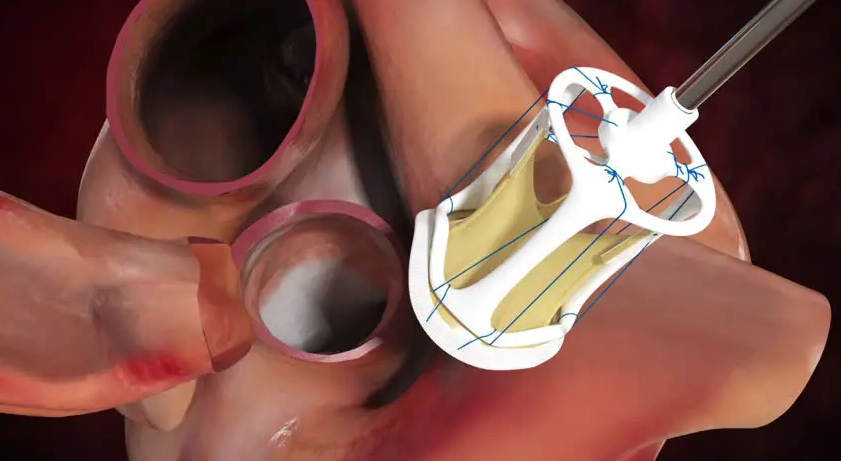
Mitral valve regurgitation occurs when part of the blood flows backward from the left ventricle into the left atrium during heart contraction because the mitral valve does not close properly.
Mild mitral valve regurgitation may not cause noticeable symptoms, while more significant regurgitation can cause symptoms when it begins to affect the heart and circulation.
Possible symptoms include:
-
Shortness of breath, particularly during physical activity.
-
Fatigue and reduced ability to perform normal activities.
-
Palpitations or a feeling of an irregular heartbeat.
-
Shortness of breath when lying down in some cases.
-
Leg swelling or fluid retention in advanced cases.
The severity of mitral valve regurgitation cannot be determined based on symptoms alone. Evaluation depends on clinical examination, echocardiography, and other measurements recommended by the physician.
🔵 What Is Mitral Valve Stenosis?
Mitral valve stenosis occurs when the opening of the mitral valve becomes narrower than normal, making it more difficult for blood to move from the left atrium into the left ventricle.
One of the most common causes of mitral valve stenosis is a previous history of rheumatic fever. Other causes may include degenerative changes, calcification, or certain congenital conditions.
Severe mitral valve stenosis can increase pressure inside the left atrium and the blood vessels of the lungs, leading to symptoms such as shortness of breath and fatigue. Some patients may also develop heart rhythm disorders such as atrial fibrillation.
Treatment depends on the cause and severity of the stenosis, the structure of the valve, and the patient's overall health condition.
🩺 How Is Mitral Valve Disease Diagnosed?
Evaluation usually begins with a medical history and physical examination, followed by the diagnostic tests considered appropriate by the physician.
🫀 Echocardiography
Echocardiography is one of the most important tests used to evaluate mitral valve disease. It helps assess:
-
The structure and movement of the valve.
-
The severity of regurgitation or stenosis.
-
The effect of the valve problem on the heart chambers.
-
Left ventricular function.
-
Certain effects related to pulmonary circulation pressure.
Some patients may require transesophageal echocardiography (TEE) to obtain more detailed images of the mitral valve, particularly when planning certain procedures or when standard echocardiography does not provide sufficient information.
Other tests, such as an electrocardiogram, chest imaging, computed tomography, or cardiac magnetic resonance imaging, may also be used when considered necessary by the medical team.
Modern heart valve guidelines emphasize that complex or severe cases should be evaluated by a specialized heart valve team to determine the most appropriate treatment strategy.
🔧 Mitral Valve Repair or Replacement?
When intervention is required for mitral valve disease, the possibility of repairing the patient's natural valve is an important factor in choosing the treatment approach, particularly in selected cases of severe primary mitral regurgitation where a successful repair is considered achievable.
Depending on the nature of the valve problem, mitral valve repair may involve:
-
Repairing the valve leaflets.
-
Addressing the chordae tendineae when necessary.
-
Repairing or reinforcing the valve annulus.
-
Reconstructing damaged parts of the valve.
Mitral valve replacement may be considered when repair is not suitable or when the extent and nature of the valve damage make a reliable repair unlikely.
The choice between a mechanical and biological replacement valve depends on several factors, including the patient's age, overall health, bleeding and clotting risks, ability to adhere to medication, and long-term follow-up requirements.
🔬 Can the Mitral Valve Be Repaired Without Open-Heart Surgery?
Yes. Some types of mitral valve repair can be performed without traditional open-heart surgery, but these procedures are appropriate only for selected patients.
One of the main catheter-based procedures is:
Mitral Valve TEER Procedure
Transcatheter Edge-to-Edge Repair (TEER) involves guiding a catheter through a blood vessel, usually from the groin, to reach the mitral valve and place a specialized device designed to reduce mitral regurgitation.
This technique does not require traditional open-heart surgery, but it is not suitable for every patient with mitral valve regurgitation.
The decision to use TEER depends on several factors, including:
-
Severity of the regurgitation.
-
Type and cause of the regurgitation.
-
Valve anatomy and structure.
-
Severity of symptoms.
-
Heart function.
-
Risk associated with conventional surgery.
-
Assessment by a specialized heart valve team.
Current guidelines support the use of TEER in selected patients, particularly some patients with severe mitral regurgitation who are at high surgical risk or are considered unsuitable for surgery. It may also have a role in certain cases of secondary mitral regurgitation according to specific clinical criteria.
Minimally Invasive Mitral Valve Surgery
Minimally invasive mitral valve surgery may be performed through smaller incisions than those used in traditional open-heart surgery. Advanced surgical techniques may be available at specialized centers with the appropriate expertise and equipment.
It is important to distinguish between:
Minimally invasive surgery: It is still surgery, but it is performed through smaller incisions in appropriately selected cases.
And:
Catheter-based mitral valve repair: The procedure is performed through the blood vessels without traditional surgical opening of the chest.
Therefore, the phrase "without open-heart surgery" does not necessarily mean "without an invasive procedure." The appropriate technique depends on each patient's condition.
⚠️ Can the Mitral Valve Be Replaced Through a Catheter?
Catheter-based mitral valve replacement is not currently a general alternative to surgery for all patients with mitral valve disease.
Catheter-based techniques for mitral valve replacement or implantation may be considered in highly selected cases, including certain cases involving failure of a previously implanted biological valve. Their use depends on the patient's condition, cardiac anatomy, procedural risk, and the capabilities of the specialized center.
Therefore, when a patient searches for mitral valve replacement without open-heart surgery, it is important first to determine what the specific condition requires: repair or replacement? Is there a previous prosthetic valve? Is the patient anatomically and medically suitable for a catheter-based procedure?
These questions cannot be answered based on symptoms alone.
⭐ What Are the Potential Benefits of Minimally Invasive or Catheter-Based Procedures?
When a patient is suitable for a minimally invasive or catheter-based procedure, these approaches may offer certain advantages compared with traditional surgery in selected cases.
Potential benefits may include:
-
Avoiding a large chest incision in some procedures.
-
Shorter recovery time for some patients.
-
A shorter hospital stay in certain cases.
-
Providing treatment options for some patients who are considered high-risk candidates for conventional surgery.
However, these potential benefits should not be considered guaranteed for every patient. Less invasive procedures also have their own risks, limitations, and selection criteria.
Heart valve guidelines emphasize the importance of individually balancing the potential benefits and risks of each treatment option through a specialized medical team.
🫀 When Does a Patient With Mitral Valve Disease Need an Intervention?
Not every patient with mitral regurgitation or stenosis needs surgery.
Regular monitoring may be appropriate in some cases, while other patients may require medication or an intervention to repair or replace the valve.
The decision depends on several factors, including:
-
Severity of the valve disease.
-
Presence of symptoms and their effect on daily activities.
-
Left ventricular function.
-
Size of the heart chambers.
-
Presence of elevated pulmonary artery pressure.
-
Heart rhythm disorders.
-
Cause of the valve disease.
-
Valve anatomy and repairability.
-
Surgical risk and overall health condition.
In cases of severe mitral regurgitation, the decision to intervene is not based on symptoms alone. The medical team also evaluates the effect of the disease on the heart and the possibility of permanent damage if appropriate treatment is delayed.
🦠 Infective Endocarditis: When Does It Require Urgent Evaluation?
Infective endocarditis is an infection affecting the inner lining of the heart and may involve the heart valves.
Possible symptoms include:
-
Fever.
-
Fatigue.
-
Shortness of breath.
-
Sweating or chills.
-
Other symptoms depending on the location of the infection and its effects.
Suspected infective endocarditis requires prompt medical evaluation because treatment depends on identifying the type of infection and determining its effect on the heart valve.
Treatment may require appropriate antibiotics under medical supervision, while some cases may require surgery if severe valve damage or specific complications develop.
It is important to distinguish infective valve disease from mitral valve regurgitation or stenosis caused by other conditions, as each condition requires a different evaluation and treatment approach.
🫀 What Is the Difference Between Mitral and Aortic Valve Treatment?
Mitral valve disease should not be confused with aortic valve disease.
The mitral valve is located between the left atrium and left ventricle, while the aortic valve is located between the left ventricle and the aorta.
Each valve has its own diseases and appropriate treatment options.
One surgical technique used for certain aortic valve conditions is the Ozaki procedure. This technique involves reconstructing the aortic valve leaflets using the patient's own pericardial tissue after it has been prepared and shaped according to the valve measurements.
However, the Ozaki procedure is not a treatment for the mitral valve and therefore should not be listed as an option for treating mitral valve regurgitation or stenosis.
🩺 How Do You Choose the Right Heart Valve Surgeon?
When looking for a cardiac surgeon to treat heart valve disease, it is better not to rely solely on phrases such as "the best doctor." Choosing the appropriate physician depends on the patient's condition, the required specialty, and the type of expertise needed.
It is useful to consider:
🔹 The surgeon's specialization in cardiac and valve surgery.
🔹 Experience with the specific procedure required by the patient.
🔹 Availability of evaluation through a specialized heart valve team.
🔹 Availability of the diagnostic tests required before treatment.
🔹 Medical follow-up after treatment or surgery.
🔹 Discussion of available treatment alternatives and the potential risks and benefits of each option.
In complex cases, modern guidelines emphasize the importance of a Heart Team, meaning that the patient may be evaluated by a multidisciplinary team when an intervention on the heart valve is being considered.
❤️ Heart Valve Surgery in Mohandessin
Heart valve surgery varies depending on the affected valve and the underlying condition.
Treatment options may include:
-
Mitral valve repair.
-
Mitral valve replacement.
-
Certain aortic valve procedures.
-
Repair or replacement of other heart valves when necessary.
-
Selected minimally invasive procedures.
-
Selected catheter-based procedures for patients who meet the appropriate criteria.
The type of procedure cannot be determined based on the diagnosis alone. Even patients with the same diagnosis may require different treatment approaches depending on their age, heart function, valve anatomy, symptoms, other medical conditions, and procedural risk.
🔎 What Tests May Be Needed Before Heart Valve Surgery?
The physician determines which tests are necessary according to the patient's condition. These may include:
🫀 Echocardiography
To evaluate the structure of the valve, the severity of regurgitation or stenosis, and heart function.
🫀 Transesophageal Echocardiography
It may be required to obtain more detailed information about the valve, particularly when planning a specific procedure.
🫀 Electrocardiogram
To identify heart rhythm abnormalities or changes associated with heart disease.
🧪 Blood Tests
To assess the patient's general health and readiness for an intervention when necessary.
🩻 Additional Imaging Tests
The physician may request computed tomography, cardiac magnetic resonance imaging, or other imaging tests depending on the patient's condition.
After reviewing the results, the medical team can determine whether the patient needs regular monitoring, medication, catheter-based treatment, or surgical repair or replacement of the valve.
🏥 Why Does Mitral Valve Treatment Differ From One Patient to Another?
Because mitral valve disease is not a single condition.
A patient may have primary mitral regurgitation caused by a structural problem in the valve itself, secondary mitral regurgitation related to changes in the heart muscle, or mitral stenosis caused by different underlying conditions.
Therefore, treatment cannot be determined based on a single symptom or one test result.
The physician considers:
Type of disease + severity + symptoms + heart function + valve anatomy + other medical conditions + procedural risk.
Based on this complete assessment, the most appropriate treatment approach can be selected.
📍 Heart and Chest Surgery in Mohandessin with Dr. Mahmoud El Degwy
Dr. Mahmoud El Degwy Ahmed provides specialized care in cardiothoracic surgery, including the evaluation of patients with heart valve diseases, coronary artery conditions, and selected chest diseases and surgical conditions.
The evaluation of a patient with mitral valve disease begins with reviewing symptoms, performing a medical examination, and assessing echocardiography and other test results. The appropriate treatment options can then be determined according to the patient's condition.
The decision between surgery, catheter-based intervention, or regular monitoring depends on an accurate medical diagnosis and the patient's individual needs rather than on the name of the procedure alone.
📞 Book an Evaluation Appointment
If you have been diagnosed with mitral valve regurgitation or mitral valve stenosis, or if you are experiencing symptoms such as shortness of breath, palpitations, or fatigue during physical activity, specialized evaluation can help determine the severity of the condition and whether monitoring, medical treatment, or an intervention is required.
🏥 Mohandessin: Beginning of Syria Street – Next to Arab League Mosque – Giza
🏥 Heliopolis: 70 Abdel Aziz Fahmy Street – Saint Fatima Square
🏥 Maadi: Western Basatin – Cairo
🫀 Conclusion
Treatment for mitral valve disease now includes a wide range of options, beginning with regular monitoring and medical treatment for patients who do not require an intervention and extending to valve repair or replacement when necessary.
In selected patients, catheter-based mitral valve repair such as TEER can be performed without traditional open-heart surgery. Minimally invasive surgical procedures are also available for certain patients at specialized centers. Catheter-based mitral valve replacement, however, has more limited indications and is not a general replacement for conventional surgery.
Repairing the patient's natural valve remains an important option when it is technically possible and medically appropriate, while valve replacement may be considered when repair is not suitable.
The best way to reach the appropriate treatment decision is through a complete evaluation that considers the type and severity of valve disease, heart function, symptoms, valve anatomy, and overall health. The available treatment options should then be discussed with a specialized heart valve team.
⚠️ Medical Disclaimer: The medical information provided in this article is intended for educational and informational purposes only and should not be considered a substitute for a direct clinical examination or consultation with a qualified physician. Please consult your doctor to determine the appropriate treatment plan for your individual condition.