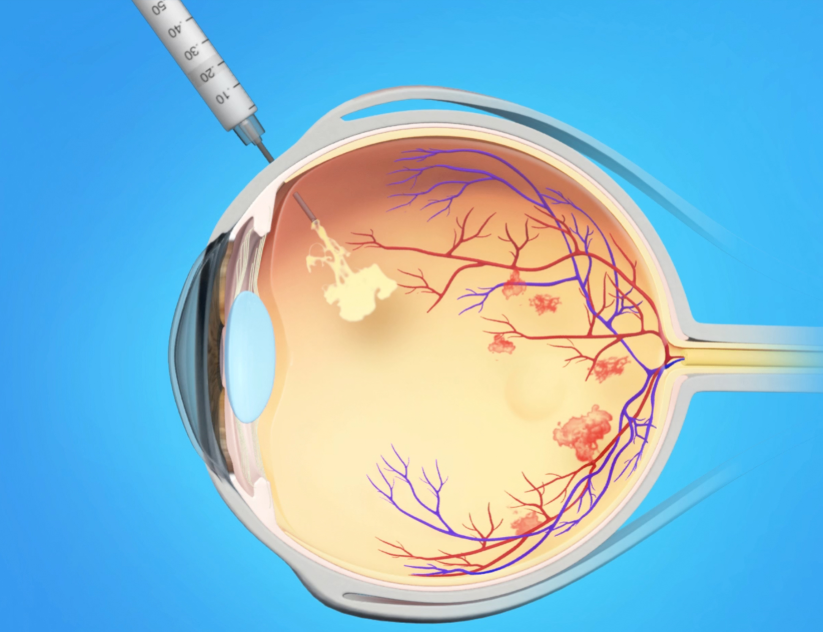

Intravitreal Injection… A Revolution That Transformed the Future of Vision
Intravitreal injection, commonly known as injection inside the eye, is considered one of the most significant modern advancements in ophthalmology. This procedure has brought about a major shift in treating retinal diseases that once led to severe vision loss or blindness with no effective treatment available. Today, thanks to this technique, it is possible to preserve vision and even restore part of it.
What Is an Intravitreal Injection?
An intravitreal injection is a method of delivering medication directly into the vitreous body inside the eye using a very fine needle. This approach allows the drug to reach the retina and other sensitive areas that are difficult to treat with eye drops or oral medications. The procedure takes only a few minutes, is performed under simple local anesthesia, and does not require complex surgery.
Why Is This Procedure Considered a Medical Breakthrough?
Before the introduction of intravitreal injections, there were no effective treatments for many retinal diseases, and vision loss rates were extremely high. Today, this procedure allows for:
Halting disease progression
Reducing vision loss
Improving vision in some patients
Preserving patient independence and quality of life
Delivering the medication directly into the eye also increases its effectiveness while reducing side effects compared to oral or surgical treatments.
Diseases Treated by Intravitreal Injection
This technique is used to treat a wide range of retinal conditions, including:
1) Diabetic Retinopathy
A common complication of diabetes, causing fluid leakage and the formation of abnormal blood vessels in the retina. Anti-VEGF injections help stop disease progression and improve vision.
2) Age-Related Macular Degeneration (AMD)
One of the leading causes of vision loss among older adults. Before intravitreal injections, rapid vision deterioration was common. Today, the disease can be significantly slowed, preserving vision for years.
3) Retinal Vein Occlusion
This blockage leads to retinal swelling and reduced vision. Injections help absorb fluid and improve visual acuity.
4) Macular Edema
Fluid accumulation in the center of the retina causes blurry vision. Injections help reduce swelling and restore visual clarity.
5) Intraocular Infections
Some severe inflammatory conditions require delivering antibiotics or steroids directly into the eye for fast and effective control.