
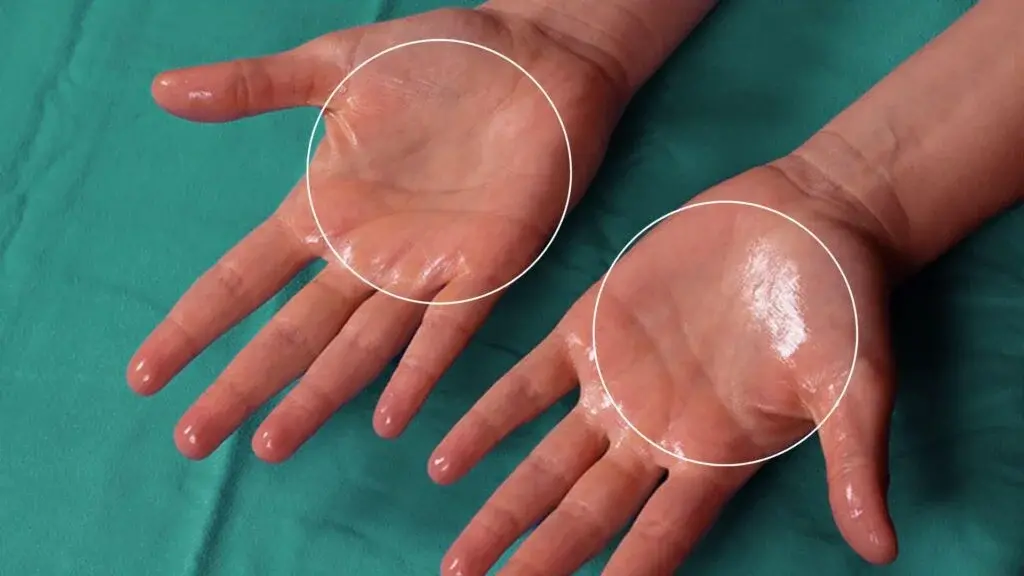

🫱 Surgical Treatment of Excessive Hand Sweating Using Thoracoscopic Surgery | Dr. Mahmoud El-Dagwy
Excessive hand sweating can be a normal response to heat, physical activity, or stress. However, frequent and excessive sweating without an obvious trigger may indicate palmar hyperhidrosis, a condition that can affect writing, using electronic devices, holding objects, and performing everyday or social activities.
There are several approaches to managing excessive hand sweating. The appropriate treatment depends on the underlying cause, severity of sweating, its impact on daily life, and the patient's response to previous treatments. In severe cases and when medically appropriate, especially after less invasive treatments have not provided sufficient improvement, surgical treatment of hand sweating using thoracoscopic surgery may be considered.
This procedure is commonly known as Endoscopic Thoracic Sympathectomy (ETS) or Sympathotomy. It aims to reduce the nerve signals involved in excessive sweating of the hands.
Important: Surgery is not appropriate for every case of excessive hand sweating. Its suitability can only be determined after a comprehensive medical evaluation and a discussion with a qualified surgeon about alternative treatments, potential risks, and expected outcomes.
📞 Contact Information for Dr. Mahmoud El-Dagwy
Specialty: Professor and Consultant of Cardiothoracic Surgery
Experience: More than 20 years of experience in cardiothoracic surgery
Location: Mohandessin – Giza, Egypt
Phone: 01110691461
The suitability of surgery is determined after evaluating the patient's condition, the severity of sweating, previous treatments, and whether another underlying cause may require a different treatment approach.
What Is Palmar Hyperhidrosis?
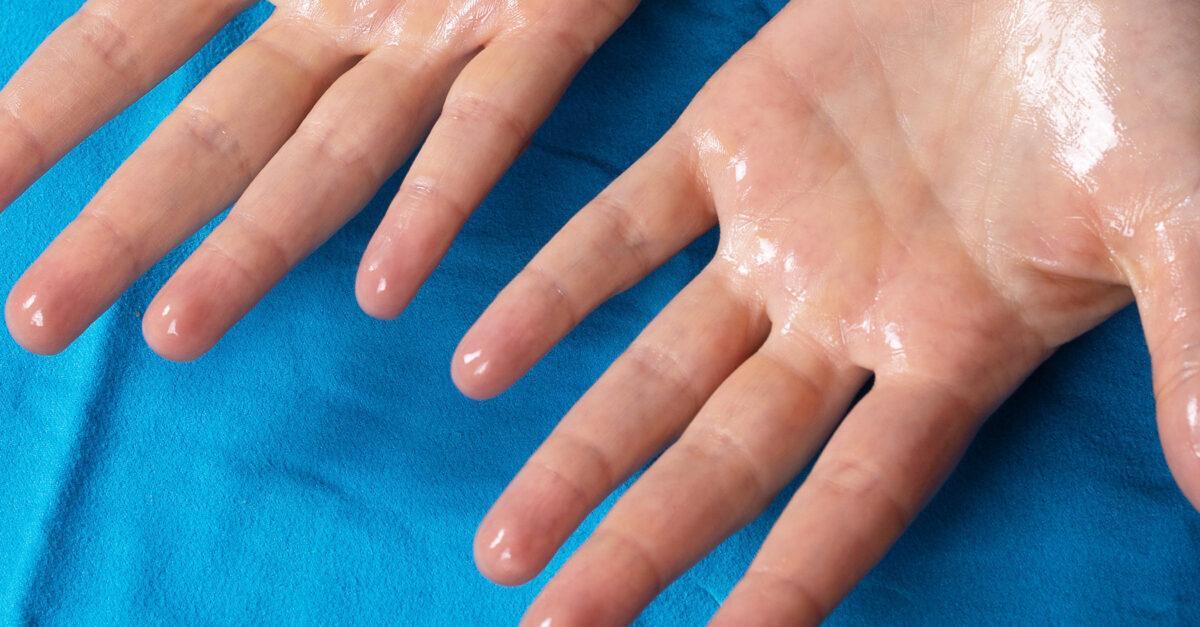
Palmar hyperhidrosis refers to excessive sweating of the palms beyond what is normally required to regulate body temperature.
Sweating may occur even without high temperatures or physical activity, and in some cases it can become severe enough to interfere with daily activities.
Common signs of excessive hand sweating may include:
-
Frequent excessive sweating of the palms.
-
Difficulty holding certain tools, papers, or objects because of wet hands.
-
Difficulty writing or using a keyboard.
-
Difficulty handling certain electronic devices.
-
Frequent need to dry the hands.
-
Embarrassment during handshakes or social interactions.
-
Interference with professional or everyday activities.
The severity of symptoms varies from one person to another. Therefore, diagnosing hyperhidrosis does not depend solely on the amount of sweat, but also on the pattern of symptoms, their impact, and the patient's medical history.
🩺 What Causes Excessive Hand Sweating?
Hyperhidrosis may be primary, meaning it is associated with increased activity of the nerve signals that stimulate the sweat glands. It often affects specific areas such as the palms, soles of the feet, and underarms.
On the other hand, sweating may be secondary to another medical condition or certain medications. Some thyroid disorders, low blood sugar, medical conditions, and medications may be associated with increased sweating.
For this reason, identifying the possible cause of excessive sweating is an important step before considering surgical treatment.
If severe sweating develops suddenly, occurs unusually at night, or is accompanied by other symptoms, medical evaluation is important rather than assuming that the condition is primary hyperhidrosis.
When Can Thoracoscopic Treatment for Excessive Hand Sweating Be Considered?
Surgery is generally not the first treatment option for most cases of excessive hand sweating.
Treatment usually begins with less invasive options, such as medical antiperspirants, iontophoresis for selected cases, certain medications, or botulinum toxin injections depending on the patient's condition and medical assessment.
Thoracoscopic surgery may be discussed for patients with severe and functionally significant palmar hyperhidrosis, particularly when conservative or less invasive treatments have not provided adequate improvement.
The surgical decision should include a clear discussion of:
-
Severity of excessive sweating.
-
Its effect on daily life.
-
Previous treatments and their results.
-
The patient's general health.
-
Ability to tolerate anesthesia and surgery.
-
Potential benefits.
-
Potential risks and complications, particularly compensatory sweating.
-
Available non-surgical alternatives.
Specialized medical guidance generally reserves sympathectomy for selected cases of severe palmar hyperhidrosis after other treatment options have not provided adequate results.
🔬 How Is Excessive Hand Sweating Treated Using Thoracoscopic Surgery?
The procedure involves accessing the sympathetic nerve chain inside the chest. This is part of the autonomic nervous system and is involved in regulating several body functions, including sweating.
Thoracoscopic surgery is performed through small surgical openings in the chest. A thoracoscope allows the surgeon to visualize the targeted area and address the nerve signals associated with excessive sweating of the hands.
The surgical technique may vary. Depending on the patient's condition and the surgical plan, the surgeon may interrupt part of the sympathetic chain or otherwise disrupt the targeted nerve signals.
There is no single technique that is suitable for every patient. The appropriate level and surgical approach depend on the patient's anatomy, condition, and the surgeon's assessment and experience.
🫁 Why Is a Chest Procedure Used to Treat a Problem in the Hands?
It may seem unusual that surgery for excessive hand sweating is performed through the chest. However, the reason is related to the pathway of the sympathetic nervous system.
A chain of nerve structures and fibers inside the chest is involved in transmitting nerve signals associated with sweating in the upper limbs.
Through thoracoscopy, the surgeon can access the targeted nerve pathway and address it according to the surgical plan.
For this reason, this procedure is associated with thoracic and minimally invasive surgery rather than surgery directly involving the hand.
⚕️ What Are the Advantages of Thoracoscopic Surgery for Excessive Hand Sweating?
Thoracoscopic surgery allows the procedure to be performed through small surgical openings rather than a large incision in the chest.
The technique may involve:
-
Small surgical incisions.
-
Use of a thoracoscope to visualize the surgical area.
-
Access to the sympathetic nerve chain inside the chest.
-
Targeted management of the nerve pathway according to the surgical plan.
However, the use of minimally invasive surgery does not mean that the procedure is risk-free, nor does it mean that recovery or results will be identical for every patient.
💧 Does Excessive Hand Sweating Disappear After Surgery?
The goal of surgery is to reduce sweating in the targeted area by interrupting the nerve signals associated with sweating.
A significant reduction in hand sweating may occur after surgery. However, the procedure should not be presented as a guarantee that sweating will disappear permanently or as a treatment suitable for every patient.
A reduction in hand sweating does not necessarily mean that sweating will stop in other areas of the body. One of the most important issues to discuss before surgery is the possibility of compensatory sweating.
Medical literature recognizes compensatory sweating as one of the important potential adverse effects associated with sympathectomy. It may vary in severity and duration, and its exact occurrence and intensity cannot be predicted for every individual patient before surgery.
⚠️ What Is Compensatory Sweating After Surgery for Excessive Hand Sweating?
Compensatory sweating refers to increased sweating in other parts of the body after interruption of the sympathetic nerve pathway responsible for sweating in the targeted area.
It may occur in areas such as:
-
The back.
-
The chest.
-
The abdomen.
-
The thighs.
-
The face in some cases.
Its severity varies between patients. It may be mild in some individuals or more bothersome in others.
Available medical data indicate that compensatory sweating is one of the most common complications associated with sympathectomy and may be an important factor affecting long-term patient satisfaction.
For this reason, the decision to undergo surgery should not be based solely on the desire to eliminate hand sweating. Patients should understand the potential risks and alternatives before making a decision.
🛡️ Is Thoracoscopic Surgery for Excessive Hand Sweating Safe?
Like any surgical procedure, thoracoscopic surgery cannot be considered completely risk-free.
The level of risk varies according to the patient's medical condition, preoperative assessment, anesthesia, surgical technique, the experience of the surgical team, and overall health.
Potential risks associated with the procedure may include:
-
Compensatory sweating.
-
Postoperative pain.
-
Anesthesia-related complications.
-
Certain chest-related complications.
-
Rare injury to nerves or blood vessels.
-
Horner syndrome, a recognized complication that may occur if certain nearby nerve fibers are affected.
-
Persistence or recurrence of sweating in some patients.
Specialized medical guidance emphasizes careful patient selection and a clear discussion of potential risks before sympathectomy is considered.
💉 What Are the Non-Surgical Alternatives for Excessive Hand Sweating?
Before considering surgery, several other treatment options may be evaluated depending on the patient's condition.
Medical Antiperspirants
Antiperspirant products containing ingredients such as aluminum chloride may be used in some cases of hyperhidrosis. The physician determines whether they are appropriate and how they should be used.
Iontophoresis
Iontophoresis is used in some cases of excessive sweating affecting the hands and feet. It involves passing a low electrical current through water while the hands or feet are placed in the water.
Repeated treatment sessions may be required to maintain improvement.
Medications
Certain medications that affect nerve signals associated with sweating may be used in selected cases. However, some medications can cause side effects and should only be used under medical supervision.
Botulinum Toxin Injections
Botulinum toxin injections may help reduce the nerve signals that stimulate the sweat glands. Repeated treatment may be necessary to maintain the effect.
Thoracoscopic Surgery
Surgery may be considered for selected patients, but it is more invasive than the previously mentioned treatment options and is associated with important potential risks. Therefore, it should not be considered before appropriate alternatives have been evaluated and potential complications have been discussed.
🩺 What Happens Before Surgery for Excessive Hand Sweating?
Before deciding on surgery, the physician needs to evaluate the condition comprehensively.
This evaluation may include:
-
Determining when the sweating started and how it has progressed.
-
Identifying the areas affected by excessive sweating.
-
Assessing the impact of the condition on daily life.
-
Reviewing medications and medical history.
-
Reviewing previous treatments and the patient's response to them.
-
Looking for possible secondary causes of excessive sweating when clinically indicated.
-
Performing the necessary preoperative examinations and tests.
-
Explaining the procedure, risks, and available alternatives.
-
Discussing the possibility of compensatory sweating.
These steps help determine whether surgery is appropriate or whether another treatment option may be more suitable.
🛌 What Is Recovery Like After the Procedure?
Recovery varies from one patient to another. Therefore, it is not appropriate to provide one fixed recovery period for all activities without knowing the details of the procedure and the patient's individual condition.
After surgery, the physician may recommend:
-
Taking prescribed medications as directed.
-
Caring for the surgical wounds according to medical instructions.
-
Avoiding certain physical activities for a period determined by the medical team.
-
Attending scheduled follow-up appointments.
-
Reporting unusual or concerning symptoms to the physician.
Discharge instructions and the timing of returning to work or sports vary according to the patient's condition and the specific procedure performed.
👨⚕️ Why Does Excessive Hand Sweating Require Specialist Evaluation?
Because palmar hyperhidrosis is not the same condition in every patient.
In some cases, sweating may be primary and mainly affect the hands, while in other cases it may be associated with factors that require a different diagnostic and treatment approach.
The severity of sweating alone is also not enough to determine whether surgery is appropriate.
The best treatment decision combines:
Accurate diagnosis + assessment of severity + appropriate treatment trials + understanding of risks and alternatives + surgical evaluation of whether the procedure is suitable.
This is particularly important with sympathectomy because it is a surgical intervention that can have potential side effects, some of which may be long-lasting.
🫁 Thoracoscopic Chest Surgery and the Role of a Specialized Surgeon
Thoracoscopic techniques are used in several types of chest surgery, and the appropriate procedure depends on the diagnosis and the patient's individual condition.
Examples of procedures that may be performed using thoracoscopic techniques in appropriate cases include certain surgeries involving the lungs, mediastinum, and pleura, as well as selected procedures involving the sympathetic nerve chain.
However, this does not mean that every condition can be treated using thoracoscopy or that minimally invasive surgery is always the best option. The surgical approach is determined after evaluating the patient's condition and performing the necessary investigations.
📞 Consultation with Dr. Mahmoud El-Dagwy for Excessive Hand Sweating
If excessive hand sweating is affecting your daily life or has not responded adequately to previous treatments, the first step is a medical evaluation to determine the possible cause and discuss available treatment options.
You can contact Dr. Mahmoud El-Dagwy, Professor and Consultant of Cardiothoracic Surgery in Mohandessin, Giza, to discuss the condition and determine whether surgical intervention or another treatment option may be appropriate.
📍 Location: Mohandessin – Giza, Egypt
📞 Phone: 01110691461
Important: Contacting the physician does not automatically mean that surgery is the appropriate treatment. The treatment decision depends on the diagnosis, clinical examination, severity of hyperhidrosis, previous treatments, and the patient's overall health.
Conclusion
Surgical treatment of excessive hand sweating using thoracoscopic surgery may be an option for selected patients with severe palmar hyperhidrosis who have not achieved sufficient improvement with less invasive treatment options.
However, surgery is not a first-line treatment and is not free of potential risks. Compensatory sweating is one of the most important potential adverse effects that should be discussed before making a decision.
Therefore, specialist evaluation and careful consideration of potential benefits, risks, and available alternatives are essential before determining whether surgery is appropriate for an individual patient.
Medical Articles Related to Thymus Gland Surgery and Chest Wall Procedures:
⚠️ Medical Disclaimer: The medical information provided in this article is intended for educational and informational purposes only. It is not a substitute for a direct clinical examination or consultation with a qualified medical professional. Please consult your physician to determine the treatment plan that is appropriate for your individual condition.
