
Inguinal Hernia: Symptoms, Diagnosis and Treatment Options | Dr. Ahmed Atef Sharaf
An inguinal hernia is one of the common surgical conditions that can affect the lower abdomen and groin area. It occurs when tissue pushes through a weakened area in the abdominal wall near the inguinal canal.
Patients commonly notice a swelling or bulge in the groin area, sometimes described in everyday Arabic as “Khanna El-Wark.” The swelling may become more noticeable or increase in size when standing, coughing, moving, or exerting effort. A proper medical examination is needed to determine whether the swelling is caused by an inguinal hernia.
Dr. Ahmed Atef Sharaf provides medical services at his clinic in Maadi. The clinic address and contact details are provided below.
Dr. Ahmed Atef Sharaf Contact Details
📍 Address: 2 Street 100, off El-Horreya Square, above El Omda Café, second floor, Maadi, Cairo.
📞 Booking Phone: 01091383195
💬 WhatsApp: 01091383195
.jpg)
What Is an Inguinal Hernia?
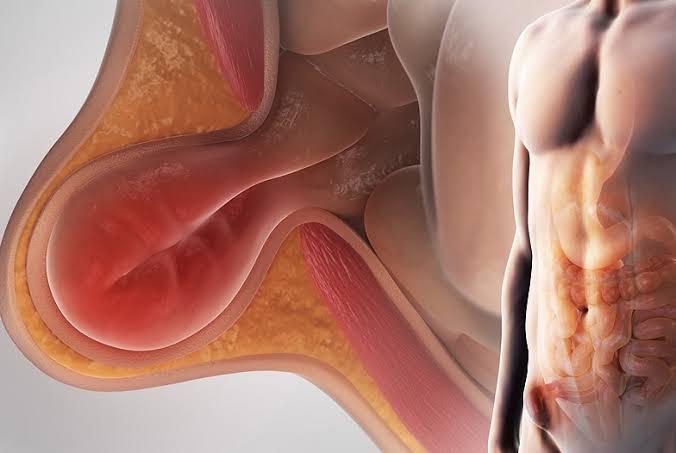
An inguinal hernia occurs when tissue inside the abdomen pushes through a weakened area in the abdominal wall in the groin region.
It may appear as a visible or palpable bulge that becomes more noticeable while standing, coughing, or exerting effort. In some cases, the bulge may become less noticeable when lying down.
The presentation can vary from one person to another, so proper medical evaluation is needed rather than relying only on the appearance of the swelling.
What Are the Symptoms of an Inguinal Hernia?
The most common sign is a swelling or bulge in the groin area, which may become more noticeable during activities that increase pressure inside the abdomen.
Other symptoms may include:
- Pain or discomfort in the groin area.
- A feeling of heaviness or pressure in the affected area.
- Increased discomfort when coughing or exerting effort.
- A more noticeable bulge while standing.
- Extension of the bulge toward the upper thigh or scrotum in some men.
Not every patient experiences all of these symptoms. An inguinal hernia may sometimes cause mild symptoms or no significant pain.
Why Does an Inguinal Hernia Become More Noticeable During Physical Effort?
Coughing, sneezing, or physical exertion can increase pressure inside the abdomen. When there is a weak area in the abdominal wall, tissue may push through that area, making the bulge more noticeable.
This is why some patients notice that the swelling appears or becomes larger when standing, moving, coughing, or exerting effort, while it may become less noticeable with rest or lying down in some cases.
How Is an Inguinal Hernia Diagnosed?
Diagnosis usually begins by reviewing the patient’s symptoms and examining the affected area. The doctor may ask the patient to stand or cough during the examination to observe the bulge and assess it.
In some cases, imaging tests may be needed if the diagnosis is not clear during the physical examination or if further evaluation of the area is required.
Does Every Groin Swelling Mean an Inguinal Hernia?
No. A swelling or pain in the groin area does not necessarily mean that the patient has an inguinal hernia, as similar symptoms can have other causes.
For this reason, the condition should not be diagnosed based only on the appearance of the swelling or a description of symptoms. A medical examination is needed to determine the underlying cause.
Can an Inguinal Hernia Disappear on Its Own?
The bulge may temporarily disappear or become less noticeable when lying down in some cases. However, this does not necessarily mean that the hernia itself has disappeared.
An inguinal hernia is associated with a weakness in the abdominal wall, so management depends on the type and size of the hernia, the symptoms, and the patient’s overall condition.
How Is an Inguinal Hernia Treated?
Treatment depends on the individual assessment and may vary according to the size of the hernia, symptoms, and presence of complications.
When an intervention is needed, surgical hernia repair is the main treatment. The appropriate surgical approach is determined according to the patient’s condition and the type of hernia.
There is no single surgical technique that is appropriate for every patient. The choice depends on the medical evaluation.
Does Every Inguinal Hernia Require Surgery?
Not necessarily. The timing and need for surgery depend on the nature of the hernia, the symptoms, the patient’s overall health, and the potential risk of complications.
In some cases, the doctor may recommend monitoring, while surgery may be appropriate in other cases, particularly when symptoms are present, the hernia is increasing in size, or other factors indicate the need for intervention.
What Happens If an Inguinal Hernia Suddenly Becomes Painful?
Sudden severe pain in the area of the hernia, especially when accompanied by a swelling that does not go back in, vomiting, abdominal bloating, or difficulty passing gas or stool, may indicate a complication that requires urgent medical evaluation.
In such situations, medical assessment should not be delayed, and the problem should not be managed without professional evaluation.
Can an Inguinal Hernia Be Prevented?
Not all inguinal hernias can be prevented because some contributing factors cannot be controlled. However, certain factors that increase pressure on the abdominal wall may be managed, such as addressing chronic constipation or persistent coughing and avoiding inappropriate heavy lifting techniques.
If a hernia is already present, medical evaluation is needed to determine the appropriate approach.
An inguinal hernia is a common surgical condition, and one of its main signs is a bulge or swelling in the groin area that may become more noticeable when standing, coughing, or exerting effort.
The swelling alone is not enough to determine the exact cause. Diagnosis depends on medical examination and, in some cases, additional testing. Treatment also varies according to the size of the hernia, symptoms, and the patient’s overall condition, and some patients may require surgical repair.