
Teeth Cleaning and Tartar Removal in Tanta | Restore a Healthy, Beautiful Smile with Dr. Islam Safwat
Professional Teeth Cleaning and Tartar Removal in Tanta with Dr. Islam Safwat
Maintaining good oral health is one of the most important factors in preserving overall health and quality of life. A clean, healthy smile not only enhances your appearance but also protects you from numerous health problems that may begin in the mouth and eventually affect other parts of the body. One of the most common oral health issues is dental tartar buildup, which may initially appear to be a cosmetic concern but can actually become the leading cause of gum disease, persistent bad breath, loose teeth, and even tooth loss if left untreated.
If you are looking for the best dentist for teeth cleaning and tartar removal in Tanta, Dr. Islam Safwat provides comprehensive dental care using the latest ultrasonic scaling technology to safely remove tartar, plaque, and surface stains while protecting the tooth enamel. Every patient receives a personalized preventive care plan to maintain healthy teeth and gums for the long term.
Whether you suffer from bleeding gums while brushing, yellow or brown tartar deposits around your teeth, persistent bad breath, or simply want to maintain a bright and healthy smile, routine professional teeth cleaning is one of the most effective ways to keep your teeth healthy and strong for years to come.
Why Is Regular Teeth Cleaning Important?
Many people believe that brushing their teeth daily with toothpaste is enough to maintain good oral health. However, even the highest-quality toothbrush cannot remove all plaque and bacteria, especially in hard-to-reach areas between the teeth and below the gum line.
Over time, the soft plaque hardens into tartar, which firmly adheres to the tooth surface and cannot be removed with a toothbrush or dental floss. Professional cleaning performed by a dentist is the only effective solution.
For this reason, dentists recommend having professional teeth cleaning at least every six months. Some patients may require more frequent visits depending on their oral health and the rate of tartar accumulation.
What Is Dental Tartar?
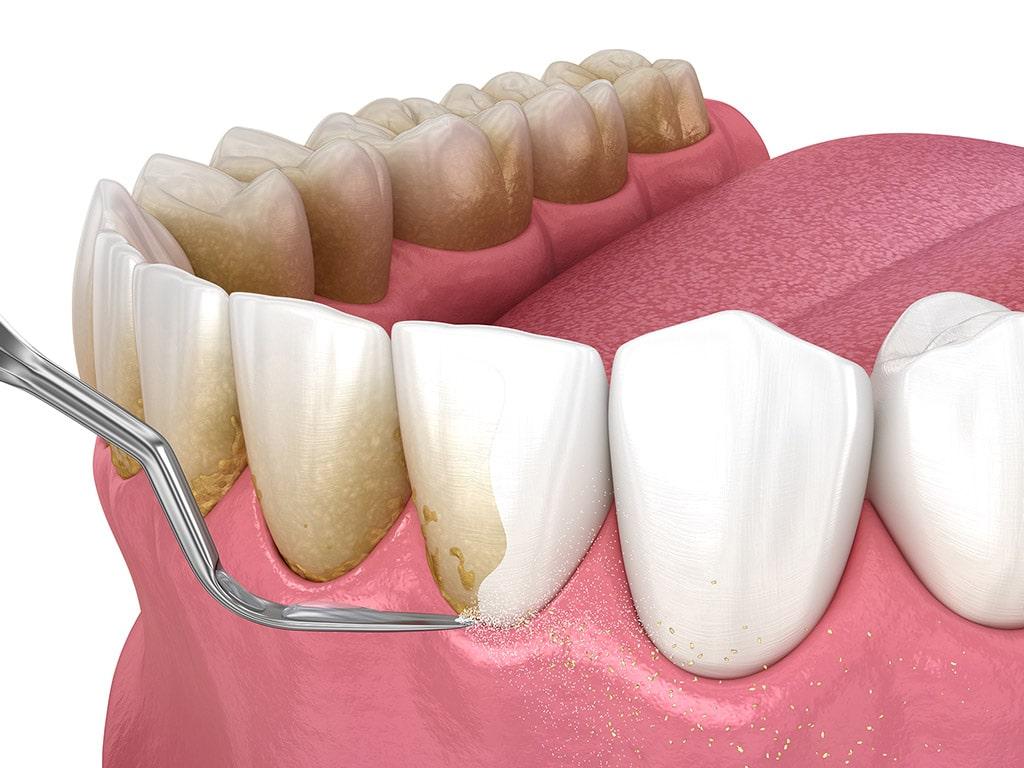
Dental tartar, also known as calculus, is a hardened deposit that forms when food particles and bacteria combine with minerals naturally found in saliva. As a result, the soft plaque layer gradually calcifies and firmly attaches to the teeth.
Initially, plaque appears as a colorless or whitish film. If it is not removed through proper oral hygiene, it hardens within a few days and becomes tartar, which cannot be removed with regular brushing or flossing.
Tartar commonly develops near the gum line or behind the lower front teeth, where saliva production is naturally higher.
How Does Dental Tartar Form?
The formation of tartar occurs in several stages:
Stage One: Plaque Formation
After eating, food debris and sugars remain on the teeth. Naturally occurring bacteria in the mouth begin forming a thin, sticky layer known as dental plaque.
Stage Two: Bacterial Growth
If the teeth are not cleaned properly, bacteria continue multiplying and produce acids and sticky substances that remain attached to the tooth surfaces.
Stage Three: Mineralization
The plaque combines with minerals such as calcium and phosphate found in saliva, causing it to harden into dental tartar within a relatively short period.
Stage Four: Gum Inflammation
As tartar accumulates, it irritates the gum tissues, leading to:
- Redness of the gums
- Bleeding during brushing
- Swollen gums
- Persistent bad breath
If left untreated, the condition may progress to periodontal disease, resulting in the loss of the bone supporting the teeth.
What Is the Difference Between Plaque and Tartar?
Many people confuse plaque with tartar, although they are significantly different.
| Plaque | Tartar |
|---|---|
| Soft, sticky film | Hardened deposit |
| Can be removed by brushing | Can only be removed professionally by a dentist |
| Forms daily | Develops when plaque is left untreated |
| Contributes to tooth decay | Causes gum disease and periodontal problems |
| Usually colorless | Yellow, brown, or black |
Removing plaque every day helps prevent tartar formation and protects both teeth and gums.
Types of Dental Tartar
Dental tartar is not limited to the deposits visible above the gum line. There are two main types, each affecting oral health differently.
1. Supragingival Calculus
This is the most common type and forms on the visible surfaces of the teeth.
It usually appears in shades of:
- White
- Yellow
- Light brown
Patients can often see this type of tartar near the gum line.
2. Subgingival Calculus
This type is more serious because it develops beneath the gum line inside periodontal pockets, making it invisible to the naked eye.
It is characterized by:
- Greater hardness
- Dark coloration
- High bacterial content
- Chronic gum inflammation
- Damage to the supporting bone around the teeth
Subgingival calculus requires deep professional cleaning performed by a qualified dentist.
Causes of Dental Tartar Buildup
Several factors can accelerate tartar formation, including:
1. Poor Oral Hygiene
Failing to brush your teeth at least twice a day is the leading cause of plaque accumulation and tartar formation.
2. Not Using Dental Floss
Food particles trapped between the teeth create an ideal environment for bacterial growth.
3. Smoking
Smoking is one of the primary causes of heavy tartar buildup and tooth staining. It also significantly increases the risk of gum disease.
4. Frequent Consumption of Staining Beverages
Regular consumption of beverages such as:
- Coffee
- Tea
- Soft drinks
- Dark-colored juices
can contribute to surface staining and accelerate tartar accumulation.