
Certainly! Here is a professional English translation of your article, structured with clear headings and a clean layout suitable for a blog or medical information site.
Comprehensive Guide to Alzheimer’s Disease in Seniors: Understanding Symptoms, Key Differences, and Coping Strategies
Alzheimer's disease is one of the most concerning conditions for seniors and their families, not only for its impact on memory but for its ability to change the very essence of daily life. With increasing health awareness, the most pressing question has become: "Is what I am experiencing just normal age-related forgetfulness, or the beginning of Alzheimer's?" In this detailed article, we will explore everything you need to know about this disease, with a specific focus on how to distinguish it from natural age-related changes.
Understanding the Nature of Alzheimer’s
Alzheimer's is a neurodegenerative brain disorder and the most common cause of "dementia" worldwide. The disease begins with silent chemical and structural changes in the brain that may start years before the first visible symptom appears. These changes lead to the death of nerve cells and the severing of connections between them, resulting in a gradual shrinkage of brain size.
Detailed Symptoms of Alzheimer’s Disease
Alzheimer's symptoms develop gradually and vary from person to person, but they can be classified into three main categories:
1. Cognitive Symptoms (Mental Decline)
-
Short-term memory loss: This is the most famous symptom; a patient may remember events from 30 years ago vividly but forget what they ate an hour ago or repeat the same question several times.
-
Difficulty with abstraction and logic: The patient loses the ability to deal with numbers, making managing finances or paying bills impossible.
-
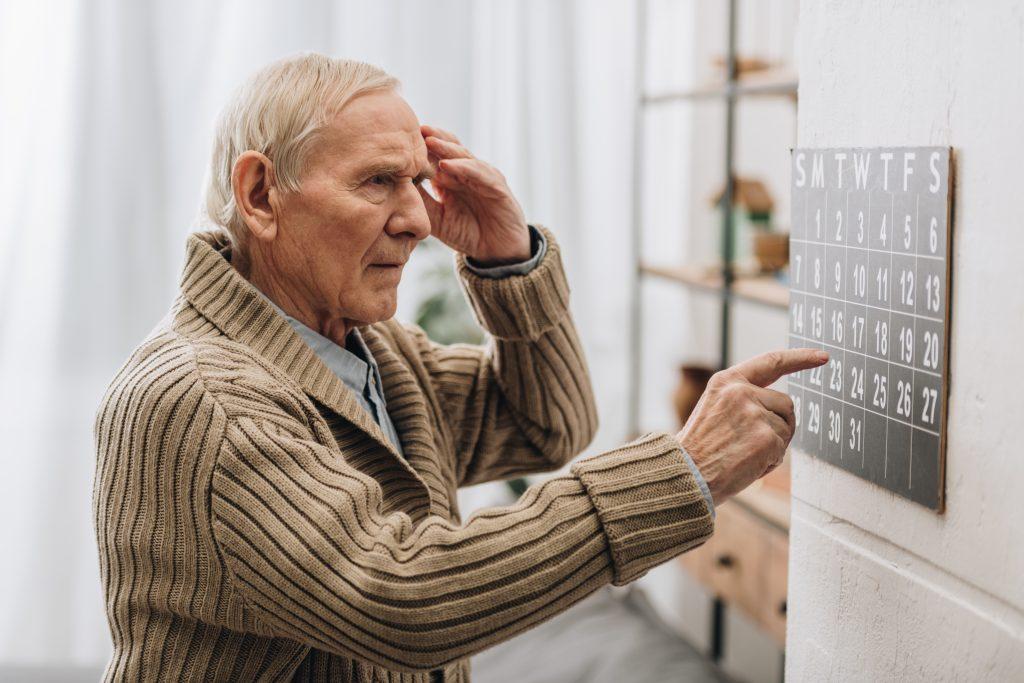
Disorientation in time and space: A patient may leave a home they have lived in for years and not know how to return, or forget which month or year it is.
2. Behavioral and Psychological Symptoms
-
Personality changes: A calm person may become aggressive, or a social person may suddenly become withdrawn.
-
Suspicion and Confusion (Paranoia): The patient may start accusing those around them of theft or conspiracy because they cannot explain why their personal items are missing.
-
Depression and Anxiety: In the early stages, the patient may feel intense frustration due to an internal awareness of their declining abilities.
3. Physical Symptoms (Late Stages)
-
Loss of balance and inability to walk steadily.
-
Difficulty swallowing and poor coordination of body movements.
-
Loss of control over vital bodily functions.
Alzheimer’s vs. Normal Forgetfulness: The Deciding Factor
It is essential to distinguish between the "memory lapses" that happen to everyone with age and Alzheimer’s disease. Here is a comparison table highlighting the differences:
The 10 Warning Signs (According to the Alzheimer’s Association)
To simplify matters for families, 10 signs have been identified. if several of these are present, a medical examination is required immediately:
-
Memory loss that disrupts daily life.
-
Difficulty in planning or solving simple problems.
-
Difficulty completing familiar household tasks.
-
Frequent confusion regarding time and place.
-
Trouble understanding visual images and spatial relationships (e.g., difficulty reading or judging distances).
-
New problems with words while speaking or writing.
-
Misplacing things and losing the ability to retrace steps.
-
Decreased or poor judgment (e.g., neglecting personal hygiene).
-
Withdrawal from work or social activities.
-
Changes in mood and personality (anxiety, suspicion, fear).
Causes and Risk Factors
While science has not yet found a single definitive cause, several factors contribute to the disease:
-
Aging: This remains the greatest factor, with incidence increasing after age 65.
-
Genetics: Certain genes increase probability, but they are not an absolute destiny.
-
Unhealthy Lifestyle: Obesity, inactivity, and smoking affect the health of blood vessels in the brain.
-
Head Injuries: There is a link between severe head injuries and an increased risk of infection later in life.
-
Social Isolation: A lack of mental and social stimulation accelerates the deterioration of nerve cells.
Integrated Care Strategies: How Can We Help?
Care is not just about providing medication; it is the art of daily interaction:
1. Effective Communication (The Language of Love and Patience)
-
Use simple, direct sentences.
-
Maintain eye contact to make the patient feel secure.
-
Avoid correcting the patient aggressively or mocking their forgetfulness; this increases their agitation.
-
Listen "with your heart"; sometimes a patient is angry because they feel cold or hungry and do not know how to express it.
2. Home Environment (Safety First)
-
Remove rugs that may cause tripping or slipping.
-
Improve lighting in every corner; shadows may appear to the patient as ghosts or intruders (hallucinations).
-
Place signs and pictures on doors and cabinets to help the patient remember where things are.
3. Mental Stimulation and Physical Activity
-
Encourage the patient to engage in light walking.
-
Use "Reminiscence Therapy" by showing old photo albums; this evokes strong positive emotions.
-
Listening to music they loved in their youth can amazingly reduce anxiety attacks.
Protecting the Caregiver (The Unsung Hero)
Caring for an Alzheimer’s patient is a long marathon, not a short sprint. The caregiver (son, daughter, or spouse) is vulnerable to what is known as "Psychological Burnout."
Advice: Do not carry the burden alone. Seek help from relatives or professional caregivers. Advice: Dedicate time for yourself daily to practice a hobby or even just to rest; your mental health is the fuel that ensures the continued care of your loved one.
Can Alzheimer’s Be Prevented?
Although there is no vaccine, there is something called "Cognitive Reserve." You can build this reserve starting now through:
-
Reading and Continuous Learning: Learning a new language or a manual skill builds new neural connections.
-
Healthy Diet: Following a diet based on leafy greens and fish (Omega-3).
-
Adequate Sleep: The brain cleanses itself of harmful amyloid proteins during deep sleep.
-
Managing Chronic Diseases: Controlling blood sugar and blood pressure protects the delicate capillaries in the brain.
Conclusion
Alzheimer’s disease is not just the end of memory; it is the beginning of a new type of communication based on emotion and compassion. Distinguishing between normal forgetfulness and warning symptoms is the first step toward correct and early care. Always remember that an Alzheimer’s patient remains a human being in need of dignity, respect, and love. Even if they forget our names, they never forget the warmth we make them feel.
Final Message: If you notice any of these symptoms persistently in yourself or a loved one, the next step is to visit a geriatric specialist for a comprehensive evaluation. Early diagnosis gives us more time to deal with the disease with intelligence and calm.