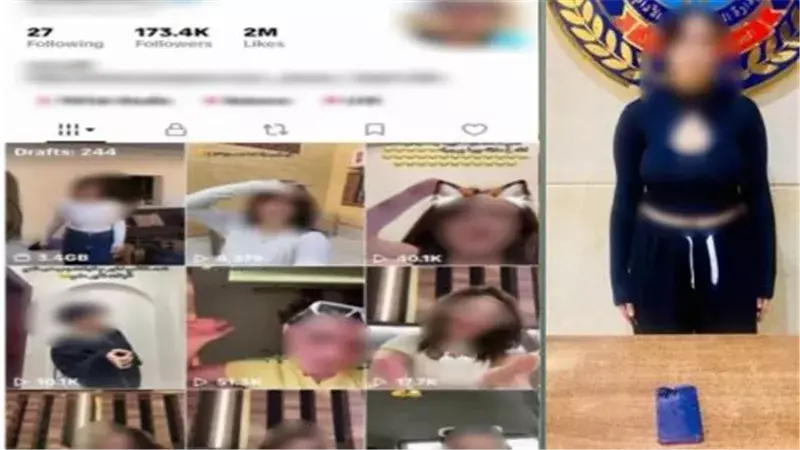

A tense session unfolded at the Cairo Criminal Court in New Cairo during the trial of Sarah Khalifa and several co-defendants accused of importing and manufacturing synthetic drugs. Khalifa addressed the judges declaring, “I am not a criminal… I am asking for justice… the seized documents are forged.”
The court postponed the hearing to December 21 to allow the defense to present its arguments and ordered that the defendants be examined by forensic authorities.
Defense lawyers argued the impossibility of the events as presented by prosecution witnesses and insisted on all previous requests filed in the case records. Khalifa was confronted with statements documented in the session minutes, while her lawyer requested a forensic examination. Meanwhile, the defense for the third and fifth defendants submitted a motion to recuse the court panel.
Prosecutors revealed during the session that a secret relationship had existed between Khalifa and the third defendant. They also highlighted the testimony of the fifth defendant, who stated that even a very small amount of the seized powder “could kill instantly if smoked,” underscoring the extreme danger of the material involved.
Addressing the court, the prosecutor asked: “What conscience can trade in a lethal poison that destroys lives without mercy? Young people are turned into test subjects at the hands of a network that knows no compassion.”
The Public Prosecution referred 28 defendants—including Sarah Khalifa—to criminal court on charges of forming an organized group involved in importing chemicals used in manufacturing drugs, producing them for trafficking, and possessing unlicensed firearms and ammunition.
Investigations revealed a structured organization in which members imported raw materials, manufactured them inside a residential property, and distributed them across multiple areas. Authorities seized more than 750 kilograms of synthetic drugs and related components.
Urgent decisions were also issued, including freezing the defendants’ assets, accessing their banking records, listing fugitives on travel-ban lists, and maintaining the detention of the remaining accused.
The referral decision was supported by the testimonies of 20 witnesses, along with digital and technical evidence including photos, conversations, and videos documenting the group’s activities.