Jensen Huang: 6-Year-Old Chips Sold Out… SK Expands Production, Samsung Bets on Advanced Nodes
Introduction 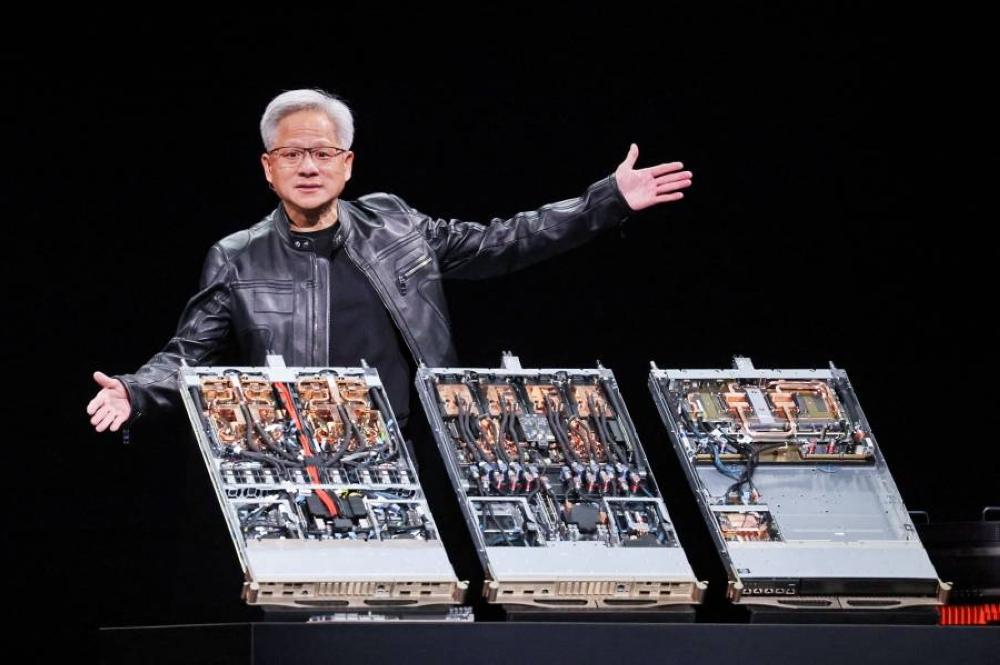
Jensen Huang, CEO of NVIDIA, confirmed that demand for computing chips remains at record highs, noting that even chips launched six years ago are now out of stock. Meanwhile, SK hynix announced an investment exceeding 21 trillion won to expand production, while Samsung Electronics is strengthening its semiconductor presence through 2nm process technology.
Jensen Huang’s Statements
NVIDIA reported the highest quarterly and annual revenues in its history, reflecting sustained AI-driven demand.
Huang explained that the shift toward Agentic AI has doubled demand for computing power, expecting further growth as “Physical AI” applications expand into manufacturing and robotics.
He noted that the “Hopper” chips introduced four years ago and the “Ampere” chips released in 2020 are now unavailable in the market, despite belonging to previous generations.
He also revealed that first samples of the new “Rubin” generation have been shipped, with mass production set for the second half of the year, while growth continues to be supported by the “Blackwell” architecture.
SK hynix Investment 
In response to surging demand, SK hynix decided to inject an additional 21.6 trillion won into the first phase of its Yongin cluster, bringing total investment to 31 trillion won after a previous 9.4 trillion won announcement.
The project consists of six production stages within phase one. The timeline has been accelerated, moving the launch of the first zone from May 2026 to February 2026, and advancing overall completion from 2032 to around 2030.
Regulatory adjustments will allow facility utilization to increase to 1.4 times the legal limit, significantly boosting production capacity.
Current monthly DRAM production capacity:
- Samsung: approximately 600,000 units
- SK hynix: approximately 450,000 units
- Micron: approximately 300,000 units
The Cheongju plant is expected to add around 50,000 units per month, while the first phase in Yongin will contribute between 30,000 and 40,000 units, with a long-term goal of increasing total output by up to 200,000 units monthly.
Samsung Strategy 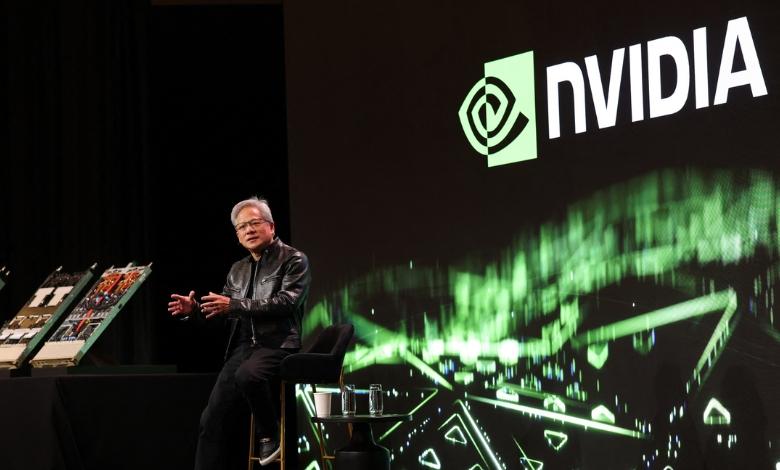
Samsung is focusing on strengthening its position as an integrated semiconductor company by investing in 2nm process technology for logic chips.
Estimates suggest the company’s profits could reach 200 trillion won, with approximately 190 trillion won coming from the memory segment, providing room for expansion into advanced technologies.
The 2nm process has been implemented in the Exynos 2600 processor within the Galaxy S26 series as a practical test of advanced manufacturing capabilities.
The company aims to attract global AI clients, including firms currently relying on TSMC, by improving production efficiency and ensuring yield stability.
Samsung’s strategy is to provide a fully integrated ecosystem covering chip design, fabrication, memory, and advanced packaging to support the rapidly growing AI chip market.
Conclusion 
The parallel moves by NVIDIA, SK hynix, and Samsung highlight the accelerating investment race in the semiconductor industry, driven by expanding artificial intelligence applications and advanced computing technologies worldwide.